Big Think
@bigthink·8.8M subscribers·10.1K videos
Annette Gordon-Reed on Retelling Jefferson's Story | Big Think
Posted
April 24, 2012
Views
1,348
Likes
11
Engagement
0.82%
April 24, 2012
1,348
11
0.82%
Every word spoken in this episode is indexed. Type any phrase to jump straight to the moment it was said.
Type any word or phrase that may have been spoken. Click a result to seek the player to that exact moment.
Try a name, a topic, or a quoted line
See what was published immediately before and after this episode.
 4:46Now Playing
Annette Gordon-Reed on Retelling Jefferson's Story
New videos DAILY
Join Big Think Edge for exclusive videos
----------------------------------------------------------------------------------
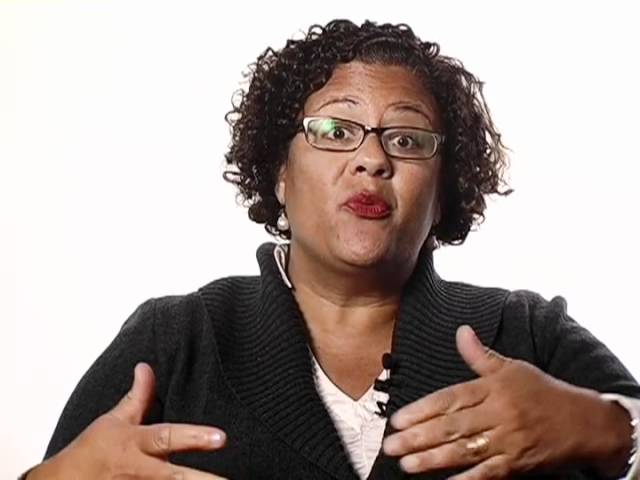
Annette Gordon-Reed wanted to fill in the holes in the Merchant Ivory film.
----------------------------------------------------------------------------------
Annette Gordon-Reed:
Annette Gordon-Reed is a professor of law at New York Law School and a professor of history at Rutgers. She earned a place in history with her first book, Thomas Jefferson and Sally Hemings: An American Controversy, which had an acclaimed but stormy reception when published in 1997, and which The New Yorker described as “brilliant.” She is recognized as one of our country’s most distinguished presidential scholars.Gordon-Reed spent her early career as an associate at Cahill Gordon & Reindel, and as Counsel to the New York City Board of Corrections. She speaks or moderates at numerous conferences across the country on history and law-related topics. Gordon-Reed is a graduate of Dartmouth College and Harvard Law School, where she was a member of the Law Review. She lives in Manhattan with her husband, daughter, and son.
----------------------------------------------------------------------------------
TRANSCRIPT:
Question: What first piqued your interest about Jefferson’s relationship with Sally Hemmings?
Gordon-Reed: Well, in 1994, 1995, I began reading that they were going to do a movie, Merchant Ivory was going to do a movie about Jefferson called “Jefferson in Paris” and there was a lot of consternation on the part of people because they heard that they were going to treat the story as true. The story that Jefferson had a liaison with Sally Hemings that was going to be incorporated into the film, and they were saying things like there’s no evidence that this ever happened and, you know, Jefferson will never be involved with a slave girl, and I sort of wondered, you know, of all the things that, you know, people make question in history, why was it so important for people to, you know, to so vociferously deny that this was possible and if you’re going to, you know, you shouldn’t believe this above anything else about American history. And so I sat down to write an [IB] piece that kind of got longer and longer and longer and then I decided to go ahead and write a book about it. Not about whether or not Jefferson and Hemings had children together, but whether or not, but how people wrote about it, how black’s words are perceived, how blacks are portrayed in the pages of history, because I thought there was a real double standard in looking at the evidence for the relationship versus the statements of Jefferson’s family, you know, their explanations for why this get looked up like Jefferson. So, there were issues of race and issues of class that really interested me, and I wanted to try to tease that out more than did they or didn’t they, but it was really about the historiography of the subject.
Question: Where did you find your sources?
Gordon-Reed: For this particular book, Jefferson’s papers are being published all over [the more] published yet his letters. I mean, there are, you know, thousands and thousands of them. His memorandum book, his list of all his transactions that’s been published, the farm book has been published as well. That’s his record of life, on plantation life at Monticello. So those things are published. There are unpublished archives, you know, if I go to the Jefferson papers, I used some unpublished papers as well, but I looked at archives in Virginia, the Virginia Historical Society, the Library of Virginia. I went to England for some of the material about Sally Hemings’ father, a couple of London and Lancaster, so all over.
Question: Were there any cathartic moments during the research?
Gordon-Reed: Well, when I figured out that I should be paying attention to the names of Sally Hemings’ children. I was sort of going along and with my first book just sort of writing them down and going through and doing these various things, and then I began to wonder, well, you know, these are actual. I began to see other Randolph people who had the same name and then I began to think who are these people? Why are these children named? Where is Beverly come from? [William] Beverly was actually Jefferson’s oldest son’s name. Who is that? That was actually a person. And so and when I found out who that was and I found out that he was an associate of Jefferson’s father, that they have been on expedition together, they have carved their initials in the tree together, then it just hit me. Here are something that right in front of your face the names of these children, something that…
Read the full transcript at
Sentinel Indexing in Progress
Metadata and chapters are available. Claim extraction for this episode is pending.
All video content is delivered via YouTube embedded players in accordance with the YouTube Terms of Service. Sentinel provides research tools that promote discovery and accountability across political media.