Big Think
@bigthink·8.8M subscribers·10.1K videos
Elizabeth Alexander on the Importance of Race to the Obama Presidency | Big Think
Posted
April 24, 2012
Views
133
Likes
1
Engagement
0.75%
April 24, 2012
133
1
0.75%
Every word spoken in this episode is indexed. Type any phrase to jump straight to the moment it was said.
Type any word or phrase that may have been spoken. Click a result to seek the player to that exact moment.
Try a name, a topic, or a quoted line
See what was published immediately before and after this episode.
 4:54Now Playing
Elizabeth Alexander on the Importance of Race to the Obama Presidency
New videos DAILY
Join Big Think Edge for exclusive videos
----------------------------------------------------------------------------------
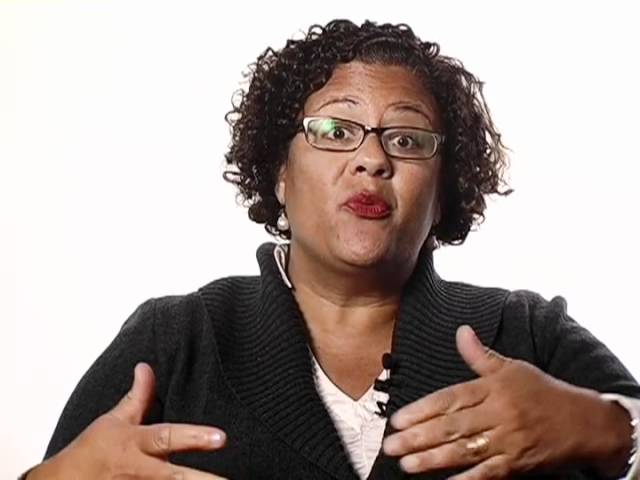
Elizabeth Alexander on the power of racial identity.
----------------------------------------------------------------------------------
Elizabeth Alexander:
Elizabeth Alexander is Professor of African American Studies and future Chair of the African American Studies Department at Yale University. In 2008, Dr. Alexander was selected by President-elect Barack Obama to compose and read a poem for his inauguration. She is the author of four books of poems, The Venus Hottentot, Body of Life, Antebellum Dream Book, and American Sublime, which was one of the American Library Association’s 25 Notable Books of the Year as well as one of three finalists for the Pulitzer Prize.
Her collection of essays on African American literature, painting, and popular culture, The Black Interior, was published in 2004. Her verse play, "Diva Studies," was produced at the Yale School of Drama in May 1996.
Alexander has taught at the University of Chicago, where she won the Quantrell Award for Excellence in Undergraduate Teaching, New York University’s Graduate Creative Writing Program, and Smith College, where she was Grace Hazard Conkling Poet-in-Residence, first director of the Poetry Center at Smith College, and member of the founding editorial collective for the feminist journal Meridians.
Professor Alexander is an inaugural recipient of the Alphonse Fletcher, Sr. Fellowship for work that “contributes to improving race relations in American society and furthers the broad social goals of the U.S. Supreme Court’s Brown v. Board of Education decision of 1954.” She teaches courses on African American poetry, drama, and 20th century literature, as well as the survey introduction to African American Studies and is a graduate of the University of Pennsylvania.
Her collection of essays on African American literature, painting, and popular culture, The Black Interior, was published in 2004. Her verse play, "Diva Studies," was produced at the Yale School of Drama in May 1996.
Alexander has taught at the University of Chicago, where she won the Quantrell Award for Excellence in Undergraduate Teaching, New York University’s Graduate Creative Writing Program, and Smith College, where she was Grace Hazard Conkling Poet-in-Residence, first director of the Poetry Center at Smith College, and member of the founding editorial collective for the feminist journal Meridians.
Professor Alexander is an inaugural recipient of the Alphonse Fletcher, Sr. Fellowship for work that “contributes to improving race relations in American society and furthers the broad social goals of the U.S. Supreme Court’s Brown v. Board of Education decision of 1954.” She teaches courses on African American poetry, drama, and 20th century literature, as well as the survey introduction to African American Studies and is a graduate of the University of Pennsylvania.
----------------------------------------------------------------------------------
TRANSCRIPT:
Question: Does Obama’s presidency mark a post-racial age?
Alexander: Well, if I ruled the world, the term post-racial would not exist. I don’t see post-racial as a goal. Let me clearly say what I mean here, I don’t think race is to be transcended. Race itself is not a problem. We all have race and history and region and gender and class, you know, we all have histories, we’re all from some place and I don’t think that the goal is to say that we’re now all in this fabulous neutral happy place but rather say, “Well, can we hear each other’s stories?” Can we… can we, sort of, take the weave and the overlap of the experience and really understand it as one thing with a lot of strands that sometimes really have clashed and mumped up against each other. Can we reconcile a violent history? Can we reconcile the inequities of the present? Post-raciality doesn’t accomplish anything per se and I think that what it would also mean is rushing past that which has not been altogether resolved. Now, on the other hand, are we in a place where, you know, if there is such a thing as the National Conversation on Race is… has maybe moved forward? Yes. I think we are in that place and I think that part of it is, you know, that the country has elected, done something that it has never done before, it’s elected an African-American president, it’s elected an African-American president who, in his own background, reflects the incredible and fascinating diversity of African-Americanness, of Blackness, if you will.
Read the full transcript at
Sentinel Indexing in Progress
Metadata and chapters are available. Claim extraction for this episode is pending.
All video content is delivered via YouTube embedded players in accordance with the YouTube Terms of Service. Sentinel provides research tools that promote discovery and accountability across political media.