Big Think
@bigthink·8.8M subscribers·10.1K videos
Aspiring Poets Need Not Live in Paris | Rita Dove | Big Think
Posted
April 24, 2012
Views
868
Likes
25
Comments
2
Engagement
3.11%
April 24, 2012
868
25
2
3.11%
Every word spoken in this episode is indexed. Type any phrase to jump straight to the moment it was said.
Type any word or phrase that may have been spoken. Click a result to seek the player to that exact moment.
Try a name, a topic, or a quoted line
Episode Timeline
Every episode in order around the one you’re watching — click any card and the page flips straight to it.
 5:50
5:50 6:28Now Playing
Aspiring Poets Need Not Live in Paris
New videos DAILY
Join Big Think Edge for exclusive videos
----------------------------------------------------------------------------------
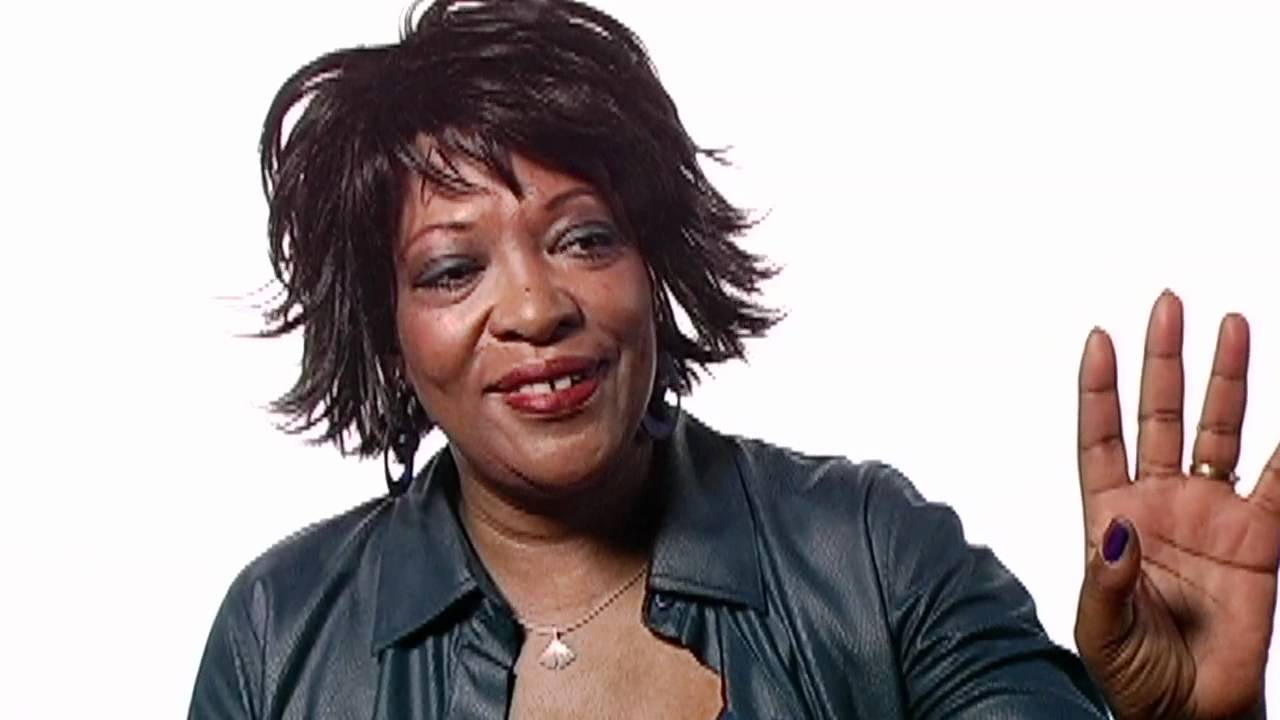
Rita Dove offers advice for those looking to make a career out of poetry.
----------------------------------------------------------------------------------
Rita Dove:
Rita Dove served as Poet Laureate of the United States and Consultant to the Library of Congress from 1993 to 1995 and as Poet Laureate of the Commonwealth of Virginia from 2004 to 2006. She has received numerous literary and academic honors, among them the 1987 Pulitzer Prize in Poetry and, more recently, the 2003 Emily Couric Leadership Award, the 2001 Duke Ellington Lifetime Achievement Award, the 1997 Sara Lee Frontrunner Award, the 1997 Barnes & Noble Writers for Writers Award, the 1996 Heinz Award in the Arts and Humanities and the 1996 National Humanities Medal.
Dove has published the poetry collections The Yellow House on the Corner (1980), Museum (1983), Thomas and Beulah (1986), Grace Notes (1989), Selected Poems (1993), Mother Love (1995), On the Bus with Rosa Parks (1999), American Smooth (2004), a book of short stories, Fifth Sunday (1985), the novel Through the Ivory Gate (1992), essays under the title The Poet's World (1995), and the play The Darker Face of the Earth, which had its world premiere in 1996 at the Oregon Shakespeare Festival and was subsequently produced at the Kennedy Center in Washington, D.C., the Royal National Theatre in London, and other theaters. She is the editor of Best American Poetry 2000, and from January 2000 to January 2002 she wrote a weekly column, "Poet's Choice," for The Washington Post. Her latest poetry collection, Sonata Mulattica, was published by W.W. Norton & Company in the spring of 2009.
----------------------------------------------------------------------------------
TRANSCRIPT:
Question: In this day of digital media and short attention spans, what is the future of poetry?
Rita Dove: I think it’s going to be a mix of things. First of all, poetry of all the forms of literature I think is the most suited for the digital age and for the shorter attention spans and all of that. It Twitters very easily, some lyric poems and it’s very easy to zip a poem to someone, so that’s one of the things I think is wonderful about poetry in the digital age. I think that it’s going to be a mix between people who will really only need to see a book on a page and those who will only want to hear it on the stage or want to hear the oral word. What is interesting about the digital age is because of all of the ways in which we have of transporting moving images now and making it very portable.
The oral aspect of poetry is coming back. I mean poetry began as an oral discipline and then we had the printing press and then it became gradually something which began to lose a little bit of its musicality because now we could read it, so all of the rhymed poems which… You know all of the formal poems which certainly began as a way of helping us remember a poem, as an aid to memory, it rhymed, that wasn’t necessary anymore. We moved away from that. Now we have spoken word. Rhyme is coming back in, so it’s absolutely fascinating to me. I think it’s going to change a little bit more, become a little bit more musical and we’ll have a whole range of things, but it’s an exciting time.
Question: What is your advice to an aspiring young poet in today’s world?
Rita Dove: My first advice would be to read, read, read, which sounds interesting coming in a digital age, but it’s so much easier to listen to a poem than it is to sit down and actually read it and to hear it in your head and that is something that every poet or aspiring poet needs to be able to do, I think to hear it in their head. What I wish someone had told me. I wish someone had told me that my stories are really mine to tell. In other words, anything that I think is important or that has moved me has the ability to move somebody else. It was a long process to… for me and I think for many young poets to be able to realize that even the smallest, the most domestic experience can move someone else. It doesn’t have to be about the Trojan War. You know it doesn’t have to be the Iliad. It doesn’t have to be something that again, here we get to history, that makes it to the front page of the news, but we live our lives in detail, all of us. We walk down the street. We breathe. We hear things. We try to transcribe it generalities and the details are what make us come alive and I wish someone had said that just at the beginning, so I wouldn’t have felt so discouraged when I began writing and thinking who would want to hear the stories of a young black girl growing up in the Midwest.
Read the full transcript at
Sentinel Indexing in Progress
Metadata and chapters are available. Claim extraction for this episode is pending.
All video content is delivered via YouTube embedded players in accordance with the YouTube Terms of Service. Sentinel provides research tools that promote discovery and accountability across political media.