Big Think
@bigthink·8.8M subscribers·10.1K videos
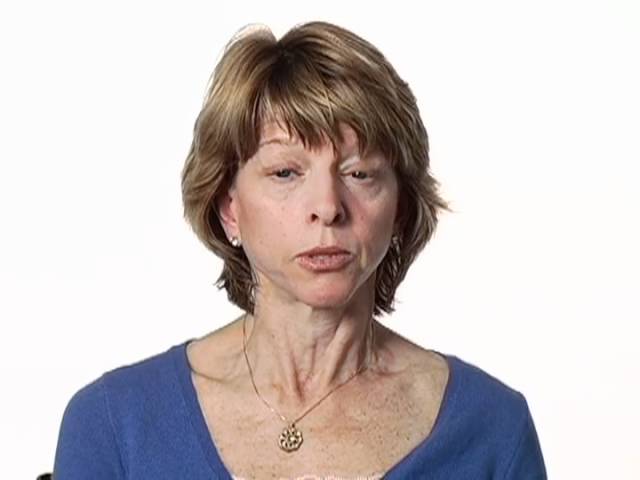
Azar Nafisi: What do you think of Condoleezza Rice's democracy promotion in Iran? | Big Think
Posted
April 24, 2012
Views
371
Likes
3
Engagement
0.81%
April 24, 2012
371
3
0.81%
Every word spoken in this episode is indexed. Type any phrase to jump straight to the moment it was said.
Type any word or phrase that may have been spoken. Click a result to seek the player to that exact moment.
Try a name, a topic, or a quoted line
See what was published immediately before and after this episode.
 3:15Now Playing
Azar Nafisi: What do you think of Condoleezza Rice's democracy promotion in Iran?
New videos DAILY
Join Big Think Edge for exclusive videos
----------------------------------------------------------------------------------
The Secretary’s programs lack the necessary depth to be effective, Nafisi says.
----------------------------------------------------------------------------------
Azar Nafisi:
Azar Nafisi is best known as the author of the national bestseller Reading Lolita in Tehran: A Memoir in Books, which electrified its readers with a compassionate and often harrowing portrait of the Islamic revolution in Iran and how it affected one university professor and her students. The book has spent over 117 weeks on the New York Times bestseller list. Azar Nafisi’s new book, Things I Have Been Silent About: Memories, a memoir about her mother, was published in January 2009.
Azar Nafisi is a Visiting Professor and the executive director of Cultural Conversations at the Foreign Policy Institute of Johns Hopkins University’s School of Advanced International Studies in Washington, DC, where she is a professor of aesthetics, culture, and literature, and teaches courses on the relation between culture and politics. Azar Nafisi held a fellowship at Oxford University, teaching and conducting a series of lectures on culture and the important role of Western literature and culture in Iran after the revolution in 1979. She has taught at the University of Tehran, the Free Islamic University and Allameh Tabatabaii.
----------------------------------------------------------------------------------
TRANSCRIPT:
Azar Nafisi: I don’t think it is effective. You see in order to support other people, first of all you really have to believe that those . . . We cannot use political ploys. When we don’t like Iran, we want to support the . . . I remember about Afghanistan. When I came to U.S. in ’97, I was so mad that nobody was talking about what women were . . . Apart from a small group of women here – give them credit, the feminist majority especially – were talking about Taliban. but the majority of society was silence. The administrations . . . The different administrations were mainly silent. Okay so now Taliban is bad, but let . . . we’ll let them be for a time being. Then 9/11 happens, and all of a sudden when we’re invading Afghanistan we remember Afghani women – that they have been suffering under Taliban. Then we drop them. Are you hearing the administration talking about Afghani women anymore? They’re suffering, I can tell you that. They’re being killed and all sorts of . . . So U.S. foreign policy circles should learn that these are not things you play with. If you think about Iranian people’s right to democracy, you can’t constantly vacillate – well if you like the regime, you’ll shut up about it. If you don’t like it, you’ll offer cures for it. So that is the first thing. The second thing is that what we need is not money. You want to put money into promoting democracy in Iran, put money into education of democracy via Internet; via radio free Iran, radio..., or .... It is a culture entity. The most hopeful thing about Iran – and this hope might be dashed. I’m not saying . . . I’m not optimistic. I’m hopeful. The most hopeful thing about Iran, it has . . . it has a vibrancy of society. It has people who have, with their flesh and blood, understood what individual rights mean, and they want change. Let us help them change from within through bringing education of democracy; through bringing their voices back; through talking about what the Iranian worker’s struggle is right now; Iranian women’s struggles. Money to individuals . . . Money, like weapons, doesn’t solve the problem; culture does, you know. So that is my critique of that. I’m not saying whether Mrs. Rice was well intentioned or not, but intentions don’t come into this, you know? Depth does. I don’t think there’s any depth to these programs.
Sentinel Indexing in Progress
Metadata and chapters are available. Claim extraction for this episode is pending.
All video content is delivered via YouTube embedded players in accordance with the YouTube Terms of Service. Sentinel provides research tools that promote discovery and accountability across political media.