Big Think
@bigthink·8.8M subscribers·10.1K videos
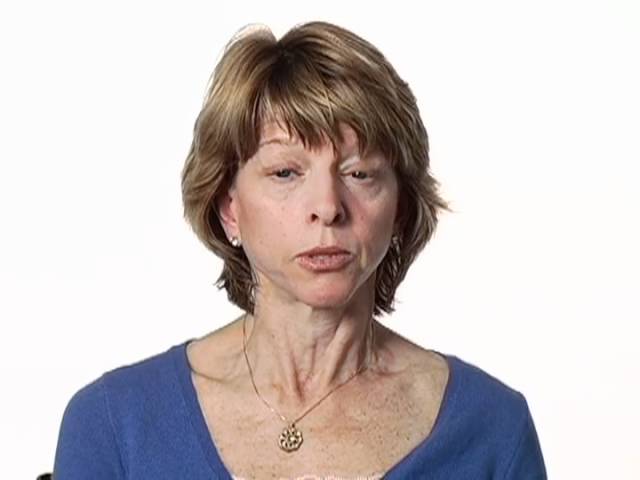
Sara Horowitz Takes Stock of the Freelancer's Union | Big Think
Posted
April 24, 2012
Views
162
Likes
3
Engagement
1.85%
April 24, 2012
162
3
1.85%
Every word spoken in this episode is indexed. Type any phrase to jump straight to the moment it was said.
Type any word or phrase that may have been spoken. Click a result to seek the player to that exact moment.
Try a name, a topic, or a quoted line
See what was published immediately before and after this episode.
 4:25Now Playing
Sara Horowitz Takes Stock of the Freelancer's Union
New videos DAILY
Join Big Think Edge for exclusive videos
----------------------------------------------------------------------------------
The labor expert considers Tina Brown’s analysis of the gig economy.
----------------------------------------------------------------------------------
Sara Horowitz:
Sara Horowitz founded Working Today - Freelancers Union in 1995 to represent the needs and concerns of the growing independent workforce. In recognition of her efforts to create a self-sustaining organization of flexible workers, Horowitz was awarded a John D. and Catherine T. MacArthur Foundation Fellowship in 1999. Before founding Freelancers Union, Horowitz worked as a labor attorney, a union organizer, and a public defender in New York City. A lifelong resident of Brooklyn, she holds degrees from Cornell University's School of Industrial and Labor Relations, SUNY Buffalo Law School, and Harvard's John F. Kennedy School of Government. Horowitz is a trustee of the Nathan Cummings Foundation and is on the board of the Women’s Housing and Economic Development Corporation.
----------------------------------------------------------------------------------
TRANSCRIPT:
Question: How has the Freelancer’s Union adjusted to the downturn?
Sara Horowitz: Well, let me just say yes. We had 65,000 members last year. We have about 106,000. And we’re growing, you know, between 3 and 4,000 a month now. And I would say that our strategy was with these assumptions in mind. Not so much that we knew that the market was going to tank but recognized that the market in which freelancers and independent contractors play in was one that wasn’t really even recognized as a market. And if you look at Clay Christensen’s work on disruptive innovations, you could really see that this was something that was just not on people’s radar. This group couldn’t unionize under the National Labor Relations Act. Government hasn’t really seen them as a constituency. Interestingly, last week, I don’t know if you saw that Mayor Bloomberg announced a partnership with the Freelancers Union, recognizing the importance of developing an unemployment system, looking at the [IB] taxation system, and some of the issues around workspace. And I think it’s significant ‘cause Mayor Bloomberg is not just the mayor of a particularly small town but of New York and he is, you know, known for his acumen about business. So, I think our strategy has been to build the safety net, to have an orientation of entrepreneurship where we build it ourselves. We build our own institutions. We run our institutions. We’re self-sufficient. We’ve been self-sufficient since 2006. I like the discipline of that. If there’s something that we’re doing badly, our members let us know. They let us know loudly, constantly. While it maybe annoying in the moment, it actually, I think, keeps us really robust. And I think that’s really good and I think others should do that too.
Question: What is the gig economy?
Sara Horowitz: I really like the way Tina Brown put it. And I think that they’re interesting generational things. So that if you are talking to somebody who is, let’s say, over 50, who has been laid off and he’s just confronting freelancing, it’s a very difficult transition for people who have known a job or you get your benefits and the regularity of a paycheck. But after somebody has gotten… sort of come to realize they’re not going back to that or if they do, it’ll be short-term, then they realize this is… it is what it is. I think people who are graduating from college expect this now and just don’t have the resentment and… are just much more, like, okay, how are we going to deal with it. I think the interesting group that is probably the most clueless are elective officials, ironically, probably because they collect the regular paycheck and their W-2s. Unless they’re in a campaign and then, their, like, young staff say to them, by the way… You know, actually, the workforce just change. And I think, like, when you listen to the debates of congress people and senators, it’s, like, remarkable to me at how they are in such a bubble and don’t understand, like, just on the brass tacks of what this economy is really like and…
Read the full transcript at
Sentinel Indexing in Progress
Metadata and chapters are available. Claim extraction for this episode is pending.
All video content is delivered via YouTube embedded players in accordance with the YouTube Terms of Service. Sentinel provides research tools that promote discovery and accountability across political media.