Big Think
@bigthink·8.8M subscribers·10.1K videos
Big Think Interview With Atul Gawande | Big Think
Posted
April 24, 2012
Views
19,544
Likes
212
Comments
6
Engagement
1.12%
April 24, 2012
19,544
212
6
1.12%
Every word spoken in this episode is indexed. Type any phrase to jump straight to the moment it was said.
Type any word or phrase that may have been spoken. Click a result to seek the player to that exact moment.
Try a name, a topic, or a quoted line
 41:37Now Playing
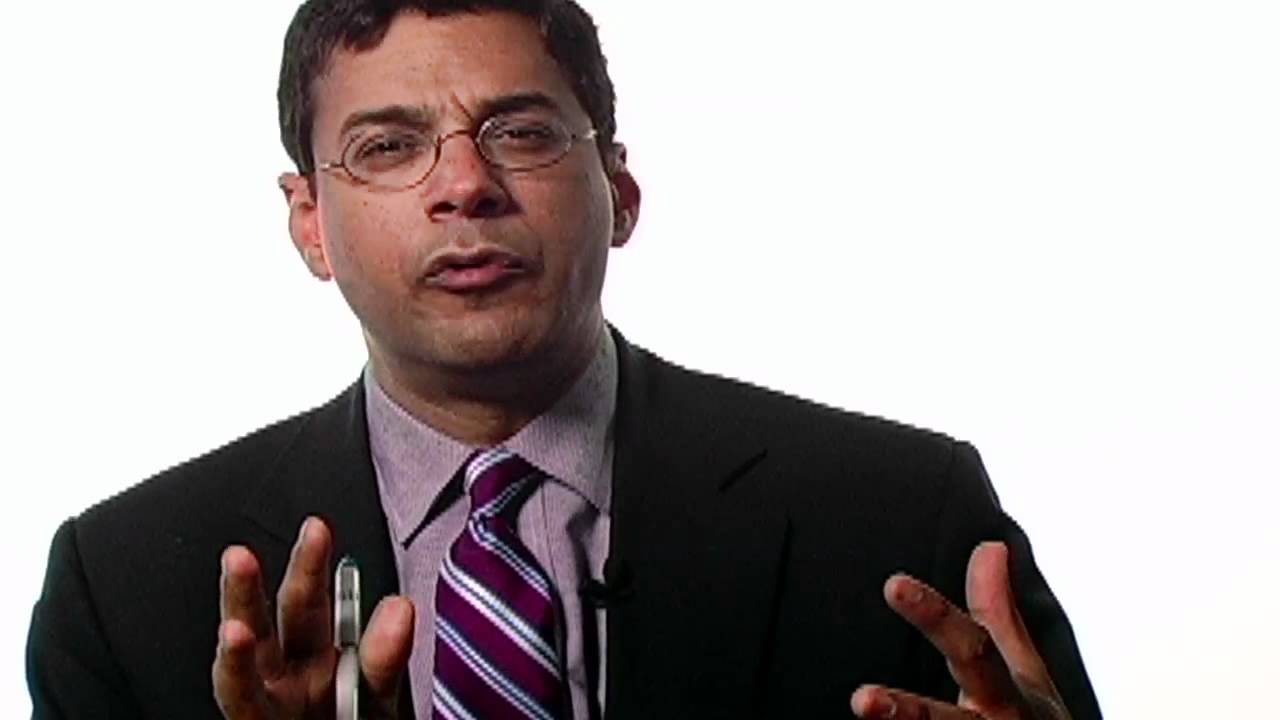
Big Think Interview With Atul Gawande
New videos DAILY
Join Big Think Edge for exclusive videos
----------------------------------------------------------------------------------
A conversation with the surgeon, Harvard professor, and New Yorker staff writer.
----------------------------------------------------------------------------------
Atul Gawande:
Atul Gawande is a general surgeon at Brigham and Women’s Hospital and, since 1998, a staff writer for The New Yorker. In 2006, he received the MacArthur Award for his research and writing. His book "Complications: A Surgeon’s Notes On An Imperfect Science" was a finalist for the National Book Award in 2002 and is published in more than a hundred countries. His newest book, "The Checklist Manifesto," is one of Amazon’s best books of the month: December 2009. He and his wife, Kathleen Hobson, live outside Boston and have three children: Walker, Hattie, and Hunter.
----------------------------------------------------------------------------------
TRANSCRIPT:
Atul Gawande: So I'm Atul Gawande. I'm a surgeon at the Brigham and Women's Hospital in Boston, associate professor at the Harvard School of Public Health, and a writer for The New Yorker magazine.
Question: Does emotion ever come into play in the operating room?
Atul Gawande: You know, I think they -- I think emotions were from the very beginning. Your biggest emotion is fear. I remember that first time I got handed a knife, and you know, the surgeon opposite me had drawn the dotted line where I was to use the knife. And I pressed down on the skin, and half of my thinking was, oh my God, what if I cut too deep? And instead I found that skin is springy, it's tough, it's rubbery, and drawing the knife through that very first time, I didn't go nearly deep enough. I had to cut a couple of times in order just to get through. So fear and learning not to be paralyzed was fundamental to what it was to get good at surgery, grappling with it in ways that you weren't ignoring the fear. I think the worst surgeons are the ones who have no fear, and therefore can become almost cavalier and not learn from inevitable errors. But I've also seen folks who can become paralyzed by the fear and the choices and the proliferating complexities as a case goes on. And all of that fascinated me, and I was trying to get a handle on how do you temper yourself in ways that you can be effective individually? And then later on, as I grasped that there are whole teams involved, it got more and more complicated.
Question: What was your greatest difficulty in becoming a surgeon?
Atul Gawande: You know, I don't know that they were issues that were unique to me personally, but my experience going through surgical training was tempered by an unusual set of experiences. My fifth day of surgical training, the fifth day of July in that first internship year, my son was born. And then 10 days later at home, he went into congestive heart failure. And I was in the operating room, doing -- assisting in my first gall bladder operation, when I got called to -- that my son was in the emergency room at Children's Hospital and I needed to go over. When that happened, I left the operation, walked over still in my scrubs, and walking over the bridge between the Brigham and Women's Hospital, which is an adult hospital, and the Children's Hospital, which was right next door, I felt myself transforming from doctor to father, and arrived in time to see my son failing to breathe, everybody scrambling, and the nurse saying they weren't sure he'd make it. He did pull through. They got him intubated, they got him into an intensive care unit, they slowly figured out what was going on. It was a -- part of the arch of his aorta was missing and needed to be reconstructed. He was in the hospital for two weeks. He left still quite ill. It was two months before he really was on the mend, and during that whole time I got two days off, and then needed to be seeing my patients, and then walking back and forth between the hospital where I was a surgical trainee and the hospital where I was a dad.
Read the full transcript at
Sentinel Indexing in Progress
Metadata and chapters are available. Claim extraction for this episode is pending.
All video content is delivered via YouTube embedded players in accordance with the YouTube Terms of Service. Sentinel provides research tools that promote discovery and accountability across political media.