Big Think
@bigthink·8.8M subscribers·10.1K videos
Big Think Interview With Howard Gardner | Big Think
Posted
April 24, 2012
Views
42,893
Likes
323
Comments
13
Engagement
0.78%
April 24, 2012
42,893
323
13
0.78%
Every word spoken in this episode is indexed. Type any phrase to jump straight to the moment it was said.
Type any word or phrase that may have been spoken. Click a result to seek the player to that exact moment.
Try a name, a topic, or a quoted line
Episode Timeline
Every episode in order around the one you’re watching — click any card and the page flips straight to it.
 29:08Now Playing
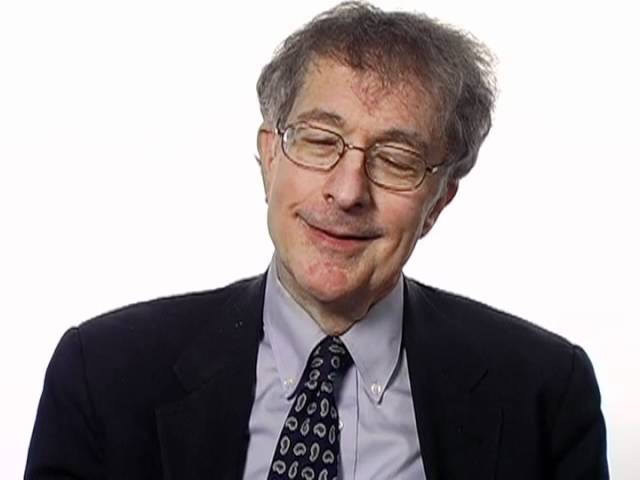
Big Think Interview With Howard Gardner
New videos DAILY
Join Big Think Edge for exclusive videos
----------------------------------------------------------------------------------
Howard Gardner is a developmental psychologist and the John H. and Elisabeth A. Hobbs Professor of Cognition and Education at the Harvard Graduate School of Education. He holds positions as Adjunct Professor of Psychology at Harvard University and Senior Director of Harvard Project Zero.
Among numerous honors, Gardner received a MacArthur Prize Fellowship in 1981. In 1990, he was the first American to receive the University of Louisville's Grawemeyer Award in Education and in 2000 he received a Fellowship from the John S. Guggenheim Memorial Foundation. In 2005 and again in 2008 he was selected by Foreign Policy and Prospect magazines as one of 100 most influential public intellectuals in the world. He has received honorary degrees from twenty-two colleges and universities, including institutions in Ireland, Italy, Israel, and Chile.
The author of over twenty books translated into twenty-seven languages, and several hundred articles, Gardner is best known in educational circles for his theory of multiple intelligences, a critique of the notion that there exists but a single human intelligence that can be assessed by standard psychometric instruments. During the past twenty five years, he and colleagues at Project Zero have been working on the design of performance-based assessments, education for understanding, and the use of multiple intelligences to achieve more personalized curriculum, instruction, and assessment. In the middle 1990s, Gardner and his colleagues launched The GoodWork Project. "GoodWork" is work that is excellent in quality, personally engaging, and exhibits a sense of responsibility with respect to implications and applications. Researchers have examined how individuals who wish to carry out good work succeed in doing so during a time when conditions are changing very quickly, market forces are very powerful, and our sense of time and space is being radically altered by technologies, such as the web. Gardner and colleagues have also studied curricula. Gardner's books have been translated into twenty-seven languages. Among his books are The Disciplined Mind: Beyond Facts and Standardized Tests, The K-12 Education that Every Child Deserves (Penguin Putnam, 2000) Intelligence Reframed (Basic Books, 2000), Good Work: When Excellence and Ethics Meet (Basic Books, 2001), Changing Minds: The Art and Science of Changing Our Own and Other People's Minds (Harvard Business School Press, 2004), and Making Good: How Young People Cope with Moral Dilemmas at Work (Harvard University Press, 2004; with Wendy Fischman, Becca Solomon, and Deborah Greenspan). These books are available through the Project Zero eBookstore.
Currently Gardner continues to direct the GoodWork project, which is concentrating on issues of ethics with secondary and college students. In addition, he co-directs the GoodPlay and Trust projects; a major current interest is the way in which ethics are being affected by the new digital media.
In 2006 Gardner published Multiple Intelligences: New Horizons, The Development and Education of the Mind, and Howard Gardner Under Fire. In Howard Gardner Under Fire, Gardner's work is examined critically; the book includes a lengthy autobiography and a complete biography. In the spring of 2007, Five Minds for the Future was published by Harvard Business School Press. Responsibility at Work, which Gardner edited, was published in the summer of 2007.
----------------------------------------------------------------------------------
TRANSCRIPT:
Question: Is our culture biased towards one type of intelligence over another?
Howard Gardner: Well the theory claims we all had these eight intelligences and people are different from one another in their profile of intelligences and there’s no necessary link between one intelligence and the other. It also is based on the assumption that we wouldn’t have these intelligences if they haven’t been valuable in human evolution. An example I like to use is that the—we developed the natural intelligence so we knew what to eat and what not to eat, to be able to pay attention to which animals to run away from and which animals to hunt and of course which plants to eat and which ones—there’s a reason why we're sensitive to the world of nature.
Now most of us, particularly people who watch this, they go to super markets and they don't have to know anything about the wild, but I think that the neural networks which evolved to help us get around in the Savannah’s of East Africa 50,000 years ago, they're now being used for ......
Read the full transcript at
Sentinel Indexing in Progress
Metadata and chapters are available. Claim extraction for this episode is pending.
All video content is delivered via YouTube embedded players in accordance with the YouTube Terms of Service. Sentinel provides research tools that promote discovery and accountability across political media.