Big Think
@bigthink·8.8M subscribers·10.1K videos
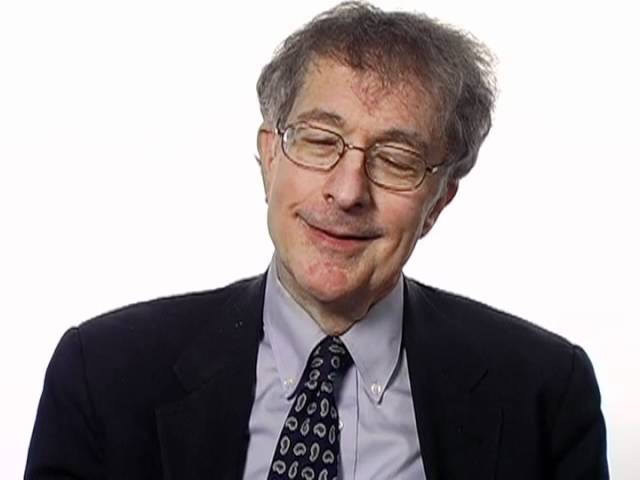
Peter Thiel on the 25-year history of economic bubbles Peter Thiel | Big Think
Posted
April 24, 2012
Views
1,041
Likes
22
Comments
1
Engagement
2.21%
April 24, 2012
1,041
22
1
2.21%
Every word spoken in this episode is indexed. Type any phrase to jump straight to the moment it was said.
Type any word or phrase that may have been spoken. Click a result to seek the player to that exact moment.
Try a name, a topic, or a quoted line
Episode Timeline
Every episode in order around the one you’re watching — click any card and the page flips straight to it.
 1:39Now Playing
Peter Thiel on the 25-year history of economic bubbles
New videos DAILY
Join Big Think Edge for exclusive videos
----------------------------------------------------------------------------------
Peter Thiel provides full context for the current economic crisis.
----------------------------------------------------------------------------------
Peter Thiel:
Peter Thiel is an American entrepreneur, hedge fund manager and venture capitalist. He is Clarium’s President and the Chairman of the firm’s investment committee, which oversees the firm’s research, investment, and trading strategies. Before starting Clarium, Peter served as Chairman and CEO of PayPal, an Internet company he co-founded in December 1998 and was acquired by eBay for $1.5 billion in October 2002.
Prior to founding PayPal, Peter ran Thiel Capital Management , the predecessor to Clarium, which started with $1 million under management in 1996. Peter began his financial career as a derivatives trader at CS Financial Products, after practicing securities law at Sullivan & Cromwell.
In addition to managing Clarium, Peter is active in a variety of philanthropic and educational pursuits; he sits on the Board of Directors of the Pacific Research Institute, the Board of Visitors of Stanford Law School, and is an adviser to the Singularity Institute for Artificial Intelligence. Peter received a BA in Philosophy from Stanford University and a JD from Stanford Law School. He is self-described libertarian and a minority investor in Big Think.
----------------------------------------------------------------------------------
TRANSCRIPT:
Peter Thiel: If you want to frame it very precisely, why have we had 25 or 30 years of one bubble of extraordinary proportions after another, starting with Japan in the late 1980s? You had South Asia in the mid ‘90s. You had the tech boom in the late ‘90s, and, of course, three incredible overlapping bubbles, housing which peaked in Q2 of ’06, finance and financial leverage that peaked in Q2 of ’07, and then, arguably, emerging markets which I believe is an equally serious bubble that basically came to an end in late 2007 and early 2008. One of the questions we should ask is why have there been so many bubbles? And I think the events of the last two months perhaps will lessen the appeal of the conventional answer to this, which for the last 20 years has been that one cannot talk about bubbles, that it’s not coherent to talk about them. To paraphrase Alan Greenspan, the bigger a bubble it is, the harder it is to see, so there may be lots of little bubbles but we can never see a big bubble, which is of course, spatially, a very odd metaphor, since one would think that the bigger something is, the easier it is to see. I think the question of the systematic distortions is once again going to become a real question in a way that it has not been for a very long time.
Sentinel Indexing in Progress
Metadata and chapters are available. Claim extraction for this episode is pending.
All video content is delivered via YouTube embedded players in accordance with the YouTube Terms of Service. Sentinel provides research tools that promote discovery and accountability across political media.