Big Think
@bigthink·8.8M subscribers·10.1K videos
Awakening the Food Giant Peter Brabeck | Big Think
Posted
April 24, 2012
Views
446
Likes
2
Comments
2
Engagement
0.90%
April 24, 2012
446
2
2
0.90%
Every word spoken in this episode is indexed. Type any phrase to jump straight to the moment it was said.
Type any word or phrase that may have been spoken. Click a result to seek the player to that exact moment.
Try a name, a topic, or a quoted line
Episode Timeline
Every episode in order around the one you’re watching — click any card and the page flips straight to it.
 8:16Now Playing
Awakening the Food Giant
New videos DAILY
Join Big Think Edge for exclusive videos
----------------------------------------------------------------------------------
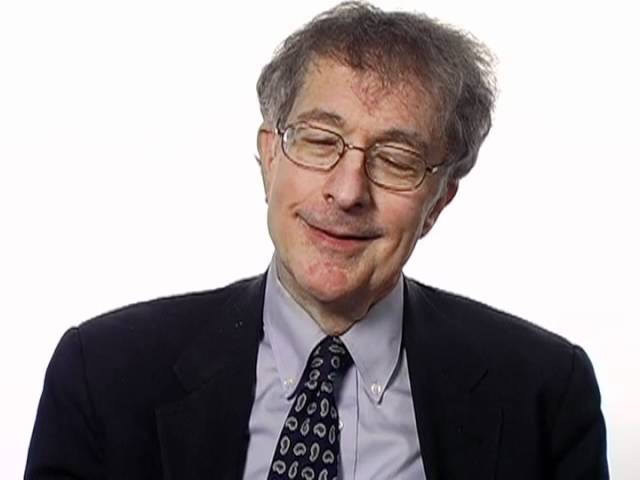
Peter Brabeck, Chairman of Nestlé, reflects upon the evolution of the company and its culture, and how he came to spend his career there.
----------------------------------------------------------------------------------
Peter Brabeck:
Peter Brabeck assumed the top spot at Nestlé in 2008, after overseeing its strategic transformation into the world's foremost nutrition company. Since joining Nestlé in 1968, he has been in leadership positions in multiple countries, including Chile, Ecuador, and Switzerland. Since 1987, he has been based at Nestle's headquarters in Vevey. Mr. Brabeck is the Chairman of the board of directors of Nestle (since 2005). From 1997 to 2008, he was also the CEO of Nestle. Mr. Brabeck-Letmathe is a member of the boards of directors of L'Oreal SA, Paris (since 1997), and Roche Holding SA, Basel (since 2000). He is also a member of the Foundation Board of the World Economic Forum and a member of the European Round Table of Industrialists.
----------------------------------------------------------------------------------
TRANSCRIPT:
Topic: Looking back
Peter Brabeck: I was born in an Austrian city that was one of the heaviest bombed during the Second World War. My first memories are of a city that had been burned down and that there was basically no house standing. But at the same time there was a magnificent surrounding of lakes and mountains. My parents, since I was able to walk, took me out to the mountains and at two and a half years I was standing on a pair of skis. Since then I have not stopped skiing and I have not stopped climbing mountains.
It was somehow this contrast between a broken down city and the perfect nature, which would somehow form to certainly part of my character, no doubt about it. The other thing was that it was a time where nothing could be worse, only things could be better. Therefore, there was an embedded optimism in the people in general. Everybody was optimistic; everybody was thinking that tomorrow will be better than it is today. I think that's another part that has certainly formed my character. I’m very optimistic about things in life and I always look forward to see how you find solution to problems.
Question: How did you end up at Nestlé?
Peter Brabeck: The beginning was very agonistic if you want. I was just coming back from the first Austrian Hindu Kush expedition where we tried to climb these high mountains in Alpine style, which was at that time quite revolutionary. Coming back, I had to confront reality that I needed to work and that I had to make my own living. On the other hand, I really wanted to continue to be able to climb mountains and I knew that Latin America would be one place where I combine both things. So I presented myself to multi-national companies and I always said, “Is there any possibility to go to Latin America one day?” Until I came to this ice cream and frozen food company, which was called Findus.
As I said, I didn't know it belonged to Nestlé. It happened that I also spoke Swedish. Findus was a Swedish company. And my question was answered positively in the sense that it was said, “Look. We engage here in Austria but if you really do very, very well there might be a possibility for you somewhere in Latin America.” That's why I started with Nestlé and that's how it all came about.
Question: How has Nestlé changed through the years?
Peter Brabeck: I started to mention that in the sixties, of course '68, you know very well what the public opinion was. From a political issue, it was the area of socialism, it was the area of anti-capitalism, it was the area of against multi-national companies which then led to policy-making that said that the future would be joint ventures. In many parts of the world, you were not allowed to have a 100 percent foreign owned company if you wanted to be in the food or if you wanted to be in the retail sector.
State intervention was extremely important. Import substitution was very important, so if you wanted to sell something, you had to produce locally. You were not supposed to import. The usage of local raw materials and so on and so on. So it was a very heavily state intervened society at that time.
Like in most everything, things change. In Latin America the biggest change factor was Pinochet who really introduced a more open society, a freer economy. With this fantastic economic success of his regime, many, many other Latin American countries followed afterwards, opened up their markets, freed the economy, and suddenly the state intervention became much less.
Read the full transcript at
Sentinel Indexing in Progress
Metadata and chapters are available. Claim extraction for this episode is pending.
All video content is delivered via YouTube embedded players in accordance with the YouTube Terms of Service. Sentinel provides research tools that promote discovery and accountability across political media.