Big Think
@bigthink·8.8M subscribers·10.1K videos
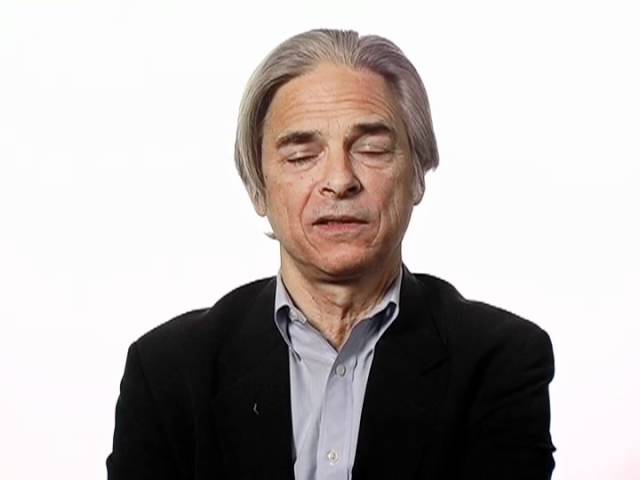
Big Think Interview With Regina Herzlinger | Big Think
Posted
April 24, 2012
Views
2,524
Likes
12
Comments
1
Engagement
0.52%
April 24, 2012
2,524
12
1
0.52%
Every word spoken in this episode is indexed. Type any phrase to jump straight to the moment it was said.
Type any word or phrase that may have been spoken. Click a result to seek the player to that exact moment.
Try a name, a topic, or a quoted line
See what was published immediately before and after this episode.
 2:01
2:01 3:04
3:04 9:52Now Playing
Big Think Interview With Regina Herzlinger
New videos DAILY
Join Big Think Edge for exclusive videos
----------------------------------------------------------------------------------
A conversation with the Nancy R. McPherson Professor of Business at the Harvard Business School.
----------------------------------------------------------------------------------
Regina E. Herzlinger:
Regina E. Herzlinger is the Nancy R. McPherson Professor of Business Administration Chair at the Harvard Business School. She was the first woman to be tenured and chaired at Harvard Business School and the first to serve on a number of corporate boards. She is widely recognized for her innovative research in health care, including her early predictions of the unraveling of managed care and the rise of consumer-driven health care and health care focused factories, two terms that she coined.
Her book, Who Killed Health Care? (NY: McGraw-Hill, 2007), was selected by the U.S. Chamber of Commerce as one of the ten books that changed the debate in 2008.
Her book, Consumer-Driven Health Care: Implications for Providers, Payers, and Policymakers (San Francisco: Jossey-Bass 2004) received the 2004 American Journal of Nursing Book of the Year award for History and Public Policy.
She has won the Consumers’ for Health Care Choices Pioneer in Health Economics award, the American College of Heatlhcare Executives’ Hamilton Book of the Year award twice, the Healthcare Financial Management Association’s Board f Directors award, and Management College of Physician Executive. Modern Healthcare’s readers regularly selected her as among the “100 Most Powerful People in Healthcare” and Managed Healthcare named her one of health care’s top ten thinkers. In recognition of her work in nonprofit accounting and control, she was named the first Chartered Institute of Management Accountants Visiting Professor at the University of Edinburgh. In addition, she has delivered many keynote addresses at annual meetings of large health care and business groups and been selected as one of the outstanding instructors of the Harvard Business School MBA Program.
She has served on the Scientific Advisory Group to the U.S. Secretary of the Air Force and as a board member of many private and publicly-traded firms, mostly in the consumer-driven health care space, often as chair of the Governance and Audit subcommittees.
----------------------------------------------------------------------------------
TRANSCRIPT:
Regina Herzlinger: I’m Regina Herzlinger. I’m the Nancy R. McPherson Professor of Business at the Harvard Business School.
Question: How can we reduce health care costs?
Regina Herzlinger: Health care is a hugely inefficient industry.
McKinsey analyzed the American health care system versus health care systems in other countries, and it came up with the figure that there is about half trillion dollars of, I would put it, waste, in the US health care system.
The biggest source of waste is the way we treat people with chronic diseases like diabetes, aids, heart disease, cancer, people who have chronic disabilities like bad backs. We treat them in a very fragmented way.
We have no one organization that is responsible for everything that the person with diabetes has, everything that the person with AIDS needs.
These people have tremendously complicated needs. Their diseases are multifactorial and they manifest themselves in many different ways.
What we need is a health care system that’s organized around the needs of the patient for total care for their diseases, total care for their disabilities. What we have is a health care system that’s organized by inputs, doctors, hospitals, nursing homes.
Each one of these inputs, each one of these providers what did they want? Well, they’re human. What they want is they want to make sure that they maximize their share of their pie. Maximizing their share of the pie is not the same as doing what’s best for that patient.
Question: In what way should health care be focused on outcomes?
Regina Herzlinger: What do we know about outcomes in health care? Well let’s say you needed a mastectomy. How much would you know about the surgeon who’s going to perform that mastectomy on you? About her mortality rates, how many people like you died when they got this surgery? About her morbidity rates? How many people became infirm? How many people got a deadly clot? How many people had a sponge left inside their body? How many people got an infection that they absolutely could not check? How many people were readmitted 30 days, 60 days, 90 days to keep #### preparing what’s going wrong with that surgery? Do you know where you could find that information? I don’t either.
Clearly what we need is much more transparency in health care.
Read the full transcript at
Sentinel Indexing in Progress
Metadata and chapters are available. Claim extraction for this episode is pending.
All video content is delivered via YouTube embedded players in accordance with the YouTube Terms of Service. Sentinel provides research tools that promote discovery and accountability across political media.