Big Think
@bigthink·8.8M subscribers·10.1K videos
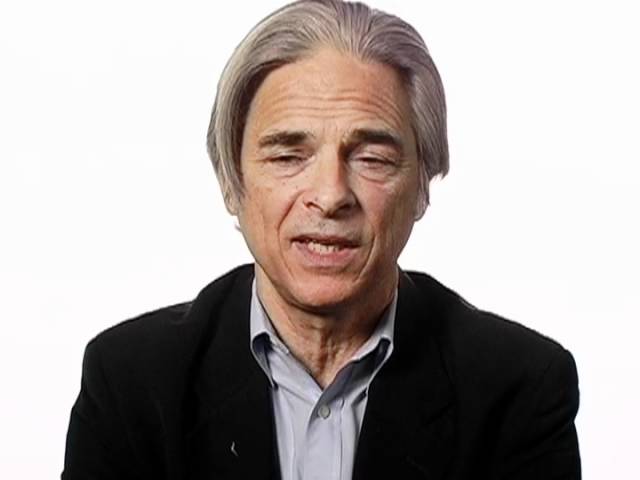
Dale Jamieson Gets Personal | Big Think
Posted
April 24, 2012
Views
188
April 24, 2012
188
Every word spoken in this episode is indexed. Type any phrase to jump straight to the moment it was said.
Type any word or phrase that may have been spoken. Click a result to seek the player to that exact moment.
Try a name, a topic, or a quoted line
See what was published immediately before and after this episode.
 2:01
2:01 3:04
3:04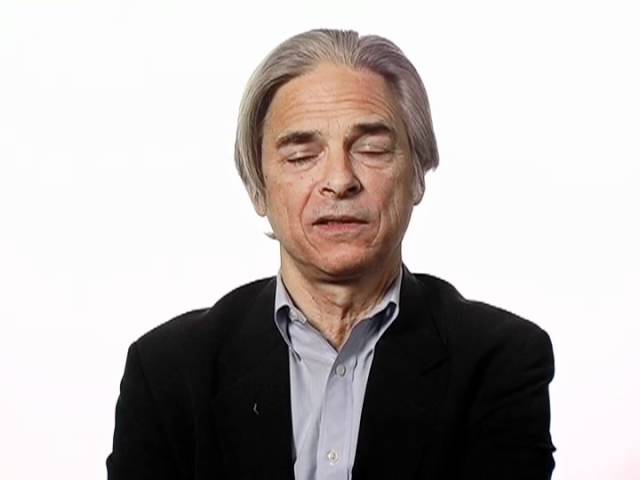 3:24Now Playing
Dale Jamieson Gets Personal
New videos DAILY
Join Big Think Edge for exclusive videos
----------------------------------------------------------------------------------
The professor on Grizzly Man, moral sincerity and the good life.
----------------------------------------------------------------------------------
Dale Jamieson:
Dale Jamieson joined the NYU faculty in Spring, 2004, from Carleton rnCollege, where he was Henry R. Luce Professor in Human Dimensions of rnGlobal Change. Previously he was Professor of Philosophy at the rnUniversity of Colorado, Boulder, where he was the only faculty member torn have won both the Dean's award for research in the social sciences and rnthe Chancellor's award for research in the humanities. He has also heldrn visiting positions at Cornell, Stanford, Princeton, Oxford and Monash. rn
rnProfessor Jamieson's most recent book is Morality’s Progress: Essays rnon Humans, Other Animals, and the Rest of Nature (Oxford, 2002). Hern is also the editor or co-editor of seven books, most recently A rnCompanion to Environmental Philosophy (Blackwell, 2001), and Singerrn and his Critics (Blackwell, 1999), named by Choice as one ofrn the outstanding academic books of 1999. He has also published more thanrn eighty articles and book chapters. His research has been funded by thern Ethics and Values Studies Program of the National Science Foundation, rnthe US Environmental Protection Agency, the National Endowment for the rnHumanities, and the Office of Global Programs in the National rnAtmospheric and Aeronautics Administration. He is on the editorial boardrn of such journals as Environmental Ethics; Environmental rnValues; Science, Techology and Human Values; Science and rnEngineering Ethics; the Journal of Applied Animal Welfare; rnand The Journal of Agricultural and Environmental Ethics. rnrn
----------------------------------------------------------------------------------
TRANSCRIPT:
Question: What did you think of Grizzly Man?
Dale Jamieson: Well, "Grizzly Man" is a really interesting film at multiple levels, I mean. It's first of all a film about Treadwell, who himself is an extremely interesting person who has several different layers and levels of views in his relations to animals and to nature but then it's also a film about Werner Herzog who has his own take, not just on Treadwell, but his own views about nature and about animals. Now Treadwell, on the one hand, is a remarkable person informing the relationships that he did form with grizzly bears. Ecologists and ethnologists will spend decades in the field and really not develop relationships that are as strong and actually as informative as the relationships that Treadwell formed. At the same time, Treadwell, right? It's Treadwell, Treadwell is really one of us in the sense that he's a normal person who is projecting onto the animals, all of his own desires, his failures, his successes, who he wants to be. And so there's a way in which Treadwell doesn't really see the animals, he sees himself as reflected in the animals and that's part of what makes the film interesting. What really makes it interesting is both of those things are going on in Treadwell, both he has a real connection to these animals of the very profound kind and also he's using the animals to see a reflection of himself in the eye of the bear.
Question: Do you obey all the moral conclusions you have reached?
Dale Jamieson: I am very far from being the sort of person I think that I like to be, in many ways. Probably the thing that I do that is the least defensible is I fly too much in airplanes and there will come a time, I suppose, when we'll feel the need to fly less than we do and still feel as though we can accomplish the things that we can accomplish. There'll come a time when airplanes are much more efficient when it comes to producing lower levels of greenhouse gas emissions, there'll come a time when we'll be able to offset those emissions much more effectively than we do now. But alas at the moment, flying airplanes is really one of the least defensible things that we do and it's one of the things that I indulge in quite frequently, alas.
Question: What is the measure of a good life?
Dale Jamieson: Well, one measure of a good life, I think, is to be engaged in projects that one thinks are meaningful and worthwhile. So I would put the emphasis of a good life on activity, on the walk rather than the destination, and I think that most of the things that any of us do that are really valuable and really important are projects that we really shouldn't expect to be completed in our lifetime because if they could completed in our lifetime, they probably wouldn't be so important that we should devote our lives to them.
Sentinel Indexing in Progress
Metadata and chapters are available. Claim extraction for this episode is pending.
All video content is delivered via YouTube embedded players in accordance with the YouTube Terms of Service. Sentinel provides research tools that promote discovery and accountability across political media.