Big Think
@bigthink·8.8M subscribers·10.1K videos
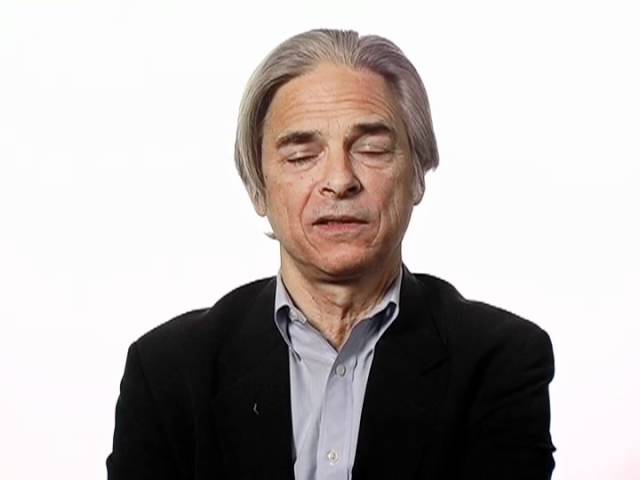
Big Think Interview With Ziggy Marley | Big Think
Posted
April 24, 2012
Views
63,702
Likes
721
Comments
87
Engagement
1.27%
April 24, 2012
63,702
721
87
1.27%
Every word spoken in this episode is indexed. Type any phrase to jump straight to the moment it was said.
Type any word or phrase that may have been spoken. Click a result to seek the player to that exact moment.
Try a name, a topic, or a quoted line
See what was published immediately before and after this episode.
 2:01
2:01 3:04
3:04 33:51Now Playing
Big Think Interview With Ziggy Marley
New videos DAILY
Join Big Think Edge for exclusive videos
----------------------------------------------------------------------------------
A conversation with musician and son of Bob Marley.
----------------------------------------------------------------------------------
ZIGGY MARLEY:
Ziggy Marley is a four-time Grammy Award-winning musician, philanthropist, and founder of the independent record label, Tuff Gong Worldwide. Known for his international work with children, Ziggy is the founder of U.R.G.E. (Unlimited Resources Giving Enlightenment), a designer for the Fashion Against AIDS Campaign and a supporter of Little Kids Rock. When not on tour, he divides his time between California, the Bahamas and Jamaica.
----------------------------------------------------------------------------------
TRANSCRIPT:
Question: What is Jamaica like today?
Ziggy Marley: Well, Jamaica right now, it’s… the politics don’t play such an important part in terms of violence anymore, you know, it’s not so much about the politics. I think now it’s more about, you know, different gangs, you know, whatever.
People just try to make some money and that’s where the violence comes in. But otherwise on that, I left Jamaica a little bit and I went back home and I keep going back. Still the vibe in Jamaica is a vibe that can’t beat still, you know what I’m saying? Especially in the country, you know? In the city, not so much but once you leave the city, there’s something there that’s nowhere else, you know?
Question: How has the country changed?
Ziggy Marley: It’s different, it’s much different. We have a lot more outside influence in Jamaica now in terms of cable TV and, you know, the different types of… you know, the Burger Kings and the McDonald’s and stuff like that. So the culture is kind of diluted and I believe that a lot of the traditions have been lost. When I was growing up, there were a lot of traditional events that we would see or take part in, now, it’s much less.
You know, and us… so when I was growing up with my father, the consciousness and there was a movement for change, there was a rebellious nature but rebellious in a positive way, but now it’s a rebellious nature but in a kind of negative way. But I think, it’s the same with the younger generation, I see that now all the world, you know? The kids are not as disciplined, not as respectful of things, you know, it’s just… the way the world is changing and what the young people are looking up to, you know, they’re looking up to the materialistic, the bling and the blang and all that type of stuff, it’s happening everywhere so Jamaica is no different, you know what? Again, I say, there’s still greatness there in Jamaica that you know the vibe… there’s something there that’s still great, that those things will never overshadow, the negative will never overshadow the positive things of Jamaica.
Question: How do you communicate Jamaica to your listeners?
Ziggy Marley: I mean, I do have ideas to kind of find some way to keep the younger generation in tuned with their past in Jamaica ‘cause as a musician, there’s something on my mind that I want the younger youths to know about, the generation of musicians that were before even me. And somewhat… they don’t… I’m telling you right now, they don’t even know some of the greats who led the way. I mean, you know, my father is a popular icon and they know him but there are others that who’s in this generation that I don’t think they even understand who they are and where the music is coming from. So that’s another… that’s another kind of… another purpose that I would like to get involved with… involved with making music.
It’s had nothing to do with that on this record, it’s a children’s record, you know, it’s called “Family Time.” There’s a song on it that I did called “Hold 'Em Joe” which was the first song I ever did on stage and it was a part of what I was telling your before, it was part of our cultural event where we learned Jamaican folk songs and I remember that this is the first song I ever sung so… and it was a… it’s a song about a donkey and stuff like that so I think it was appropriate for a kid’s record. But it’s something like that that is missing and I would like to do more to… so I can keep the culture and let the kids know the history and make the music alive, you know?
Question: What was it like working with Paul Simon?
Ziggy Marley: Yeah, with Paul, I didn’t… we weren’t in the studio together but it was kind of unexpected in the way that he got involved in the record ‘cause I wasn’t thinking of him, I wasn’t… I wasn’t even thinking that it was possible, it’s Paul Simon, you know? His… I love him but I think he was way above my, you know, whatever, my grade or whatever you want to call it. So I wasn’t thinking of...
Read the full transcript at
Sentinel Indexing in Progress
Metadata and chapters are available. Claim extraction for this episode is pending.
All video content is delivered via YouTube embedded players in accordance with the YouTube Terms of Service. Sentinel provides research tools that promote discovery and accountability across political media.