Big Think
@bigthink·8.8M subscribers·10.1K videos
Fixing How We Learn | Big Think
Posted
April 24, 2012
Views
188
Likes
2
Engagement
1.06%
April 24, 2012
188
2
1.06%
Every word spoken in this episode is indexed. Type any phrase to jump straight to the moment it was said.
Type any word or phrase that may have been spoken. Click a result to seek the player to that exact moment.
Try a name, a topic, or a quoted line
Episode Timeline
Every episode in order around the one you’re watching — click any card and the page flips straight to it.
 4:41Now Playing
Fixing How We Learn
New videos DAILY
Join Big Think Edge for exclusive videos
----------------------------------------------------------------------------------
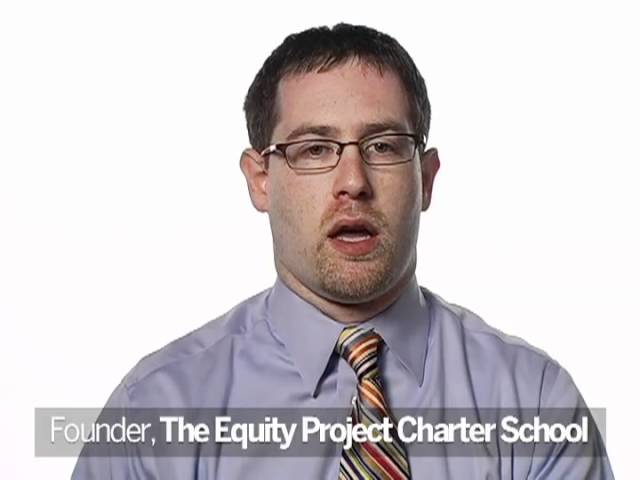
We asked Zeke Vanderhoek, founder of a revolutionary public charter school in Manhattan, how he would reform the U.S.
----------------------------------------------------------------------------------
Zeke Vanderhoek:
Zeke is the founder and chairman of Manhattan GMAT, a national GMAT test-preparation company. The company employs over 100 administrative and instructional staff, has classroom centers in 7 major US cities, while serving over 6000 students in 2008. Zeke began his educational career as a 6th and 8th grade teacher at I.S. 90, a public middle school in Washington Heights, New York City. Zeke has a B.A. from Yale University and a Masters in Philosophy & Education from Teachers College at Columbia University.
In January 2007, Zeke stepped down as CEO of Manhattan GMAT and began the process of founding The Equity Project (TEP) Charter School, a 480-seat public middle school which will serve at-risk student in the Washington Heights neighborhood of New York City. TEP was granted a 5-year charter by New York State in January 2008. In his spare time, Zeke plays piano and guitar and eats almond croissants at his local bakery. He currently lives in Harlem with his wife Stephanie and daughter Ella.
----------------------------------------------------------------------------------
TRANSCRIPT:
Topic: Reforming our schools
Zeke Vanderhoek: The two things that come to mind initially is I would invest a lot more in teachers and I would intensify schools to do so but the ultimate goal of expanding the talent pool. And the second, and obviously I’m biased because I’m running a charter school, is I think charter schools are phenomenal vehicles for innovation and right now there is sort of inequity in funding for charter schools. Charter schools which are public schools get less money than traditional public schools. In particular, they don’t get facilities, which is a huge barrier to growth. So those are the two things that I would do if somebody somehow put a crown on my head and said you can go do whatever you want in education.
Question: Why do charter schools work?
Zeke Vanderhoek: I think charter schools work and in large measure the reason that they work is that when they don’t work they are allowed to be closed. So I think one of the great things about the charter school model is there is a mechanism for evaluating schools. The schools that are great continue. The schools that are not should be shut down. It’s very hard to do that in the traditional public system. There is no real mechanism for shutting down a traditional public school in a way that makes a lot of sense. I’m sure they are sort of restructuring those schools but that’s very different from shutting it now. So I think one of the reasons charter schools work is not that they are all successful but that there’s a mechanism for evaluating whether the school is successful. You know, there are phenomenal charter schools out there. There are a lot of charter management organizations that have had great results, keep achievement first on commons schools or three that come to mind. There are a lot of mom and pop charter schools out there that have been very, very successful. I don’t know because I don’t really believe anything I read until I walk into a school so I’m not the best person to say, “Oh, this is the best charter school and this is the charter school management organization.” But clearly, there are a lot of charter schools that are doing things that are right.
Question: What’s your take on standardized tests?
Zeke Vanderhoek: I think standardized tests have their place. I am sort of a moderate on this point. I think that one of the good things that they do is they can really help pinpoint when a school is really not being successful. A standardized test that test basic reading where half the kids in the school fail, that’s a huge problem and it exposes that problem and I think that’s a very important part of a standardized test. The flip side is a standardized test is not why we go to school and you know it’s limited in its uses. Schools are places that should be about much more than bubbling in answers to series of questions and I think any grade school that you walk into doesn’t have the feel of a standardized test exam factor and we all know what that feels like, the feel of a great classroom, the feel of excitement in the classroom. So, you know, the issue of standardized test again I think that they can expose problems better than they can sort of show
Read the full transcript at
Sentinel Indexing in Progress
Metadata and chapters are available. Claim extraction for this episode is pending.
All video content is delivered via YouTube embedded players in accordance with the YouTube Terms of Service. Sentinel provides research tools that promote discovery and accountability across political media.