Big Think
@bigthink·8.8M subscribers·10.1K videos
Can we trust the Internet to regulate itself? | Big Think
Posted
April 24, 2012
Views
285
Likes
10
Comments
1
Engagement
3.86%
April 24, 2012
285
10
1
3.86%
Every word spoken in this episode is indexed. Type any phrase to jump straight to the moment it was said.
Type any word or phrase that may have been spoken. Click a result to seek the player to that exact moment.
Try a name, a topic, or a quoted line
Episode Timeline
Every episode in order around the one you’re watching — click any card and the page flips straight to it.
 5:36Now Playing
Can we trust the Internet to regulate itself?
New videos DAILY
Join Big Think Edge for exclusive videos
----------------------------------------------------------------------------------
Lincoln put it well: are we capable of governing ourselves?
----------------------------------------------------------------------------------
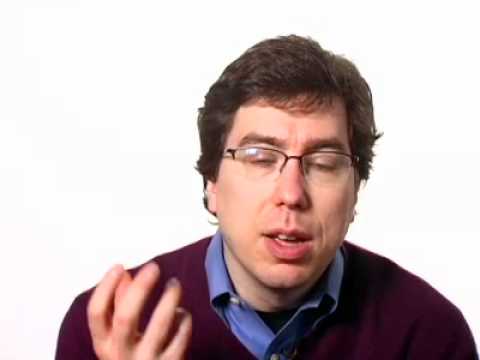
Jonathan Zittrain :
Jonathan Zittrain is a Professor of Law at Harvard Law School, Professor of Computer Science at the Harvard School of Engineering and Applied Sciences, Vice Dean for Library and Information Resources for the Harvard Law School Library, and Co-Founder of the Berkman Center for Internet & Society. Previously, he was the Chair in Internet Governance and Regulation at Oxford University and a principal of the Oxford Internet Institute. He was also a visiting professor at the New York University School of Law and Stanford Law School.
Zittrain’s research interests include battles for control of digital property and content, cryptography, electronic privacy, the roles of intermediaries within Internet architecture, and the useful and unobtrusive deployment of technology in education.
He is also the author of The Future of the Internet and How to Stop It, as well as co-editor of the books, Access Denied (MIT Press, 2008), Access Controlled (MIT Press, 2010), and Access Contested (MIT Press, 2011).
----------------------------------------------------------------------------------
TRANSCRIPT:
Question: Can we trust the Internet to regulate itself?
Jonathan Zittrain: Well, without getting overly dramatic, I think the fundamental question, posed by Abraham Lincoln in the Gettysburg Address-- the model of pithiness before there were boilerplate templates for speech writing, and phalanxes of speechwriters to use their word processors-- was, are we capable of governing ourselves? That's the question he was asking, not entirely sure of the answer. I think the internet is asking us that question too. I almost see it as a grid with four quadrants, so follow the bouncing ball along with me as I map it out. On the horizontal axis, you could imagine hierarchy on the one side, and polyarchy on the other. One system, or many competing systems. On the other axis, vertically, you have bottom up and top down, what I would also call generative and sterile. And you can park any number of technologies in any one of those four quadrants. The internet protocols, everybody basically has to follow. If you are on the internet and not using internet protocol, your bits aren't going anywhere. And in that sense, it's a hierarchy. It's on this side of the chart. But, it wasn't developed by a formal organization. Internet protocol, the fundamental unit of telecommunications in the 21st century, was not developed by any formal organization. It was not created by a government taskforce. It was made by something called the IETF, the internet engineering taskforce, an unincorporated group of engineers, informal, academics, government people, some business people moonlighting. And they got together and came up with some internet protocols. And in that sense, I say their enterprise fits into this quadrant, what you say is the bottom left. It's hierarchical, because we all have to basically sing that song if we're going to be on the internet, but it is bottom up. It's not that formal, and stiff as to how it will be developed and implemented. The rest of the internet that those protocols over here enable would be parked in this corner, because it's polyarchical. Once you're using internet protocol, if you're Jimbo, you can set up Wikipedia, and find. If you're Tim Berners-Lee, you can set up the web and invite other people to set up web servers, and invite another group of people to set up web clients, and we have the collective hallucination that it's the world wide web, which at the end of the day, it's just a bunch of computers serving up files that look like web pages, because they're singing the same song that Tim Berners-Lee invented. So in that sense, it's hierarchy, but it's just one of different protocols you could use here. When stuff goes south, in this quadrant, which is the polyarchical, bottom up quadrant, we have to figure out what to do. Somebody starts abusing the net....
Read the full transcript at
Sentinel Indexing in Progress
Metadata and chapters are available. Claim extraction for this episode is pending.
All video content is delivered via YouTube embedded players in accordance with the YouTube Terms of Service. Sentinel provides research tools that promote discovery and accountability across political media.