Big Think
@bigthink·8.8M subscribers·10.1K videos
Jonathan Zittrain Explores Internet Privacy | Big Think
Posted
April 24, 2012
Views
932
Likes
10
Engagement
1.07%
April 24, 2012
932
10
1.07%
Every word spoken in this episode is indexed. Type any phrase to jump straight to the moment it was said.
Type any word or phrase that may have been spoken. Click a result to seek the player to that exact moment.
Try a name, a topic, or a quoted line
Episode Timeline
Every episode in order around the one you’re watching — click any card and the page flips straight to it.
 7:20Now Playing
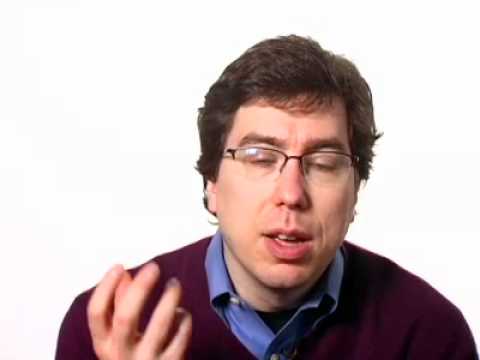
Jonathan Zittrain Explores Internet Privacy
New videos DAILY
Join Big Think Edge for exclusive videos
----------------------------------------------------------------------------------
Harvard Law Professor Jonathan Zittrain pulls back the digital curtain.
----------------------------------------------------------------------------------
Jonathan Zittrain:
Jonathan Zittrain is a Professor of Law at Harvard Law School, Professor of Computer Science at the Harvard School of Engineering and Applied Sciences, Vice Dean for Library and Information Resources for the Harvard Law School Library, and Co-Founder of the Berkman Center for Internet & Society. Previously, he was the Chair in Internet Governance and Regulation at Oxford University and a principal of the Oxford Internet Institute. He was also a visiting professor at the New York University School of Law and Stanford Law School.
Zittrain’s research interests include battles for control of digital property and content, cryptography, electronic privacy, the roles of intermediaries within Internet architecture, and the useful and unobtrusive deployment of technology in education.
He is also the author of The Future of the Internet and How to Stop It, as well as co-editor of the books, Access Denied (MIT Press, 2008), Access Controlled (MIT Press, 2010), and Access Contested (MIT Press, 2011).
----------------------------------------------------------------------------------
TRANSCRIPT:
Question: Is privacy an illusion?
Jonathan Zittrain: I devote an entire chapter of the book, right before I end the book, to privacy. And I do think that privacy is in pretty great danger. As many others have observed, we tend to get used to it. When the first people had to walk through airport metal detectors, it was the most intrusive thing you can imagine. And now we find ourselves half disrobing and not even giving it a second thought as we walk through. What strikes me most though, in 2008, are the ways in which the invasions of privacy around the corner are not coming from the usual suspects. They're not coming from big corporations. They're not coming from government, even though those are the ones we're used to, respectively, gathering information about us so they can target ads or give us credit, or government wanting to figure out who has pot in the car or something. Instead, I see the threats coming from our fellow citizens, who have very cheap cameras in their mobile phones, or video recorders, or microphones. Teaching a class now, I have no idea if the class, as it is happening, is being streamed onto the internet for people to watch. It could easily happen, thanks to the wonderful infrastructure we have of really cheap sensors, hooked up to great networks, with fast processors. Now Posener, as I understand it, and as I've read from him, he basically sees privacy as a sort of irrational desire anyway. I suppose if people have it, he might end up respecting it. But from what I've read, he has tended to favor the government having pretty good license to snoop, particularly in anti-terrorism matters. And if it started to abuse that power, surely there'd be a whistle blower, and we'd all find out, and then there'd be a Watergate. I'm not nearly as sanguine as he that that would happen so nicely every time a government is empowered to snoop. But more important,
I think again, the risks are coming from the general public, and the database of pictures generated by the world's tourists, appearing in Flicker or Facebook. Facebook, I think, has over 2½ billion photos in it right now. Those will soon be sorted by exact location, down to the GPS recording, by timestamp and by who's in the photograph. Facial recognition technologies will make it much easier to say who's in the photo, even if you don't know, as the person taking it. And at that point, I can start asking questions like, "Where was John Smith over the past two weeks? Where did tourists manage to catch him on film?" or, "Show me everybody going in and out of this Planned Parenthood clinic as the photos reveal it." That's a level of privacy invasion that I don’t think we've hit yet, and that causes trouble. In Chapter 9, I try to say more about how we might take the sting out of it.
Read the full transcript at
Sentinel Indexing in Progress
Metadata and chapters are available. Claim extraction for this episode is pending.
All video content is delivered via YouTube embedded players in accordance with the YouTube Terms of Service. Sentinel provides research tools that promote discovery and accountability across political media.