Big Think
@bigthink·8.8M subscribers·10.1K videos
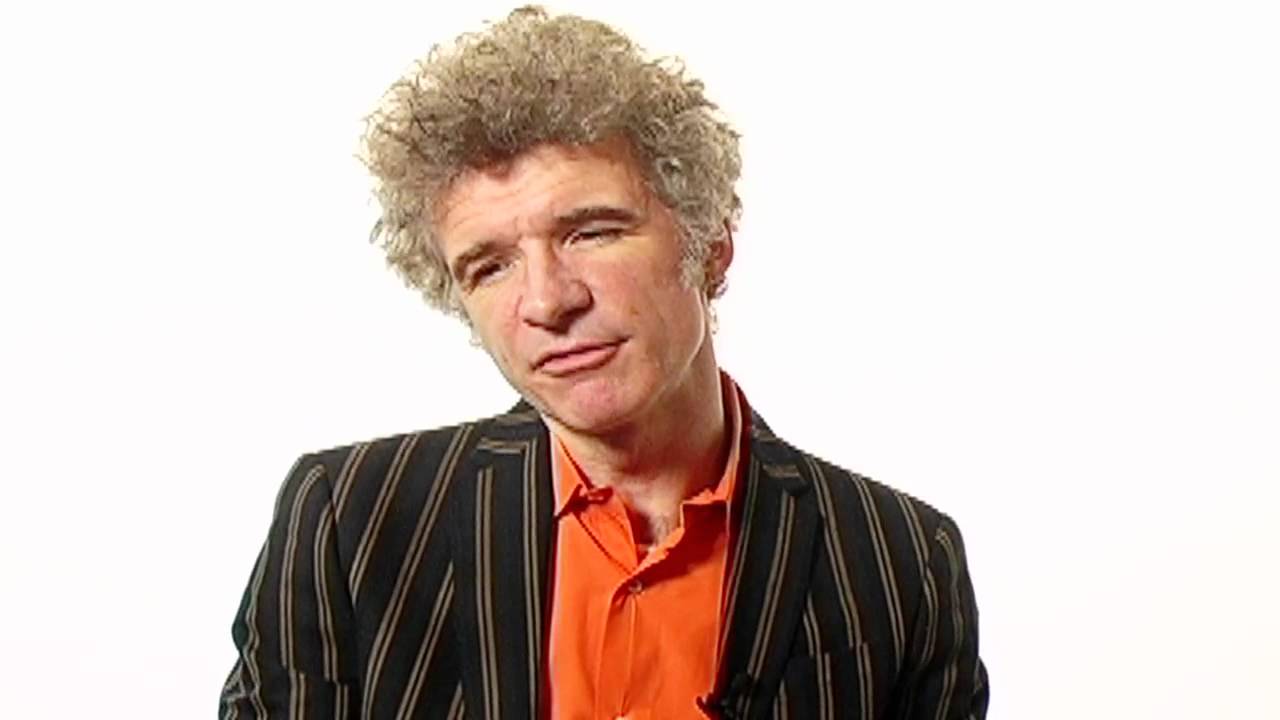
Career Switch: What Can You Do After Heading a Rock Band? | Dan Zanes | Big Think
Posted
April 24, 2012
Views
160
Likes
1
Engagement
0.63%
April 24, 2012
160
1
0.63%
Every word spoken in this episode is indexed. Type any phrase to jump straight to the moment it was said.
Type any word or phrase that may have been spoken. Click a result to seek the player to that exact moment.
Try a name, a topic, or a quoted line
 8:01Now Playing
Career Switch: What Can You Do After Heading a Rock Band?
New videos DAILY
Join Big Think Edge for exclusive videos
----------------------------------------------------------------------------------
What happens when you leave an 80s rock band? Go Solo? Self Produce? Make family music? Dan Zanes outlines the path toward redefinition.
----------------------------------------------------------------------------------
Dan Zanes:
Dan Zanes is a Grammy-winning family musician. A former member of the band the The Del Fuegos, he has gone on to redefine children's music with an "unsanitized, unpasteurized, [and] organically even" mode of composition. In 2009, he won the Independent Music Award, and has collaborated with Lou Reed, Sheryl Crow, Suzanne Vega and numerous others on his albums. He lives in Brooklyn.
----------------------------------------------------------------------------------
TRANSCRIPT:
Question: Can you explain your transition into children’s music?
Dan Zanes: What happened was when my daughter was born and I went looking for this sound I had in my head I had just… I was working on a solo record. It was my first solo record after The Del Fuegos and I… And it was… You know it was the adult themes, old girlfriends and drinking and I put that out right at the… And while I was doing that you know I hadn’t been able to find this all ages music that I was looking for in the Tower Records, so I thought I would make it myself one fall and have it be… I would make a cassette that I could give out to families in the neighborhood just as a holiday present, not holiday music, but it would be just handmade music for families and so I made this cassette and gave it out to everybody and what happened was no one cared about my solo record, but everybody wanted more copies of this cassette that I had called… I called it Rocket Ship Beach and I really had fun making it. I made it in three weeks and I just had a reel-to-reel 8 track and it just turned out to be… And I thought… And we were mostly updating folk songs and bringing in friends from the neighborhood who included West Indian babysitters that I had met. Sheryl Crow lived around the corner. Suzanne Vega came in to do a tune. Some guys that I had met we had a string band and we played and so it was just that. It was just real homemade community fun and people were way more interested in this cassette than they were in my expensive solo CD and as much as I liked it I felt like this… I felt like a useful member of society for the first time in a long time because making pop music for me was always a very self centered activity. It was always you know what’s in it for Dan and I felt like making this family music I had possibilities where I could actually… I had something to give other people and that I could be… You know I could be the guy who shows up with the guitar or the banjo and gets people singing along and you know I could… Somehow when you can do that you get invited to a lot more parties and that was you know that wasn’t lost on me and I decided that I would stop pop music and I would just move into family music and totally devote my time and energy to it and it was… It wasn’t any… It wasn’t part of my big master plan, but it was certainly when it kind of revealed itself deciding to go into it was by far the best decision that I’ve made in my adult life.
Question: Would you call this music educational?
Dan Zanes: I don’t know if I think of this as being educational. The minute I hear someone else tell me that what they’re doing is educational I’m not… That’s when my interest level plummets, so I feel like in my heart I believe it is educational, but I would never say that because I’m an entertainer. I really am. I’m not and educator, but I do believe that for me my experience is that music is my window to the outside world and it always has been through my entire life and it still is. This is the beginning. For example, we made a CD called Nueva York and it’s all songs from different parts of Latin America and we collaborated with a lot of our Latino friends around here in New York and before beginning to make this CD my knowledge of the different parts of Latin American culture or the cultures of Latin America, my knowledge was so limited, but it was through the music and then of course immediately after that is food and then from there you know politics, geography, world view, you know everything else unfolds from that, so and I’ve always tried in making our CDs we’ve always tried to include the neighborhood as much as possible and I think that I always try and think…
Read the full transcript at
Sentinel Indexing in Progress
Metadata and chapters are available. Claim extraction for this episode is pending.
All video content is delivered via YouTube embedded players in accordance with the YouTube Terms of Service. Sentinel provides research tools that promote discovery and accountability across political media.