Big Think
@bigthink·8.8M subscribers·10.1K videos
Adam Smith's Non-Profit | Big Think
Posted
April 24, 2012
Views
193
Comments
1
Engagement
0.52%
April 24, 2012
193
1
0.52%
Every word spoken in this episode is indexed. Type any phrase to jump straight to the moment it was said.
Type any word or phrase that may have been spoken. Click a result to seek the player to that exact moment.
Try a name, a topic, or a quoted line
 4:31Now Playing
Adam Smith's Non-Profit
New videos DAILY
Join Big Think Edge for exclusive videos
----------------------------------------------------------------------------------
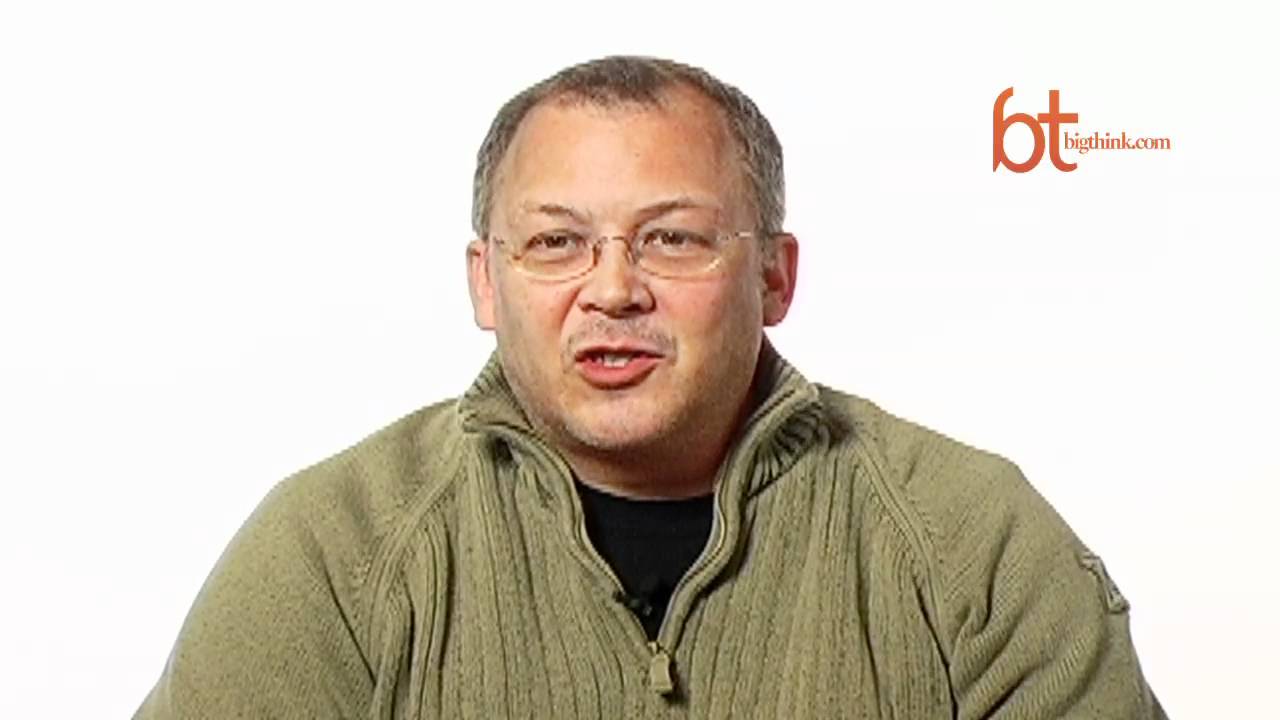
Though the father of modern capitalism is generally associated with the virtues of self-interest, he also possessed a deep moral concern for our responsibility to help others. According to the founder of Year Up, this second aspect of the free market system is finally taking hold, and its effects on society will be momentous.
----------------------------------------------------------------------------------
Gerald Chertavian:
Gerald Chertavian is the CEO and Founder of Year Up, a non-profit organization that provides intensive professional education to urban young adults. His organization was recently recognized by Fast Company and The Monitor Group as one of the top 25 organizations in the nation using business excellence to engineer social change. Prior to starting Year Up, Chertavian co-founded Conduit Communications and served as the head of marketing at Transnational Financial Services in London. He has been an active member of the Big Brother mentoring program since 1985, and was awarded New York’s outstanding member in 1989. He was also awarded the 2003 Social Entrepreneurship Award by the Manhattan Institute and the 2005 Freedom House Archie R. Williams, Jr. Technology Award. A graduate of Bowdoin College and Harvard Business School, Chertavian was born and raised in Lowell, MA.
----------------------------------------------------------------------------------
TRANSCRIPT:
Question: Is the sense of social responsibility increasing among your colleagues?
Gerald Chertavian: When I was at Harvard Business School back in 1990, there were probably eight people in the non-profit club. And I think we were looked at slightly askance by the folks because it wasn't the venture capital club or the finance club. Now today on campus, the largest single club at Harvard Business School is the social enterprise club. So in 20 years, or less than that, you have had a shift in something pretty fundamental in this country around, I think, young people wanting to take more responsibility for those around them, seeing the responsibility slightly more broadly defined than just motivated self-interest, and getting involved. So we have so many more young folks in our colleges, in our grad schools today, mentoring our students, volunteering, getting involved in service movements like AmeriCorps and Vista.
So I think the pendulum is certainly swinging to a direction where many young people are taking more responsibility for those around them and realizing that's not at odds with, you know, good old motivated self-interest and free-market capitalism. And in fact, you know, we all remember that Adam Smith wrote a book called The Wealth of Nations and talked about free markets and capitalism and why they were good ultimately for our society. He also wrote another book. He was talking about the theory of moral essentials. And what he said is, you can have a free market, and it's going to work best, but at the same time, at some point you have to realize that just getting more and more and more is actually not in society's best interest. So even Adam Smith, as our free-market economist would say, there's a concept of being responsible for others and wrote a book about that equally. I think we don't remember. He actually wrote a few books. One of them talked about moral essentials and the dangers of just seeing an accretive process without any sense of what's enough, or any sense of distribution that I have the opportunity how to help others. You know, that's equally part of keeping a very strong and well-functioning capitalist society in check.
Question: Is the rise in people heading into non-profits sustainable?
Gerald Chertavian: Certainly many, many more grad schools are offering loan forgiveness or a loan reduction for those going into the nonprofit sector, and I do think with the rise of social entrepreneurship, the rise of non-profits, hiring better and better people, growing more quickly, we are attracting incredible talent into this sector. And the reality is, people are getting paid more and more, so the gap between the nonprofit and private sector is shrinking. And certainly in the last ten years it's shrinking from when I started back in 2000. The other way I think about the pendulum is, I'm not a huge proponent of handouts, so I have not seen, with people who are able-bodied and able-minded, where handouts are producing good outcomes. And a sense of entitlement is a very destructive sentiment. And if you ever want to play the victim, you're not going to get ahead.
Read the full transcript at
Sentinel Indexing in Progress
Metadata and chapters are available. Claim extraction for this episode is pending.
All video content is delivered via YouTube embedded players in accordance with the YouTube Terms of Service. Sentinel provides research tools that promote discovery and accountability across political media.