Big Think
@bigthink·8.8M subscribers·10.1K videos
Dale Jamieson Defines Philosophy | Big Think
Posted
April 24, 2012
Views
1,110
Likes
10
Engagement
0.90%
April 24, 2012
1,110
10
0.90%
Every word spoken in this episode is indexed. Type any phrase to jump straight to the moment it was said.
Type any word or phrase that may have been spoken. Click a result to seek the player to that exact moment.
Try a name, a topic, or a quoted line
See what was published immediately before and after this episode.
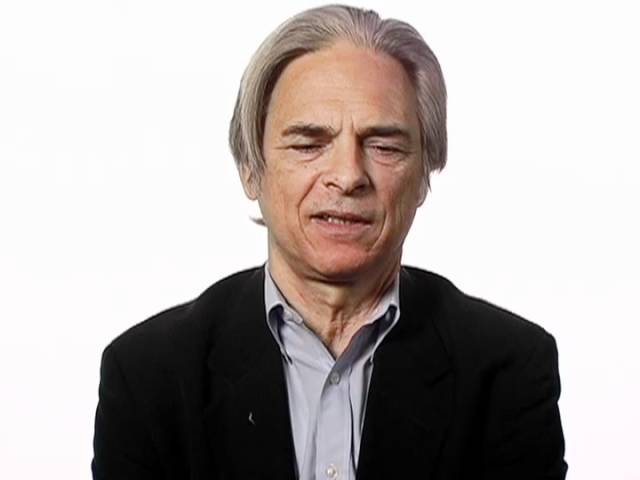 2:05Now Playing
Dale Jamieson Defines Philosophy
New videos DAILY
Join Big Think Edge for exclusive videos
----------------------------------------------------------------------------------
Philosophy is more about making good decisions than reading Immanuel Kant.
----------------------------------------------------------------------------------
Dale Jamieson:
Dale Jamieson joined the NYU faculty in Spring, 2004, from Carleton rnCollege, where he was Henry R. Luce Professor in Human Dimensions of rnGlobal Change. Previously he was Professor of Philosophy at the rnUniversity of Colorado, Boulder, where he was the only faculty member torn have won both the Dean's award for research in the social sciences and rnthe Chancellor's award for research in the humanities. He has also heldrn visiting positions at Cornell, Stanford, Princeton, Oxford and Monash. rn
rnProfessor Jamieson's most recent book is Morality’s Progress: Essays rnon Humans, Other Animals, and the Rest of Nature (Oxford, 2002). Hern is also the editor or co-editor of seven books, most recently A rnCompanion to Environmental Philosophy (Blackwell, 2001), and Singerrn and his Critics (Blackwell, 1999), named by Choice as one ofrn the outstanding academic books of 1999. He has also published more thanrn eighty articles and book chapters. His research has been funded by thern Ethics and Values Studies Program of the National Science Foundation, rnthe US Environmental Protection Agency, the National Endowment for the rnHumanities, and the Office of Global Programs in the National rnAtmospheric and Aeronautics Administration. He is on the editorial boardrn of such journals as Environmental Ethics; Environmental rnValues; Science, Techology and Human Values; Science and rnEngineering Ethics; the Journal of Applied Animal Welfare; rnand The Journal of Agricultural and Environmental Ethics. rnrn
----------------------------------------------------------------------------------
TRANSCRIPT:
Question: How does philosophy relate to our everyday lives?
Dale Jamieson: I think there's a popular misunderstanding about what ethics is and what philosophy is. The philosophers have actually done a lot to propagate, I mean, I think of philosophy as a process, I think it's better. I mean, philosophy is not a body of knowledge to impart to someone, that's why reading philosophy books isn't always the best way of learning philosophy. Philosophy is really more the process of rational engagement, rational reflection with a diversity of views and ideas and opinions and trying to sort of reason your way through to a more reflective position. I think if you look at it that way, philosophizing is to some extent some small way a part of almost everyone's lives although they don't recognize it as such and a lot of people are embarrassed about it.
Question: What is embarrassing about philosophy?
Dale Jamieson: Depending on people's family situations and what they do for a living and all of that, you know, in some parts of American society, the idea of asking questions is considered, in some way, a kind of disloyalty or a way of, you know, not really getting on with things in the way that we should be getting on with things. And I think we have to do more and not only to say that that is important, that that kind of dialogue is central really to even somewhat argue to the idea of America, the traditional idea of America. But really, that's what philosophy is, I mean, philosophy isn't reading Emmanuel Kant. Philosophy is about thinking hard about what the right thing to do is in a situation and approaching that kind of question in an open-minded and open-hearted way, receptive to a broad range of considerations and interests of other people and other things.
Sentinel Indexing in Progress
Metadata and chapters are available. Claim extraction for this episode is pending.
All video content is delivered via YouTube embedded players in accordance with the YouTube Terms of Service. Sentinel provides research tools that promote discovery and accountability across political media.