Big Think
@bigthink·8.8M subscribers·10.1K videos
Medical Professor Without Borders | Big Think
Posted
April 24, 2012
Views
145
April 24, 2012
145
Every word spoken in this episode is indexed. Type any phrase to jump straight to the moment it was said.
Type any word or phrase that may have been spoken. Click a result to seek the player to that exact moment.
Try a name, a topic, or a quoted line
See what was published immediately before and after this episode.
 6:29Now Playing
Medical Professor Without Borders
New videos DAILY
Join Big Think Edge for exclusive videos
----------------------------------------------------------------------------------
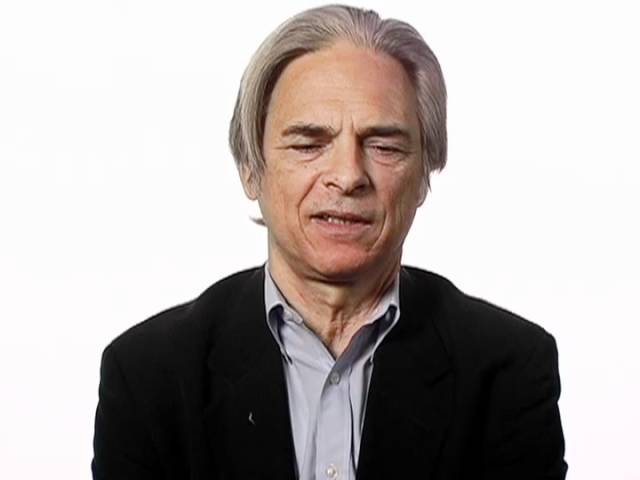
Dr. Ross Donaldson is a physician, teacher, and author who has worked in hospitals from Los Angeles to Iraq. In this video, he shares his most important medical insights from around the world.
----------------------------------------------------------------------------------
TRANSCRIPT:
Dr. Ross Donaldson: When you look at errors in medicine, this is a huge issue that we've begun to address, but really it's like having airplanes crash daily. People are not addressing it. This is something that we really need to look into.
Question: Does the U.S. need a greater focus on health outcomes?
Dr. Ross Donaldson: I certainly agree that outcomes are very low part of the focus of the American system, as it were. I think that's one of the main things that we need to do, moving forward, to improve things.
I spend half my time here in the States and half my time abroad, currently in Iraq, and when I'm here in the States, what I'm working on is quality assurance and trying to improve those outcomes in our hospitals. There's been a movement towards that lately with pay-to-performance and other things that have an outcome basis.
When you look at the health care system, especially from a European perspective, whenever they talk about the American system it's almost a joke to them. They put it in quotes--"as a system"--because, in fact, it's really not so much a system here as it is a conglomeration of interest. And those interests aren't really aligned to focus on outcomes as much as on other things.
A physician gets paid based on how many things they do, how many tests did you order, how many patients did you see. Actually, it really has no connection whatsoever with how did the patients do.
Question: What new technologies are improving outcomes?
Dr. Ross Donaldson: The electronic medical record really has the potential to be very beneficial for error reduction on several levels. One is that having the information from a patient from other hospitals, or even from your own hospital right there and readily available can really reduce the amount of errors you're making. You don't have to ask the patient again if they have an allergy because it's already there.
And the newer computer technology systems can actually prevent you from making an error. For example, if the patient has an allergy to a certain medication, and you prescribe a related medication, the computer might pop up a screen and say, "Hey are you sure you really want to do that?" You always have to have the physician able to work around that, because sometimes you do actually want to do that, but it's somebody asking you the question that can really reduce the errors in the system.
Question: How important is integrated medicine?
Dr. Ross Donaldson: I think the medical record potentially is going to help a lot with integrative care. But what's happened is that because we've a very low focus on primary health care, we've put a high focus on specialization, and what happens is that a patient comes in and they go to this specialist and that specialist, and if you don't have a person coordinating everything, you really can get in a lot of potential problems as a patient.
I think it's like having 12 chefs cooking something. Each one has his own thing that they're trying to do. What you really need to do, even if you have a bunch of people make parts of your meal, make one person being in charge in taking the overall care for the patient in mind. In our current health care system, we have dropped that ball, the primary health care push. I think the specializations are important, as is access to emergency care, but you really need somebody after you're done with the emergency or to coordinate with other things to look after the patient going forward.
Question: What have you learned about preventative care?
Dr. Ross Donaldson: I think preventive health care is a big and important push, especially for the American health care system. When we look at our rates of different indices compared to other countries, our vaccination rates and other things, a lot of those are reduced from what you would think they would be for a country with so much money. It's really that kind of preventative care that can save money at a later date. We tend to focus in America on the high technology afterward. We'll come up with some great drug to treat measles after you've had it. We have cheap vaccines to treat all these disease. It's on the public health level that we're really lacking here in the States.
Question: Are mobile devices enabling safer global expeditions?
Read the full transcript at
Sentinel Indexing in Progress
Metadata and chapters are available. Claim extraction for this episode is pending.
All video content is delivered via YouTube embedded players in accordance with the YouTube Terms of Service. Sentinel provides research tools that promote discovery and accountability across political media.