Big Think
@bigthink·8.8M subscribers·10.1K videos
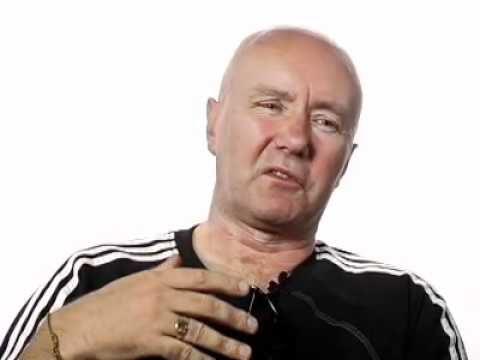
Danny Strong on the State of American Screenwriting | Danny Strong | Big Think
Posted
April 24, 2012
Views
1,456
Likes
16
Comments
3
Engagement
1.30%
April 24, 2012
1,456
16
3
1.30%
Every word spoken in this episode is indexed. Type any phrase to jump straight to the moment it was said.
Type any word or phrase that may have been spoken. Click a result to seek the player to that exact moment.
Try a name, a topic, or a quoted line
 4:36Now Playing
Danny Strong on the State of American Screenwriting
New videos DAILY
Join Big Think Edge for exclusive videos
----------------------------------------------------------------------------------
Danny Strong shares his advice for young screenwriters and why acting was a helpful preparation for becoming a writer.
----------------------------------------------------------------------------------
Danny Strong:
Danny Strong is best known for the five years he played Jonathan Levenson on the landmark television series "Buffy the Vampire Slayer" for which he was named "One of the top ten scene stealer's on television" by the San Francisco Chronicle. He is also widely recognized for his four seasons as Doyle on "Gilmore Girls" and for his starring role opposite Amanda Bynes in the teen comedy "Sydney White." His script Recount, an HBO original film about the 2000 election debacle in Florida, was voted number one on the 2007 Black List, an annual list of the years top screenplays as determined by Hollywood development executives. Danny was named by Variety magazine as one of their "Top Ten Screenwriters to Watch" for 2007.
----------------------------------------------------------------------------------
TRANSCRIPT:
Question: What advice would you give an aspiring screenwriter?
Danny Strong: Well, the only advice I would give to a starting up screenwriter, it’s very simple. You have to write something you love. So if you love these kinds of movies, then go for it. Now, from a career business standpoint, they’re not good movies to write, because studios don’t seek these out. These aren’t movies that studios are looking to make. I mean, but that changes all the time. I mean, right now they’re making comic book movies. I mean, those are the huge hits, and animated films. I’m not going to write either of those. I don’t really enjoy going to see those kinds of movies. The type of comedies they make now are very, very broad. I think the Judd Apatow comedies are actually quite smart. But the really broad type comedies, I don’t really care for those either. So I would be a bad writer for those. Now I learned that lesson the hard way, because that’s what I tried to break into the business doing and wasn’t ultimately successful. So if someone wants to write an historical film, go for it, but you should just write it because you love it. When I came up with the idea for “Recount”, it was from a business standpoint insane, because there was only one company in town that would make it, HBO. And HBO is famous for being somewhat snobby in the writers they hire. They sort of writer [sic] the classiest of writers. I had never sold a screenplay. So not only was I not the classiest of writers, I was off the radar completely. The idea of me selling a pitch to HBO was ridiculous. And my representatives and everyone I knew made it clear that I knew that going into it, that this probably can’t happen. And I said, “I know. I totally know that this is a terrible idea.” But I didn’t care, because after my research, after reading those two initial books, I just loved it so much, and I thought this could be such a great movie. And I thought even if they don’t buy it as a pitch, I’m going to write it. And even if no one likes it, I will have had the experience of writing what I think is a really, really interesting film. And that was all I cared about. And I think that’s how screenwriters, and I think writers of any kind, need to approach their work of this may never make a dime. No one may ever read this, but the experience of writing it was incredibly rewarding for me and there’s nothing else I would have enjoyed spending my time doing more than getting to write this. And I think that should be the standard for what a writer chooses to do.
Question: Why was your earlier work so different?
Danny Strong: These were my first scripts, so I’m learning how to do it. I mean, I don’t, you know, it’s a very unusual process, screenwriting. I mean, you’ve seen novelists, great novelists, fail at it, famous stories of the novelists from the ‘20s and ‘30s coming out to Los Angeles and becoming alcoholics. And it’s always blamed on the studio system destroying them, but I think in some ways it’s also the form itself of screenwriting. It’s not a free form. It’s a very constricted, very tight form. You’re creating a blueprint to be shot by a camera, and that’s going to cost a lot of money to shoot that blueprint. So it wasn’t. You know, when I look back upon it, I think, yes, I was fighting some of my natural tendencies.
Read the full transcript at
Sentinel Indexing in Progress
Metadata and chapters are available. Claim extraction for this episode is pending.
All video content is delivered via YouTube embedded players in accordance with the YouTube Terms of Service. Sentinel provides research tools that promote discovery and accountability across political media.