Big Think
@bigthink·8.8M subscribers·10.1K videos
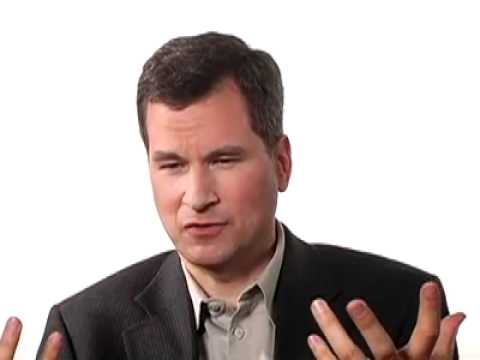
Gay Talese On The Oprah Effect Gay Talese | Big Think
Posted
April 24, 2012
Views
573
Likes
6
Engagement
1.05%
April 24, 2012
573
6
1.05%
Every word spoken in this episode is indexed. Type any phrase to jump straight to the moment it was said.
Type any word or phrase that may have been spoken. Click a result to seek the player to that exact moment.
Try a name, a topic, or a quoted line
Episode Timeline
Every episode in order around the one you’re watching — click any card and the page flips straight to it.
 2:34Now Playing
Gay Talese On The Oprah Effect
New videos DAILY
Join Big Think Edge for exclusive videos
----------------------------------------------------------------------------------
Oprah keeps books alive in a “multi-task society.”
----------------------------------------------------------------------------------
Gay Talese:
Gay Talese is an American journalist and a nonfiction writer. He wrote for The New York Times in the 1960s after working for its copy and obituary sections. In the 1950s, he was one of the first writers to add minute details, use literary flairs, and begin articles in medias res.
His groundbreaking article "Frank Sinatra Has a Cold" was named the "best story Esquire ever published," and he was credited by Tom Wolfe with the creation of an inventive form of nonfiction writing called "The New Journalism."
He has written many non-fiction books, beginning with 1964’s The Bridge: The Building of the Verrazano-Narrows Bridge. His 2006 autobiography A Writer’s Life focuses on his trials and failures as a writer, such as having a profile piece rejected by The New Yorker, which ironically reviewed the book positively and said it had a “distinctly moving” quality.
Gay Talese was named the winner of a George Polk Award for career achievement. The awards, presented by Long Island University, are considered among the top prizes in U.S. journalism. His latest book is High Notes: Selected Writings of Gay Talese.
----------------------------------------------------------------------------------
TRANSCRIPT:
Gay Talese: The little I do know about it, which is what most writers know about it is it’s good. Why is it good? Because she gets people to read and it’s very hard to get people to read, more now than ever, more now than ever. I mean to sit there and read means that you can almost do nothing else and we’re in a multitask society. They’re on the phone and they’re driving a car and they’re feeding the baby and, you know, everybody’s doing three things at once. When you’re reading, I don’t think you can even be listening to a concert. I don’t think you should be driving a car if you’re reading. If you’re reading and you’re in a train and someone’s got the stupid cell phone then even that’s an intrusion. So I think that Oprah is a great positive force because what she’s doing through her power as probably the greatest persuasive personality on television as a hostess of a television show, she’s bringing people into connection with the act and discipline of reading a book. And when you read a book, you are devoted to or have to be devoted to or dedicated to the act of reading at the risk of doing something else that while it might be easier to do like watching television, watching Oprah, she has also created a market- helped to create a market for the selling and reading of books. Publishers do not have the money or interest in advertising books as much as when I was young and starting out. It’s too expensive. And as I said before, the challenges that people have or the distractions that people have and the sense of instant gratification that people have always had to a great degree are sometimes at the expense of reading books. And Oprah, unlike anyone else, has done that and so I feel nothing but gratitude and I’m sure a lot of other writers feel that way to her.
Sentinel Indexing in Progress
Metadata and chapters are available. Claim extraction for this episode is pending.
All video content is delivered via YouTube embedded players in accordance with the YouTube Terms of Service. Sentinel provides research tools that promote discovery and accountability across political media.