Big Think
@bigthink·8.8M subscribers·10.1K videos
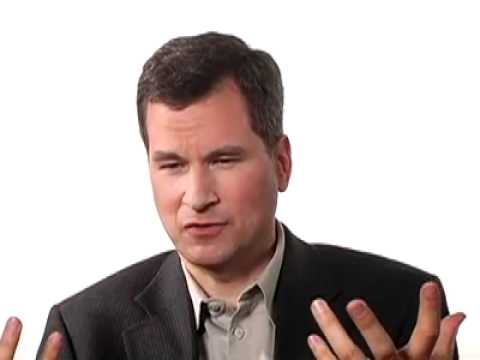
What Keeps Francine Prose Up At Night | Big Think
Posted
April 24, 2012
Views
616
Likes
9
Comments
1
Engagement
1.62%
April 24, 2012
616
9
1
1.62%
Every word spoken in this episode is indexed. Type any phrase to jump straight to the moment it was said.
Type any word or phrase that may have been spoken. Click a result to seek the player to that exact moment.
Try a name, a topic, or a quoted line
Episode Timeline
Every episode in order around the one you’re watching — click any card and the page flips straight to it.
 2:51Now Playing
What Keeps Francine Prose Up At Night
New videos DAILY
Join Big Think Edge for exclusive videos
----------------------------------------------------------------------------------
Prose might be an insomniac either way, but the author finds writing to be a useful—and important—distraction.
----------------------------------------------------------------------------------
Francine Prose:
Francine Prose is the author of fifteen books of fiction, including A Changed Man and Blue Angel, which was a finalist for the National Book Award, and the nonfiction New York Times bestseller Reading Like a Writer. Her latest novel, Goldengrove, was published in September 2008. She is the president of PEN American Center. She lives in New York City.
----------------------------------------------------------------------------------
TRANSCRIPT:
Question: What keeps you up at night
Francine Prose: You mean, besides mortality, which keeps everybody up at night? Or coffee? Or chocolate? Or? You know, I mean, I’ve become a bit of an insomniac. I mean, I’m up a lot around say between two and four and I fall asleep and I’m up. And there’s a huge range of things. I mean, a lot of it on the most mundane level, it’s, you know, the email I forgot to answer, the phone call I forgot to make, you know, the thing I have to remember tomorrow or something awful is going to happen. You know, those things and I think that that’s true for a lot of people. But then, you know, all the larger things do creep in there. I’m often just in a complete state of rage about politics and the world and our country and our society and sometimes for better or worse, it just decides to wake me up at two o’clock in the morning and there I am just gnashing my teeth in the middle of the night.
Question: So does writing help?
Francine Prose: It’s certainly a great distraction. I mean as long as I’m working, I’m not thinking about that other stuff so that’s, you know, thank you. But certainly when I was working closely with PEN, I felt like I was doing something. I mean, I was —you know, it is a human rights organization so we were keeping track of writers all over the world who were in prison and persecuted and so forth. But again, I mean, on a larger level, another friend says that literature is a weapon against propaganda. And I think that’s true. I think that everyone now is barraged with propaganda every moment of their waking lives. Every moment. Not just government propaganda but certainly that but also corporate propaganda, cultural propaganda, all sorts of propaganda. And anything you write, if it’s anything like the truth, even remotely like the truth, militates against that in a certain way, I mean, or anything you read. I mean, you can be told, for example, that, as we were for eight years, that certain countries were the axis of evil. But if you read work by writers who live in those countries, you find out, surprise, they’re human beings, just the way we are. You know, you can be told that undocumented workers are illegals but if you read work about or by people from the countries from which these people come, you realize, surprise, they’re human beings. So I think in that way, and I’m not saying literature has to do this, literature doesn’t have to do anything at all but literature can do this.
Sentinel Indexing in Progress
Metadata and chapters are available. Claim extraction for this episode is pending.
All video content is delivered via YouTube embedded players in accordance with the YouTube Terms of Service. Sentinel provides research tools that promote discovery and accountability across political media.