Big Think
@bigthink·8.8M subscribers·10.1K videos
Laurence Gonzales on How to Overcome Intelligent Mistakes | Big Think
Posted
April 24, 2012
Views
536
Likes
11
Engagement
2.05%
April 24, 2012
536
11
2.05%
Every word spoken in this episode is indexed. Type any phrase to jump straight to the moment it was said.
Type any word or phrase that may have been spoken. Click a result to seek the player to that exact moment.
Try a name, a topic, or a quoted line
 3:25Now Playing
Laurence Gonzales on How to Overcome Intelligent Mistakes
New videos DAILY
Join Big Think Edge for exclusive videos
----------------------------------------------------------------------------------
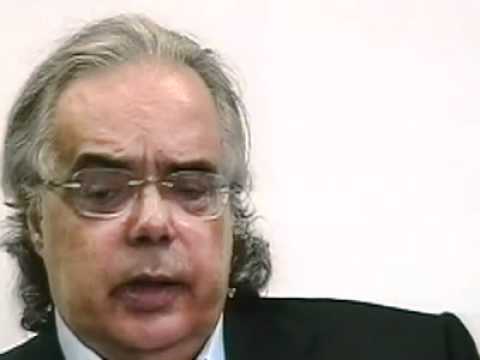
Relying on a system of mental models can confuse associations with reality says Laurence Gonzales.
----------------------------------------------------------------------------------
Laurence Gonzales:
Laurence Gonzales won the 2001 and 2002 National Magazine Awards from the American Society of Magazine Editors for National Geographic Adventure Magazine. Since 1970, his essays have appeared in such periodicals as Harper's, Rolling Stone, Men's Journal, National Geographic Adventure, Smithsonian Air and Space, Chicago Magazine, San Francisco Magazine, and many others.
He has published a dozen books, including two award–winning collections of essays, three novels, and the book–length essay, One Zero Charlie published by Simon & Schuster. His latest book, Everyday Survival, published by W.W. Norton & Company, is available at book sellers now. His previous book, Deep Survival, is now out in paperback.
----------------------------------------------------------------------------------
TRANSCRIPT:
Laurence Gonzalez:
give you an example of a really bad mistake that I made using mental models. When I was a little kid, my grandmother had an ashtray that looks like a rattlesnake. It was a beautiful thing, made out of stone, and it was very realistic. And I had this model in my head of a rattlesnake that was, you know, benign, it was a harmless thing and it had these nice emotional associations with my childhood and my grandmother. And frankly, I never thought about it again. I don’t know where it went. But one day as an adult, I was hiking in the Santa Monica Mountains and I came across the ruin of a stone house and I thought, “Oh cool. I’ll look for a souvenir here. I’ll find some old tool or something to bring home with me from this ruined house in the stone rubble.” And I started searching around and then all of a sudden, lo and behold, there was my grandmother’s ashtray. I’m like, “What a miracle! My grandmother’s ashtray, how did that happen?” And I reached out to pick it up and then I saw its tongue come out. And, of course, I realized the very stupid mistake that I made because I had all these intellectual knowledge that could have prevented me from doing that. But they didn’t because I was operating on a mental model, the closeness association I had and it was stored away. I haven’t thought about it for decades, and it was my grandmother’s ashtray. So I knew, intellectually, for example, that the chances of finding my grandmother’s ashtray anywhere in the known universe were approximately zero. I knew also that I was in the mountain wilderness where rattlesnakes are really common in California. I knew that they like to poke around in stone ruins ‘cause mice live there. I knew all these stuff and it did me no good. So this is what I mean when I say smart people do stupid things. This is the type of mistake that certain scientists call an intelligent mistake because all my learning, my most important learning caused the mistake
Sentinel Indexing in Progress
Metadata and chapters are available. Claim extraction for this episode is pending.
All video content is delivered via YouTube embedded players in accordance with the YouTube Terms of Service. Sentinel provides research tools that promote discovery and accountability across political media.