Big Think
@bigthink·8.8M subscribers·10.1K videos
The Role of the Chief Marketing Officer | Big Think
Posted
April 24, 2012
Views
21,275
Likes
193
Comments
3
Engagement
0.92%
April 24, 2012
21,275
193
3
0.92%
Every word spoken in this episode is indexed. Type any phrase to jump straight to the moment it was said.
Type any word or phrase that may have been spoken. Click a result to seek the player to that exact moment.
Try a name, a topic, or a quoted line
 5:05Now Playing
The Role of the Chief Marketing Officer
New videos DAILY
Join Big Think Edge for exclusive videos
----------------------------------------------------------------------------------
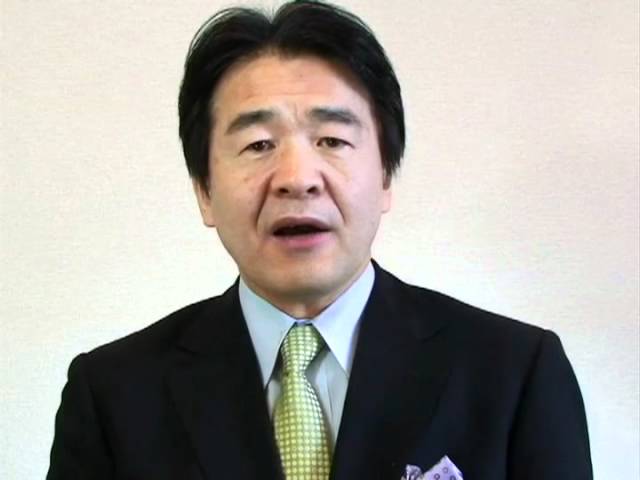
Chris Williams, CMO of Capgemini, explains the expanding role of the chief marketing officer. He says CMOs should help grow the business in a weak economy.
----------------------------------------------------------------------------------
Chris Williams:
Chris Williams is vice president and Chief Marketing Officer of Capgemini's North American business, responsible for leading the strategic positioning of the company, driving marketing execution and innovation into the North American marketplace. Prior to his current position, Williams held CMO roles for technology solutions and consulting companies including Expand Networks and Fujitsu Consulting. He was also a cofounder of Netigy, a professional services firm focused on eBusiness Infrastructure Consulting in Silicon Valley. Williams sits on the Board of Advisors for the Information Technology Services Marketing Association (ITSMA), Connotate Technologies and ePostmarks, and has been a contributing author on topics such as sales force automation and consulting services trends to publications including CRM Magazine and ebizChronicle.com. Williams, who grew up in Europe, attended Babson College in Wellesley, Mass., where he earned a Master's of Business Administration in International Business and Finance as well as a Bachelor's of Science degree in Marketing.
----------------------------------------------------------------------------------
TRANSCRIPT:
Question: What are new challenges facing chief marketing officers? Williams: The Chief Marketing Officer has a number of challenges on his or her plate today. First and foremost, it’s about making sure that the marketing organization is viewed as a strategic partner to the business, and therefore it’s imperative that marketing align to the needs of the business and can clearly articulate to the rest of the organization through the communication channels that marketing has control over and the ecosystems that we build up in our organizations as to how marketing supports the alignment of the business. Marketing also plays a strategic role in terms of helping companies, especially those that compete in heavily deregulated industries, how to become more of a marketing led organization, and that doesn’t necessarily mean that marketing leads the organization, but it does mean that competitive differentiation is established, we clearly articulate what makes our company better than another company, and marketing fundamentally has a responsibility of making sure that every employee in the organization can clearly articulate what it is about the company that makes it unique and a leader in its respective industry. So there’s balancing both the strategic aspects of being a partner to the business as well as implementing the very tactical nature of, [either] the market strategies, our campaigns, our communications and really managing a whole system of populations, whether they’re employees, whether they’re your clients and customers, potentially investors, your supply chain partners, whatever the case may be, marketing has the responsibility of really being the glue for the business and bring all of that together in one consistent manner. Question: How do you grow business in a weak economy? Williams: In order to grow a business in a weak economy, the first thing you have to do is have a very strong understanding of what the strengths and weaknesses of your company are, and in many respects it means doubling down on the areas that you feel you’re particularly strong in. There may be client bases that you’ve done a very good job of delivering to, in which case taking extra care of those clients is critical. There may be investments that you’re planning on taking, that may need to change from a time scale perspective because the market isn’t right. You’re capabilities aren’t necessarily lined up to take advantage of that in a weak economy. So it’s really understanding where your core strengths and capabilities are where you’ve had significant success and staying close to that success and potentially identifying adjacent areas of opportunities where you can continue to leverage that strength and stay away from what might be a potentially new, risky venture.
Read the full transcript at
Sentinel Indexing in Progress
Metadata and chapters are available. Claim extraction for this episode is pending.
All video content is delivered via YouTube embedded players in accordance with the YouTube Terms of Service. Sentinel provides research tools that promote discovery and accountability across political media.