Big Think
@bigthink·8.8M subscribers·10.1K videos
Nicholas Lemann: How did you get into journalism? | Big Think
Posted
April 24, 2012
Views
159
Likes
1
Engagement
0.63%
April 24, 2012
159
1
0.63%
Every word spoken in this episode is indexed. Type any phrase to jump straight to the moment it was said.
Type any word or phrase that may have been spoken. Click a result to seek the player to that exact moment.
Try a name, a topic, or a quoted line
Episode Timeline
Every episode in order around the one you’re watching — click any card and the page flips straight to it.
 2:09Now Playing
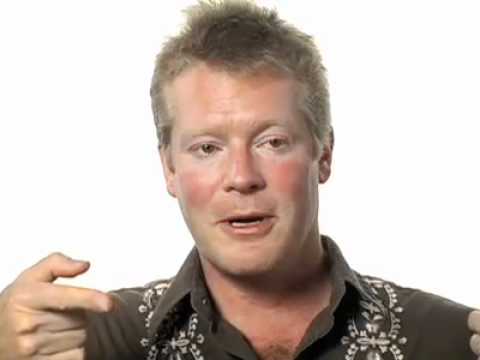
Nicholas Lemann: How did you get into journalism?
New videos DAILY
Join Big Think Edge for exclusive videos
----------------------------------------------------------------------------------
A funny deal with a small local paper.
----------------------------------------------------------------------------------
Nick Lemann:
Nick Lemann is the Dean of the Columbia University School of Journalism and a former New Yorker staff writer. While at Harvard – where he graduated in 1976 – Lemann served as President of the Crimson. He has worked as a reporter and editor at The Washington Monthly, Texas Monthly, The Atlantic Monthly and The Washington Post, focusing primarily on national affairs.
Lemann is the author of The Promised Land: The Great Black Migration and How It Changed America, The Big Test: The Secret History of the American Meritocracy, about the SAT, and most recently, Redemption: The Last Battle of the Civil War, about the failure of Reconstruction. At Columbia, where he was hired as Dean of the Journalism School in 2003, Lemann implemented a two-year curriculum and has focused on teaching alternative journalistic mediums in the Internet age.
----------------------------------------------------------------------------------
TRANSCRIPT:
Nicholas Lemann: Well I can tell you specifically. I mean it’s sort of hard to say. I didn’t know any journalists when I was growing up or anything, and I just . . . I was very much drawn to it for some reason. So the way I got into it specifically was, you know, other than working on school papers and so on, when I was a . . . I guess the ‘60s came to New Orleans in the early ‘70s when I was finishing high school. And the sort of center of that culture was down in the French Quarter, so there started to be some underground and alternative newspapers in New Orleans. And one of them I particularly liked called the ... Courier. It no longer exists. It had started in the early ‘60s as an architectural preservation publication. It sort of morphed into our first weekly. So I, you know, had decided that I was really interested in journalism. I liked this paper, and one day when I was a senior in high school, I just kind of screwed up my courage and went to their office and said I wanted to write for them. And we made an arrangement where, if I would agree to be the person who took all the papers when they came out and put them in the coin boxes and emptied the coin boxes, they would let me write an article. So I took that deal. So then I started, you know, emptying coin boxes and writing for them. And I wrote for them through, you know, the sort of spring and summer when I was finishing high school. And then went off to college and came back and worked for them again the next summer, and then sort of was off to the races from there.
Sentinel Indexing in Progress
Metadata and chapters are available. Claim extraction for this episode is pending.
All video content is delivered via YouTube embedded players in accordance with the YouTube Terms of Service. Sentinel provides research tools that promote discovery and accountability across political media.