Big Think
@bigthink·8.8M subscribers·10.1K videos
Nicholas Lemann: Growing Up Jewish in the American South | Big Think
Posted
April 24, 2012
Views
3,223
Likes
31
Comments
6
Engagement
1.15%
April 24, 2012
3,223
31
6
1.15%
Every word spoken in this episode is indexed. Type any phrase to jump straight to the moment it was said.
Type any word or phrase that may have been spoken. Click a result to seek the player to that exact moment.
Try a name, a topic, or a quoted line
Episode Timeline
Every episode in order around the one you’re watching — click any card and the page flips straight to it.
 2:47Now Playing
Nicholas Lemann: Growing Up Jewish in the American South
New videos DAILY
Join Big Think Edge for exclusive videos
----------------------------------------------------------------------------------
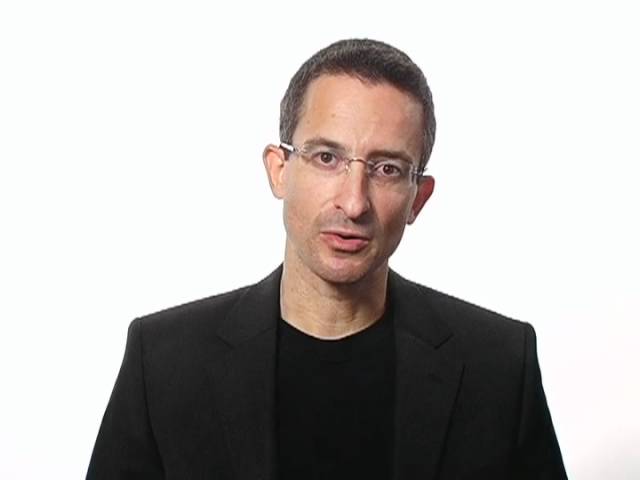
Lemann describes growing up in a community of assimilated German Jews.
----------------------------------------------------------------------------------
Nick Lemann:
Nick Lemann is the Dean of the Columbia University School of Journalism and a former New Yorker staff writer. While at Harvard – where he graduated in 1976 – Lemann served as President of the Crimson. He has worked as a reporter and editor at The Washington Monthly, Texas Monthly, The Atlantic Monthly and The Washington Post, focusing primarily on national affairs.
Lemann is the author of The Promised Land: The Great Black Migration and How It Changed America, The Big Test: The Secret History of the American Meritocracy, about the SAT, and most recently, Redemption: The Last Battle of the Civil War, about the failure of Reconstruction. At Columbia, where he was hired as Dean of the Journalism School in 2003, Lemann implemented a two-year curriculum and has focused on teaching alternative journalistic mediums in the Internet age.
----------------------------------------------------------------------------------
TRANSCRIPT:
Nicholas Lemann: Well I grew up Jewish in a way that is very hard to describe, because it’s a sort of vanished world. It was . . . I happened to have had dinner with somebody who grew up the same way in St. Louis last night, so we were sort of talking about this. The thing that captures it the best is the movie Driving Miss Daisy, if you’ve seen that. My family, you know, had been in the South for many generations. They were long time and prominent members of the Jewish community, involved in all leading Jewish causes, etc. We were members of the biggest synagogue in New Orleans which was called Temple Sinai which was a big pile on St. Charles Avenue. And now we get to the part that would surprise people who grew up Jewish anywhere else. So this is by way of saying we were not, you know, consciously kind of trying to hide the fact that we were Jewish. We did . . . In our synagogue it was reform. We did not have the laws of kosher. We did not read the Torah in the service. There was a choir. There was a rabbi who was a cousin by marriage who wore kind of ermine robes to give the service. And no one wore a yarmulke. No one wore a prayer shawl. We didn’t have bar mitzvahs. And to my memory the whole time I was growing up, the state of Israel was never once mentioned in our synagogue. So it was a . . . It was a brand of reform Judaism known in the trade as “Pittsburgh Platform” after the meeting in Pittsburgh when it was founded in 1882. And it was meant to be a kind of Judaism that sort of looked and felt like Episcopalianism, except a Jewish version. And so that’s how I grew up. It’s also a very small Jewish community. Everybody knew and/or was related to everybody else, and it was predominantly German.
Sentinel Indexing in Progress
Metadata and chapters are available. Claim extraction for this episode is pending.
All video content is delivered via YouTube embedded players in accordance with the YouTube Terms of Service. Sentinel provides research tools that promote discovery and accountability across political media.