Big Think
@bigthink·8.8M subscribers·10.1K videos
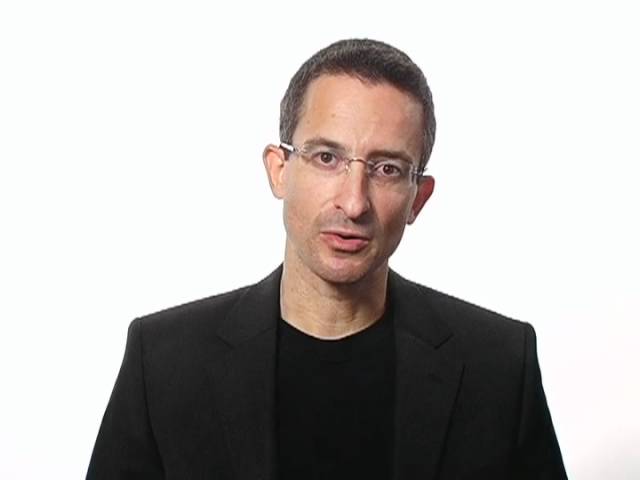
Nicholas Lemann: The Israel Lobby | Big Think
Posted
April 24, 2012
Views
646
Likes
7
Comments
4
Engagement
1.70%
April 24, 2012
646
7
4
1.70%
Every word spoken in this episode is indexed. Type any phrase to jump straight to the moment it was said.
Type any word or phrase that may have been spoken. Click a result to seek the player to that exact moment.
Try a name, a topic, or a quoted line
Episode Timeline
Every episode in order around the one you’re watching — click any card and the page flips straight to it.
 2:57
2:57 2:09Now Playing
Nicholas Lemann: The Israel Lobby
New videos DAILY
Join Big Think Edge for exclusive videos
----------------------------------------------------------------------------------
Lemann says that their influence is exaggerated, something that makes him uncomfortable.
----------------------------------------------------------------------------------
Nick Lemann:
Nick Lemann is the Dean of the Columbia University School of Journalism and a former New Yorker staff writer. While at Harvard – where he graduated in 1976 – Lemann served as President of the Crimson. He has worked as a reporter and editor at The Washington Monthly, Texas Monthly, The Atlantic Monthly and The Washington Post, focusing primarily on national affairs.
Lemann is the author of The Promised Land: The Great Black Migration and How It Changed America, The Big Test: The Secret History of the American Meritocracy, about the SAT, and most recently, Redemption: The Last Battle of the Civil War, about the failure of Reconstruction. At Columbia, where he was hired as Dean of the Journalism School in 2003, Lemann implemented a two-year curriculum and has focused on teaching alternative journalistic mediums in the Internet age.
----------------------------------------------------------------------------------
TRANSCRIPT:
Nicholas Lemann: The common answer at this moment while I’m giving this interview is the Israel lobby, and that makes me intensely uncomfortable for, you know, a number of reasons I don’t have to go into. I guess the standard answer you would get is, you know, organized business lobby groups, because they have money, are . . . are disproportionately powerful. So that seems to me to be the strongest argument. To make the argument that a group that just essentially organizes very effectively around its point of view is “too powerful”, that makes me uncomfortable. I guess you could say groups that have access to unlimited financial resources and are able to make campaign contributions by advertisements and so on, they have a kind of thumb on the scales of politics, and they get more, you know, than they should. I’m not sure I believe that if that were true, you know, there would be a tweak to the system. I’m also not persuaded that campaign finance reform ever works, because it’s kind of like you cut it here and it pops up over there. That’s what we’ve seen in the last few rounds. There’s a lot of money that wants to find its way into politics and tends to find its way into politics. I mean in a certain way the most egregious example is small states are too powerful. You know Iowa and New Hampshire are too powerful relative to their population because they get to have two senators, and because they have these early presidential primaries. So their sort of special concerns get elevated over those of others.
Sentinel Indexing in Progress
Metadata and chapters are available. Claim extraction for this episode is pending.
All video content is delivered via YouTube embedded players in accordance with the YouTube Terms of Service. Sentinel provides research tools that promote discovery and accountability across political media.