Big Think
@bigthink·8.8M subscribers·10.1K videos
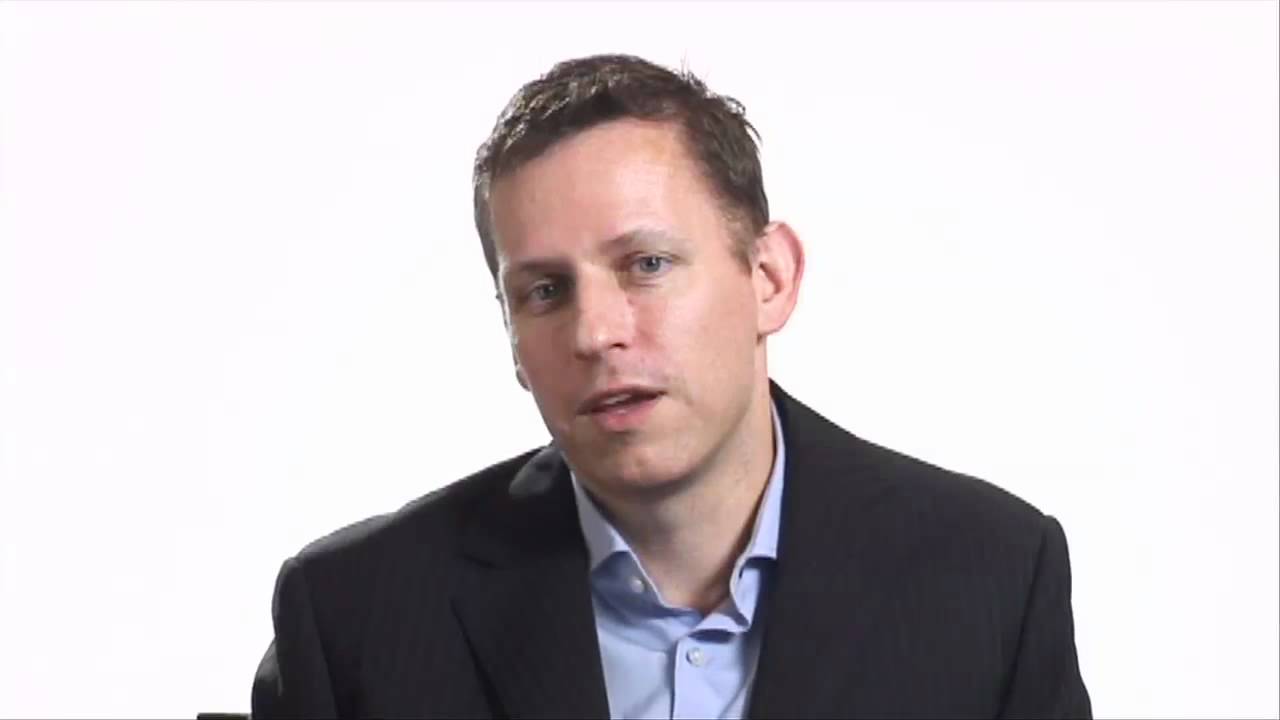
Policy Makers: "Living in the Dark Ages" | Peter Thiel | Big Think
Posted
April 24, 2012
Views
12,212
Likes
210
Comments
17
Engagement
1.86%
April 24, 2012
12,212
210
17
1.86%
Every word spoken in this episode is indexed. Type any phrase to jump straight to the moment it was said.
Type any word or phrase that may have been spoken. Click a result to seek the player to that exact moment.
Try a name, a topic, or a quoted line
Episode Timeline
Every episode in order around the one you’re watching — click any card and the page flips straight to it.
 5:37Now Playing
Policy Makers: "Living in the Dark Ages"
New videos DAILY
Join Big Think Edge for exclusive videos
----------------------------------------------------------------------------------
The $700 billion bailout of the financial industry would never have been offered to Internet companies during the tech bubble bust—and that is problematic, says Peter Thiel.
----------------------------------------------------------------------------------
Peter Thiel:
Peter Thiel is an American entrepreneur, hedge fund manager and venture capitalist. He is Clarium’s President and the Chairman of the firm’s investment committee, which oversees the firm’s research, investment, and trading strategies. Before starting Clarium, Peter served as Chairman and CEO of PayPal, an Internet company he co-founded in December 1998 and was acquired by eBay for $1.5 billion in October 2002.
Prior to founding PayPal, Peter ran Thiel Capital Management , the predecessor to Clarium, which started with $1 million under management in 1996. Peter began his financial career as a derivatives trader at CS Financial Products, after practicing securities law at Sullivan & Cromwell.
In addition to managing Clarium, Peter is active in a variety of philanthropic and educational pursuits; he sits on the Board of Directors of the Pacific Research Institute, the Board of Visitors of Stanford Law School, and is an adviser to the Singularity Institute for Artificial Intelligence. Peter received a BA in Philosophy from Stanford University and a JD from Stanford Law School. He is self-described libertarian and a minority investor in Big Think.
----------------------------------------------------------------------------------
TRANSCRIPT:
Question: Why do we value financial innovation over technological innovation?
Peter Thiel: I believe that we've been living in a – we live in a technological society, but we constantly act as though it is a financial society. Everything is going to be of critical importance in the next 20 or 30 years is whether there is a lot of progress from technology and science and yet our priorities are massively geared towards saving the financial system rather than making sure the technological system works better.
So, for example, we had a $700 billion bailout for the banks in late 2008 even though it would have been unthinkable to give $700 billion to internet companies in 2000 or 2001. I think that's sort of double standard reflects the ways in which our priorities are skewed towards finance and away from technology even though it should be the other way around.
Question: Are you still convinced of this misguided preference one year later?
Peter Thiel: Nothing has changed in the last year since this financial crisis has unfolded to reflect the change of view on this. If you look at the policymakers in Washington D.C., of the 538 people in the Senate and House, only 11 have backgrounds in engineering or science and so we have people who do not understand that windmills don't work when the wind doesn't blow, or that solar power doesn't work when it's dark. You basically have policymakers who are effectively living in the dark ages in terms of the way they are thinking about the most important questions of our time.
Question: Has financial innovation been a waste of time?
Peter Thiel: Financial innovation and technological innovation are both good to the extent they involve real innovation and bad to the extent they do not involve real innovation. The thing that is very tricky about financial innovation is that it is often hard to know whether it's innovation or whether it's something that's dependent on some kind of temporary and unsustainable trajectory. So, innovation in housing, in financial engineering around that was probably ultimately unsustainable because it depended on ever increasing debt, ever increasing leverage.
Diversions of technological innovation that may be unsustainable as well, so if you have some innovation that leads to extraordinary environmental damage, it may look like you're making a lot of progress, but it turns out not to have sort of long term compounding aspect to it. Some forms of financial innovation have involved a misallocation of resources. To my mind, people are being scapegoated a bit too much in the finance industry and I think the question we need to be asking is not whether there's been too much financial innovation, but why there has been so little innovation in other areas.
Question: Who has financial innovation helped the most?
Read the full transcript at
Sentinel Indexing in Progress
Metadata and chapters are available. Claim extraction for this episode is pending.
All video content is delivered via YouTube embedded players in accordance with the YouTube Terms of Service. Sentinel provides research tools that promote discovery and accountability across political media.