Big Think
@bigthink·8.8M subscribers·10.1K videos
The Misplaced Regulatory Focus on Hedge Funds | Peter Thiel | Big Think
Posted
April 24, 2012
Views
3,074
Likes
48
Comments
3
Engagement
1.66%
April 24, 2012
3,074
48
3
1.66%
Every word spoken in this episode is indexed. Type any phrase to jump straight to the moment it was said.
Type any word or phrase that may have been spoken. Click a result to seek the player to that exact moment.
Try a name, a topic, or a quoted line
You’re on April 24, 2012. Earlier episodes are to the left, later ones to the right — the row keeps loading as you go. Click any card to open it.
 Apr 24, 20125:27Now Playing
The Misplaced Regulatory Focus on Hedge Funds
New videos DAILY
Join Big Think Edge for exclusive videos
----------------------------------------------------------------------------------
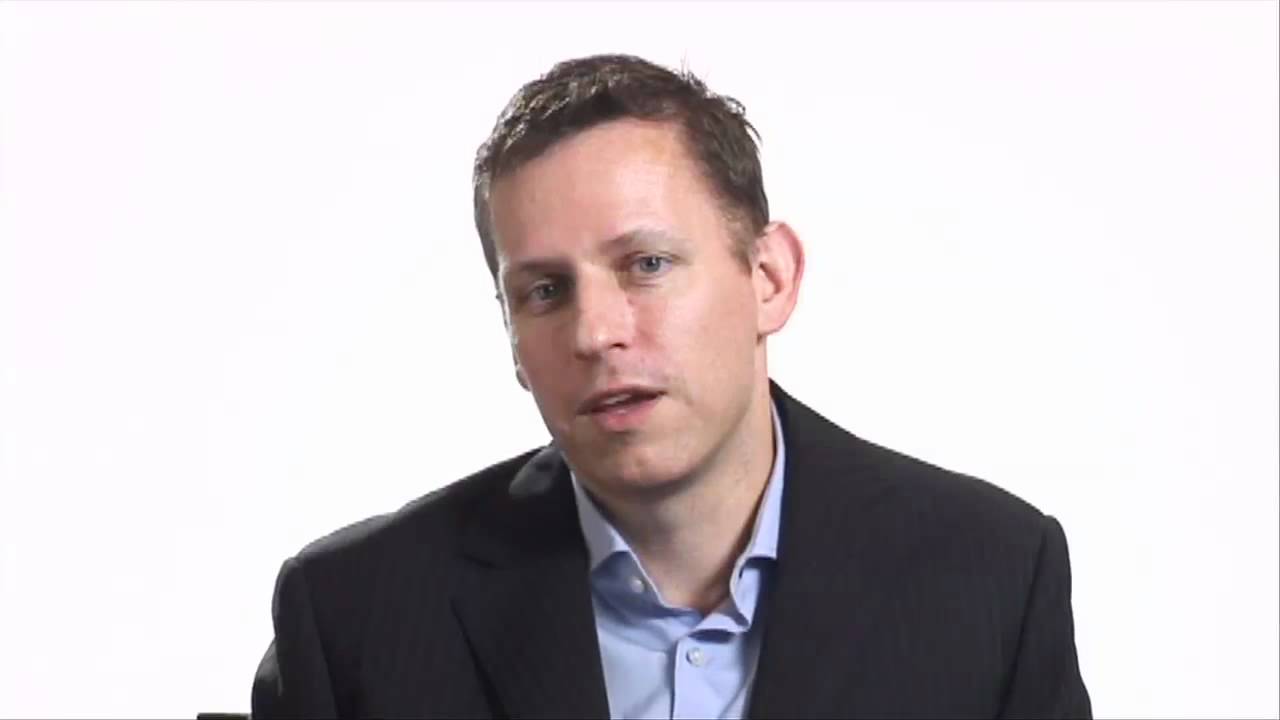
Peter Thiel explains that the real problem lies with hidden leverage.
----------------------------------------------------------------------------------
Peter Thiel:
Peter Thiel is an American entrepreneur, hedge fund manager and venture capitalist. He is Clarium’s President and the Chairman of the firm’s investment committee, which oversees the firm’s research, investment, and trading strategies. Before starting Clarium, Peter served as Chairman and CEO of PayPal, an Internet company he co-founded in December 1998 and was acquired by eBay for $1.5 billion in October 2002.
Prior to founding PayPal, Peter ran Thiel Capital Management , the predecessor to Clarium, which started with $1 million under management in 1996. Peter began his financial career as a derivatives trader at CS Financial Products, after practicing securities law at Sullivan & Cromwell.
In addition to managing Clarium, Peter is active in a variety of philanthropic and educational pursuits; he sits on the Board of Directors of the Pacific Research Institute, the Board of Visitors of Stanford Law School, and is an adviser to the Singularity Institute for Artificial Intelligence. Peter received a BA in Philosophy from Stanford University and a JD from Stanford Law School. He is self-described libertarian and a minority investor in Big Think
----------------------------------------------------------------------------------
TRANSCRIPT:
Question: Did you assume that financial institutions like AIG were too big to fail? (Scott Sumner, Money Illusion)
Peter Thiel: I certainly thought that things were more fragile before the crisis in 2008 than a lot of people did. I underestimated quite how fragile they were. And so, while I think there was definitely a risk of big institutions failing, it was surprising that they all failed, more or less, in one week. That was certainly something that I did not anticipate it happening all at once.
Question: Which regulatory suggestions floating around Congress threaten hedge funds the most and why? (Dan Indiviglio, The Atlantic Business Channel)
Peter Thiel: I believe that the regulatory focus on hedge funds has been extremely misplaced and that people have been way too focused on hedge funds as the culprit rather than the larger financial players, such as banks, insurance companies, pension funds, and a variety of much more conventional financial institutions that went badly wrong.
I think part of the reason for this misplaced focus on hedge funds can be traced back to the long term capital disaster in 1998 where excess leverage threatened the entire financial system and the place where leverage showed up was in this unregulated vehicle, e.g., long term capital, but then all of a sudden impacted everybody else in unforeseen ways. And so, in some ways, since '98, the regulators have been fighting the last war and worrying about hedge funds that were excessively leverage and would blow up the system.
I think hedge funds were not excessively leveraged; even the funds that used significant leverage did so in a way that was relatively transparent and known to their investors and were perceived as high risk. The problem is not with leverage, both hidden leverage and hidden leverage existed in places like the large money center banks, AIG, the insurance companies, and perhaps the biggest of all were Fannie Mae and Freddie Mac, which were seen as relatively safe because of some kind of implicit government guarantee, but were in reality long term capital on a much bigger scale. And the real long-term capital was Fannie Mae. It was not the hedge fund industry.
It would seem like the main lesson should be that we should be most wary of institutions that are close to the levers of political power because those are the institutions that were able to abuse the political system and prevent an investigation of the kind of corrupt practices and wrong doing. Again, exhibit A of this is, Fannie Mae, Freddie Mac, the big government-related mortgage companies. And I think one of the lessons, and it's hard to know where one goes with this, but one of the big lessons of this crisis is the way in which regulation tends to be pro-cyclical. So, when everything is going well, we deregulate and we get – the boom gets to be even bigger. And when things are going badly, we regulate and make the bust get even worse than would otherwise would be.
Read the full transcript at
Sentinel Indexing in Progress
Metadata and chapters are available. Claim extraction for this episode is pending.
All video content is delivered via YouTube embedded players in accordance with the YouTube Terms of Service. Sentinel provides research tools that promote discovery and accountability across political media.