Big Think
@bigthink·8.8M subscribers·10.1K videos
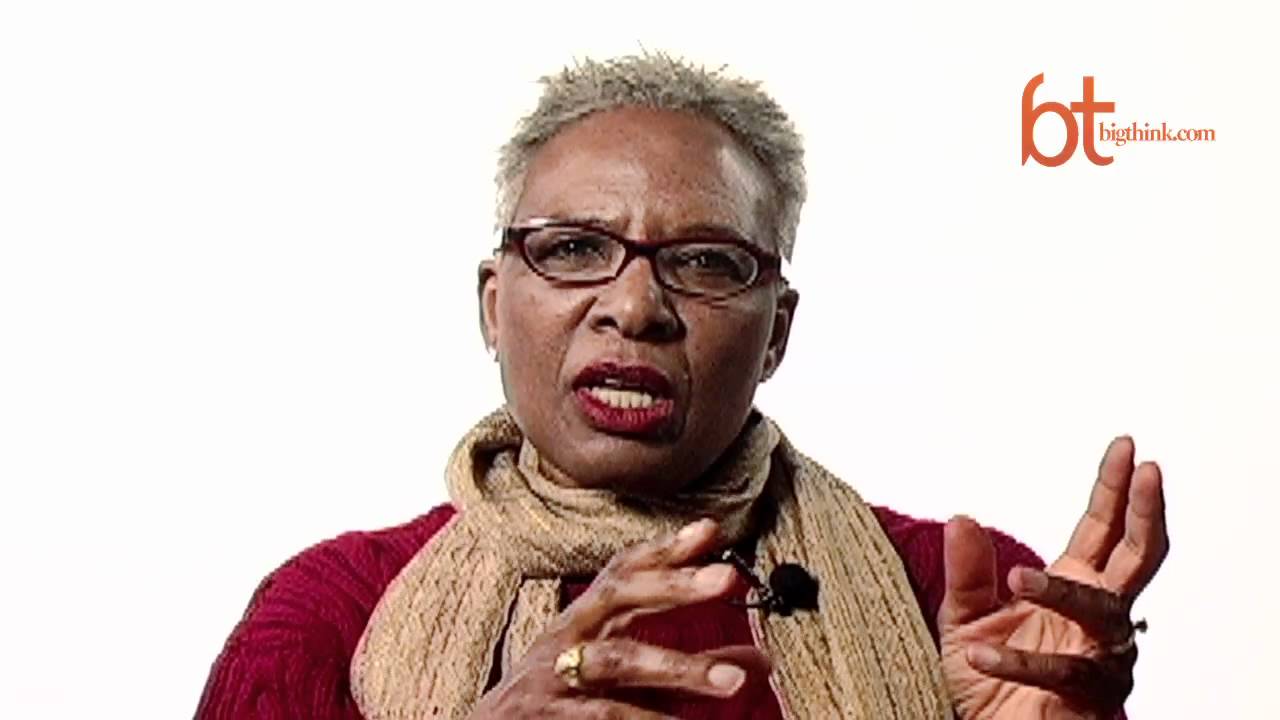
The World Before White People | Nell Irvin Painter | Big Think
Posted
April 24, 2012
Views
321,885
Likes
3,396
Comments
4,142
Engagement
2.34%
April 24, 2012
321,885
3,396
4,142
2.34%
Every word spoken in this episode is indexed. Type any phrase to jump straight to the moment it was said.
Type any word or phrase that may have been spoken. Click a result to seek the player to that exact moment.
Try a name, a topic, or a quoted line
 3:44Now Playing
Become a Big Think member to unlock expert classes, premium print issues, exclusive events and moreThe World Before White People
New videos DAILY
Join Big Think Edge for exclusive videos
----------------------------------------------------------------------------------
When did the concept of race originate? And was there no such thing as racism before it did? The author of “The History of White People” explains.
----------------------------------------------------------------------------------
Nell Irvin Painter:
Nell Irvin Painter, a leading historian of the United States, is the Edwards Professor of American History, Emerita, Princeton University. In addition to her earned doctorate in history from Harvard University, she has received honorary doctorates from Wesleyan, Dartmouth, SUNY-New Paltz, and Yale.
A Fellow of the American Academy of Arts and Sciences, Nell Painter has also held fellowships from the Guggenheim Foundation, the National Endowment for the Humanities, the American Council of Learned Societies, and the American Antiquarian Society. She has served as president of the Organization of American Historians and the Southern Historical Association. Those presidential addresses have been published in the Journal of American History (“Ralph Waldo Emerson's Saxons” in March 2009) and the Journal of Southern History (“Was Marie White?” February 2008). The City of Boston declared Thursday, 4 October 2007Nell Irvin Painter Day in honor of her Outstanding Book Award from the Gustavus Myers Center in 2006.
A prolific and award-winning scholar, her most recent books are The History of White People (W. W. Norton, 2010, paperback, March 2011),Creating Black Americans (Oxford University Press, 2006), and Southern History Across the Color Line (University of North Carolina Press, 2002). A second edition of Standing at Armageddon: The United States, 1877-1919 and a Korean translation of Sojourner Truth, A Life, A Symbolappeared in 2008. Her other books are also still in print. For a complete list of her book and article publications and other honors and activities, please consult the CV on this website.
As a public intellectual, Professor Painter is frequently called upon for lectures and interviews on television and film. In January 2008 she appeared live for a three-hour “In Depth” program on C-SPAN Book TV. To see the program on the internet, go to the web page for “In Depth.”She has also appeared on Bill Moyers’s “Progressive America.” New Jersey Network’s “State of the Arts” documented her work as both a scholar and an art student.
----------------------------------------------------------------------------------
TRANSCRIPT:
Question: After so many histories of nonwhite people by whites, does your book seek to correct the imbalance?
Nell Irvin Painter: It’s not an attempt to correct an imbalance, but I think it may function that way. For me it was an answering of questions. I started with a question I couldn’t answer. Why are white people called Caucasian? You know why? So that was where I started asking questions and it went from one thing to another.
Question: Where and when did the concept of “whiteness” originate?
Nell Irvin Painter: Yes, yes. Yeah, there are two ways of talking about it. one is just to notice that there is some people who are kind of light skinned and other people who are kind of brownish and other people who are kind of darkish, so people notice that you know immediately, but since there wasn’t a lot of motion around from one’s town or one’s village that didn’t come up very much, so somebody like Herodotus for instance, who did travel, he could say that for instance the Scythians, who made quivers out of the arms, the skinned arms of the people they vanquished, that man’s skin is very showy and white, so it was clear that people were light skinned, but to make it into something called a race or a variety, and then to endow that with certain characteristics, racial temperament for instance, that latter kind of way of dealing with race, that’s an invention of the Enlightenment of the eighteenth century.
Question: How did Enlightenment-era notions of race develop?
Nell Irvin Painter: Sure. Well when we think of science, science is a truth that is true no matter what, no matter when and for all time and science as the kind of gospel truth replaces the gospel, which was religion. Before science, before the eighteenth century, religion answered the questions, and so in the nineteenth century for instance there was a real jostling between science and religion over the truth and this is why Darwin was so controversial, but by the nineteenth and twentieth century science and taxonomy had created categories, all sorts of things.
Read the full transcript at
Sentinel Indexing in Progress
Metadata and chapters are available. Claim extraction for this episode is pending.
All video content is delivered via YouTube embedded players in accordance with the YouTube Terms of Service. Sentinel provides research tools that promote discovery and accountability across political media.