Big Think
@bigthink·8.8M subscribers·10.1K videos
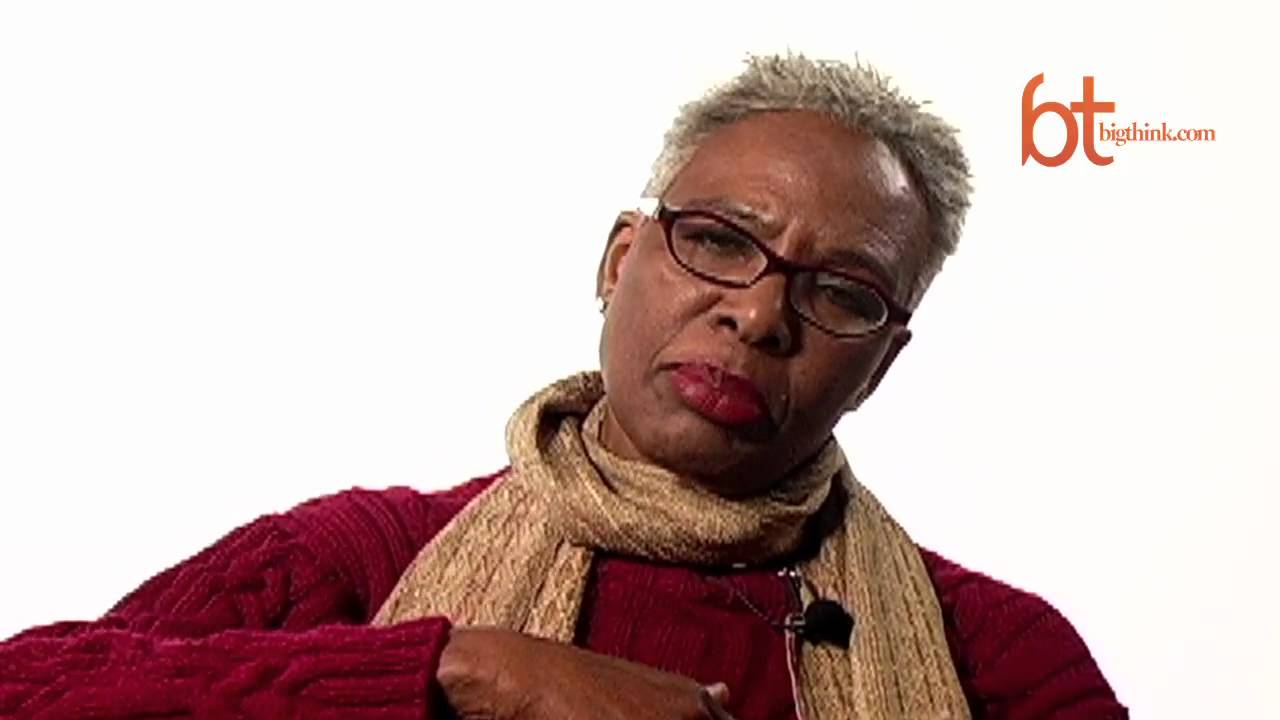
The Expanding Definition of Whiteness | Nell Irvin Painter | Big Think
Posted
April 24, 2012
Views
47,279
Likes
521
Comments
503
Engagement
2.17%
April 24, 2012
47,279
521
503
2.17%
Every word spoken in this episode is indexed. Type any phrase to jump straight to the moment it was said.
Type any word or phrase that may have been spoken. Click a result to seek the player to that exact moment.
Try a name, a topic, or a quoted line
 6:13Now Playing
The Expanding Definition of Whiteness
New videos DAILY
Join Big Think Edge for exclusive videos
----------------------------------------------------------------------------------
How did Italians, Jews, and other peoples become “white”? And will other, currently “nonwhite” ethnic groups follow suit?
----------------------------------------------------------------------------------
Nell Irvin Painter:
Nell Irvin Painter, a leading historian of the United States, is the Edwards Professor of American History, Emerita, Princeton University. In addition to her earned doctorate in history from Harvard University, she has received honorary doctorates from Wesleyan, Dartmouth, SUNY-New Paltz, and Yale.
A Fellow of the American Academy of Arts and Sciences, Nell Painter has also held fellowships from the Guggenheim Foundation, the National Endowment for the Humanities, the American Council of Learned Societies, and the American Antiquarian Society. She has served as president of the Organization of American Historians and the Southern Historical Association. Those presidential addresses have been published in the Journal of American History (“Ralph Waldo Emerson's Saxons” in March 2009) and the Journal of Southern History (“Was Marie White?” February 2008). The City of Boston declared Thursday, 4 October 2007Nell Irvin Painter Day in honor of her Outstanding Book Award from the Gustavus Myers Center in 2006.
A prolific and award-winning scholar, her most recent books are The History of White People (W. W. Norton, 2010, paperback, March 2011),Creating Black Americans (Oxford University Press, 2006), and Southern History Across the Color Line (University of North Carolina Press, 2002). A second edition of Standing at Armageddon: The United States, 1877-1919 and a Korean translation of Sojourner Truth, A Life, A Symbolappeared in 2008. Her other books are also still in print. For a complete list of her book and article publications and other honors and activities, please consult the CV on this website.
As a public intellectual, Professor Painter is frequently called upon for lectures and interviews on television and film. In January 2008 she appeared live for a three-hour “In Depth” program on C-SPAN Book TV. To see the program on the internet, go to the web page for “In Depth.”She has also appeared on Bill Moyers’s “Progressive America.” New Jersey Network’s “State of the Arts” documented her work as both a scholar and an art student.
----------------------------------------------------------------------------------
TRANSCRIPT:
Question: How have non-Anglo-Saxon ethnicities been incorporated into, or excluded from, the definition of “white”?
Nell Irvin Painter: Yes, mostly incorporated into. The dialogue changed. The discourse changed according to the needs of the time, so in the middle of the nineteenth century when Emerson was writing when he looked around his New England there were these very poor people whom he did not consider Saxons. They were Celts and they were immigrants. They were poor Irish immigrants. These were the famine immigrants, but the end of the century those people had children and those children had gone to school and made their way up the economic ladder a little bit. That was one side of it. The other side was the turn of the twentieth century brought a wave of new immigrants, people from Southern and Eastern Europe and the near east and so the former Celts as a separate race got tucked into American whiteness, not as Saxons, but as Nordics, so the twentieth century term is Nordics, which has to do with Europeans from the northwest of Europe, which includes Ireland, so that was an incorporation of people who had been despised. So the early twentieth century saw something that we can only call racism against immigrants, poor immigrants from Southern and Eastern Europe and by the time their children and grandchildren were mobilized in the new deal in the Second World War and then allowed to buy homes for white people only in the suburbs after the Second World War then they become white people, and there is a large sort of passé part of whiteness that includes everybody and that’s the whiteness that we inherit in the twenty-first century. It’s a whiteness that has also been buffeted around a bit.
Question: How have Jewish people become incorporated into this definition?
Read the full transcript at
Sentinel Indexing in Progress
Metadata and chapters are available. Claim extraction for this episode is pending.
All video content is delivered via YouTube embedded players in accordance with the YouTube Terms of Service. Sentinel provides research tools that promote discovery and accountability across political media.