Big Think
@bigthink·8.8M subscribers·10.1K videos
Why We Drink and Drive | Big Think
Posted
April 24, 2012
Views
2,264
Likes
16
Comments
12
Engagement
1.24%
April 24, 2012
2,264
16
12
1.24%
Every word spoken in this episode is indexed. Type any phrase to jump straight to the moment it was said.
Type any word or phrase that may have been spoken. Click a result to seek the player to that exact moment.
Try a name, a topic, or a quoted line
 1:39Now Playing
New videos DAILY
Join Big Think Edge for exclusive video lessons from top thinkers and doers
----------------------------------------------------------------------------------
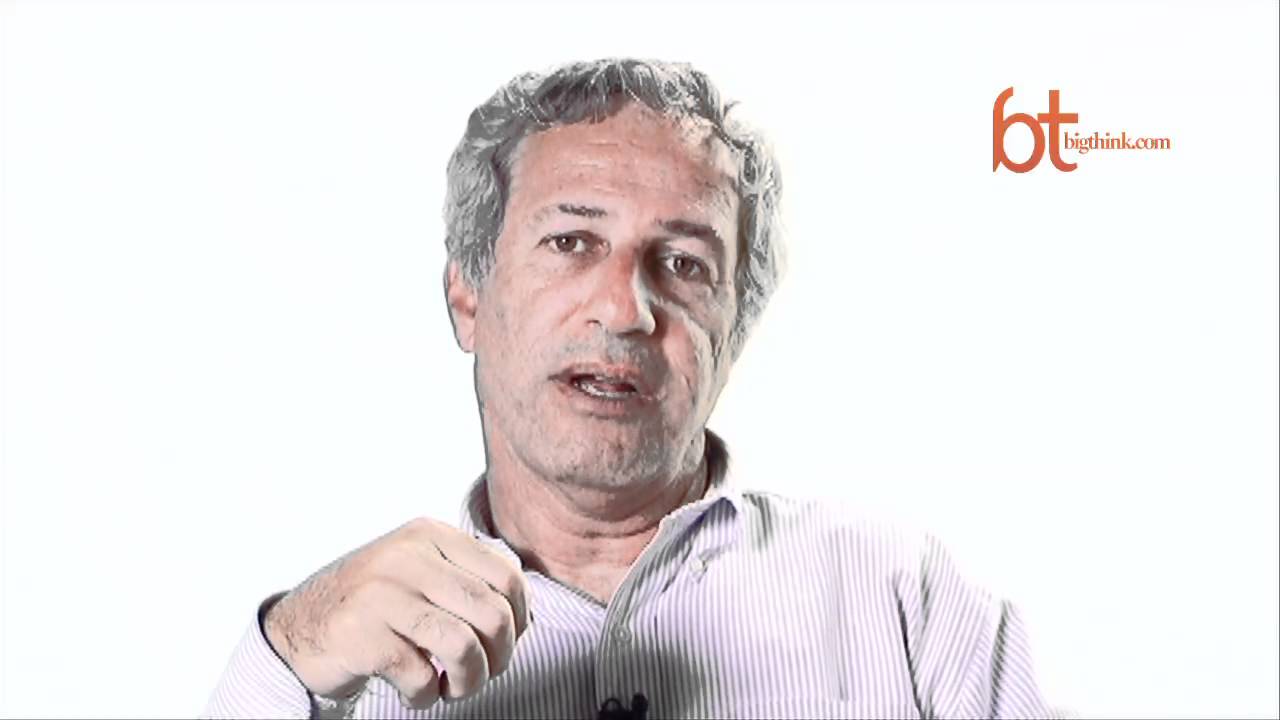
Helping someone in desperate need is an ethical choice, yet it is a choice we would all make without hesitating, i.e. thinking a single thought. The reason, according to Harvard Law Professor Glenn Cohen, is that ethical choices start in the gut. Our intuition, programmed my millions of years of evolution, instructs us what to do without needing rational deliberation. But at times, especially when making an ethical decision implies a sacrifice on our behalf, rational deliberation is necessary, and likely inescapable.
----------------------------------------------------------------------------------
GLENN COHEN
Prof. Glenn Cohen is one of the world's leading experts on the intersection of bioethics (sometimes also called "medical ethics") and the law, as well as health law. He also teaches civil procedure. From Seoul to Krakow to Vancouver, Professor Cohen has spoken at legal, medical, and industry conferences around the world and his work has appeared in or been covered on PBS, NPR, ABC, CNN, MSNBC, Mother Jones, the New York Times, the New Republic, the Boston Globe, and several other media venues. He was the youngest professor on the faculty at Harvard Law School (tenured or untenured) both when he joined the faculty in 2008 (at age 29) and when he was tenured as a full professor in 2013 (at age 34), though not the youngest in history.
Prof. Cohen's current projects relate to big data, health information technologies, mobile health, reproduction/reproductive technology, research ethics, organ transplantation, rationing in law and medicine, health policy, FDA law, translational medicine, and to medical tourism – the travel of patients who are residents of one country, the "home country," to another country, the "destination country," for medical treatment. He is the author of more than 80 articles and chapters and his award-winning work has appeared in leading legal (including the Stanford, Cornell, and Southern California Law Reviews), medical (including the New England Journal of Medicine, JAMA), bioethics (including the American Journal of Bioethics, the Hastings Center Report), scientific (Science, Cell, Nature Reviews Genetics) and public health (the American Journal of Public Health) journals, as well as Op-Eds in the New York Times and Washington Post.
Cohen is the editor of The Globalization of Health Care: Legal and Ethical Issues (Oxford University Press, 2013, the introduction of which is available here), the co-editor of Human Subjects Research Regulation: Perspectives on the Future (MIT Press, 2014, co-edited with Holly Lynch, introduction available here), Identified Versus Statistical Lives: An Interdisciplinary Perspective (Oxford University Press, 2015, co-edited with Norman Daniels and Nir Eyal , the introduction of which is available here), FDA in the Twenty-First Century: The Challenges of Regulating Drugs and New Technologies (Columbia University Press, 2015, co-edited with Holly Lynch, the introduction of which is available here), The Oxford Handbook of U.S. Health Care Law (Oxford University Press, 2015-2016, co-edited with William B. Sage and Allison K. Hoffman) and the author of Patients with Passports: Medical Tourism, Law, and Ethics (Oxford University Press, 2014), with two other books in progress.
Prior to becoming a professor he served as a law clerk to Judge Michael Boudin of the U.S. Court of Appeals for the First Circuit and as a lawyer for U.S. Department of Justice, Civil Division, Appellate Staff, where he handled litigation in the Courts of Appeals and (in conjunction with the Solicitor General’s Office) in the U.S. Supreme Court. In his spare time (where he can find any!) he still litigates, having authored an amicus brief in the U.S. Supreme Court for leading gene scientist Eric Lander in Association of Molecular Pathology v. Myriad, concerning whether human genes are patent eligible subject matter, a brief that was extensivelydiscussed by the Justices at oral argument. Most recently he
----------------------------------------------------------------------------------
TRANSCRIPT:
Glenn Cohen: When thinking about an ethical problem first of all you should start always with your gut intuition. What's my intuition about this case? You never stop there. You have to keep pushing yourself to say why do I think this. First thing to do I think is to think about cases that are somewhat similar and somewhat different. Sometimes it's varying one fact. So a great example from this classic one in philosophy is the trolley problem. There's a trolley co...
For the full transcript, check out
Sentinel Indexing in Progress
Metadata and chapters are available. Claim extraction for this episode is pending.
All video content is delivered via YouTube embedded players in accordance with the YouTube Terms of Service. Sentinel provides research tools that promote discovery and accountability across political media.