Big Think
@bigthink·8.8M subscribers·10.1K videos
The Cheap Pleasure of Searching for Aliens | Freeman J. Dyson | Big Think
Posted
April 24, 2012
Views
182
Likes
4
Comments
1
Engagement
2.75%
April 24, 2012
182
4
1
2.75%
Every word spoken in this episode is indexed. Type any phrase to jump straight to the moment it was said.
Type any word or phrase that may have been spoken. Click a result to seek the player to that exact moment.
Try a name, a topic, or a quoted line
 1:20Now Playing
The Cheap Pleasure of Searching for Aliens
New videos DAILY
Join Big Think Edge for exclusive videos
----------------------------------------------------------------------------------
Why looking for extraterrestrial life gets more and more efficient—and less and less expensive—each year.
----------------------------------------------------------------------------------
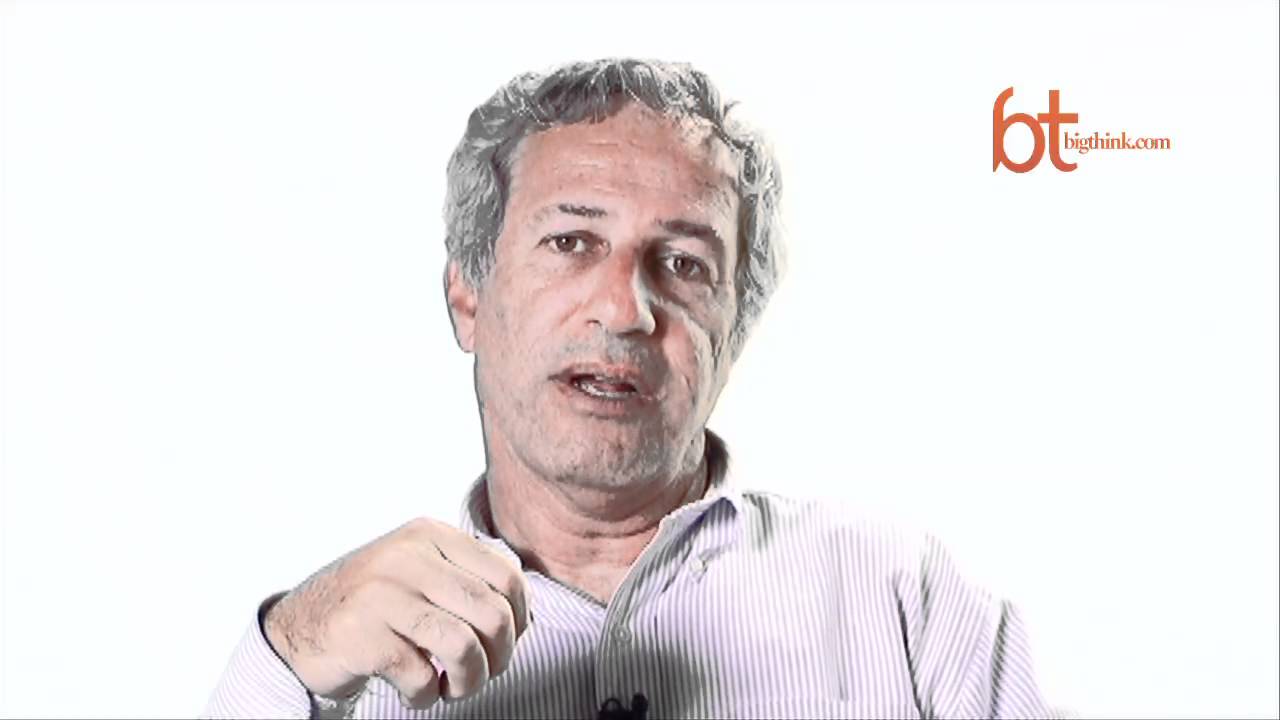
Freeman J. Dyson:
Freeman J. Dyson is Professor Emeritus of Mathematical Physics and Astrophysics in the School of Natural Sciences at the Institute for Advanced Study in Princeton. He has taught as a professor at the Institute since 1953, prior to which he was a professor for two years at Cornell University. His work on quantum electrodynamics marked an epoch in physics, with the techniques he used in this domain forming the foundation for most modern theoretical work in elementary particle physics and the quantum many-body problem. He is also celebrated as an author on science and related topics; his books include "Disturbing the Universe" (1966), "Weapons and Hope" (1984), "The Scientist as Rebel" (2006), and "A Many-Colored Glass: Reflections on the Place of Life in the Universe" (2007).
----------------------------------------------------------------------------------
TRANSCRIPT:
Question: How do you rate the chances of our discovering life on other planets?
Freeman Dyson: Well, of course, well, nobody knows. That’s why it’s interesting. I mean that it’s completely unknown whether these creatures exist or what they look or where they are, so we’re free to search in all sorts of ways and what is delightful about it is that our… It is very cheap. Actually the amounts of money that have to be spent are quite small and they don’t increase with time because our processing of data is all the time getting cheaper and cheaper. It’s essentially a matter of computers which are getting more powerful every year, but are not increasing in cost, so it means that we’re getting better and better at it, but with more or less constant expenditure and so it makes a lot of sense just to go on. There is always a chance next year we find something and we don’t have… It’s not… The public is not, is misled into thinking this is a grand and expensive project. Actually it’s not.
Recorded March 5th, 2010
Interviewed by Austin Allen
Sentinel Indexing in Progress
Metadata and chapters are available. Claim extraction for this episode is pending.
All video content is delivered via YouTube embedded players in accordance with the YouTube Terms of Service. Sentinel provides research tools that promote discovery and accountability across political media.