Big Think
@bigthink·8.8M subscribers·10.1K videos
Zen Healing | Big Think
Posted
April 24, 2012
Views
3,431
Likes
57
Comments
3
Engagement
1.75%
April 24, 2012
3,431
57
3
1.75%
Every word spoken in this episode is indexed. Type any phrase to jump straight to the moment it was said.
Type any word or phrase that may have been spoken. Click a result to seek the player to that exact moment.
Try a name, a topic, or a quoted line
Episode Timeline
Every episode in order around the one you’re watching — click any card and the page flips straight to it.
 14:51Now Playing
Zen Healing
New videos DAILY
Join Big Think Edge for exclusive videos
----------------------------------------------------------------------------------
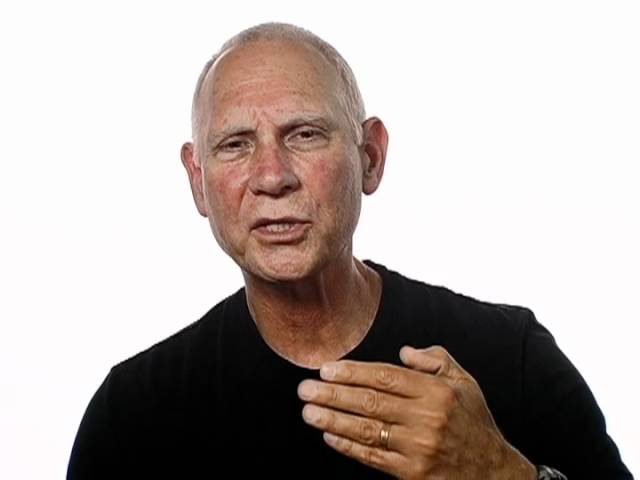
Dennis Genpo Merzel Roshi advises on the spiritual tools one can use to confront both spiritual and physical ills.
----------------------------------------------------------------------------------
Dennis Genpo Merzel:
Born in Brooklyn NY, Dennis Merzel grew up in Southern California where he was both a high school and college champion swimmer and All-American water polo player. He earned a Bachelors Degree in Economics from California State University at Long Beach and a Masters degree in Education from the University of Southern California and was a teacher and lifeguard before ordaining as a Zen monk under Zen Master Taizan Maezumi in 1973. Completing formal Koan study in 1979 he became Maezumi Roshi’s second Dharma Successor in 1980, the first being Zen Master Bernie Glassman. He received Inka (final seal of approval as Zen Master) from Zen Master Glassman in 1996, thereby becoming one of a small group of Westerners recognized as lineage holders in both the Soto and Rinzai Zen traditions.
In 1982 Genpo Sensei began teaching throughout Europe and founded the international group he named the Kanzeon (Love and Compassion) Sangha, now centered in Salt Lake City, Utah, with affiliates in France, the Netherlands, Poland, Belgium, Germany, England, and Malta. He has fourteen Dharma Successors, and has given Inka to eight Zen teachers making them Zen Masters. For eleven years, until 2007, he was the President of the White Plum Asanga, the worldwide community comprising all the Dharma heirs of Taizan Maezumi Roshi, their successors, and the many groups they lead.
Genpo Roshi is currently conducting workshops throughout the world. His publications include The Eye Never Sleeps, Beyond Sanity and Madness, 24/7 Dharma, and The Path of The Human Being, and many DVD's. His latest book, Big Mind/Big Heart: Finding Your Way, published in 2007, is also being published in translation in the Netherlands, Spain, Germany, Russia, Poland, France, Hungary, Croatia, Romania, and Bulgaria.
----------------------------------------------------------------------------------
TRANSCRIPT:
Question: How can someone who is at a low point in their life utilize your teachings?
Dennis Genpo Merzel Roshi:Well, one thing that I think we know, and I have found out it’s really important—spend some time alone, some time to really contemplate our life. One of the things that we know is that really self-actualizing individuals—and Maslow found this out a long time ago—have one thing in common, and that is that they spend a minimum of maybe an hour a day alone either in meditation or prayer, walking on a path or road, alone in the forest, in the mountains, sitting by a stream or by a fireplace or maybe just listening to music. I think it’s important for us to be really sincere and honest with ourselves and spend some quality time with ourselves, reflecting. I also think that it’s important for us to be willing to experience our emotions, our feelings—to experience our heart and not suppress or disown aspects of ourselves.
Question: Why do we suffer in the first place?
Dennis Genpo Merzel Roshi:Well, of course the major reason is craving and attachment. Those were discovered by the Buddha 2500 years ago. We all have cravings and attachments. But let me give a little twist, a littlie spin. Something that I think might be really helpful for those viewing this; that is, think about how much you care. Just think about that for a moment. How much you care? You care about of course your own life, your children, your family, and your loved ones. You care about your wife or your husband. You care about your parents. You care about the world. You care about the planet. You care about the future of the planet. Just think of how much you care. We usually think, “Maybe I don’t care enough. Maybe I should care more.” That’s true. All of us could care more, but we don’t look at that caring as an attachment. I care so much that I’m actually binding myself, without even a rope, because I am so caring. I am so loving towards others, and of course I could be more, but that binds me because, out of this caring, what I’m not doing is being free.
Think of that as the left hand side of the triangle, and think about that caring as an attachment, as a craving. I crave to care more. I’m attached to satisfying my partner or fulfilling my mother or making my husband happy or being there for another. I care so much that I’m frustrated. I feel disappointment. I feel guilty that I don’t do enough. I’m not there enough.
Read the full transcript at
Sentinel Indexing in Progress
Metadata and chapters are available. Claim extraction for this episode is pending.
All video content is delivered via YouTube embedded players in accordance with the YouTube Terms of Service. Sentinel provides research tools that promote discovery and accountability across political media.