Big Think
@bigthink·8.8M subscribers·10.1K videos
Big Think Interview with Anthony Romero | Big Think
Posted
April 24, 2012
Views
573
Likes
7
Engagement
1.22%
April 24, 2012
573
7
1.22%
Every word spoken in this episode is indexed. Type any phrase to jump straight to the moment it was said.
Type any word or phrase that may have been spoken. Click a result to seek the player to that exact moment.
Try a name, a topic, or a quoted line
Episode Timeline
Every episode in order around the one you’re watching — click any card and the page flips straight to it.
 45:18Now Playing
Big Think Interview with Anthony Romero
New videos DAILY
Join Big Think Edge for exclusive videos
----------------------------------------------------------------------------------
A Conversation with the ACLU Director.
----------------------------------------------------------------------------------
Anthony D. Romero:
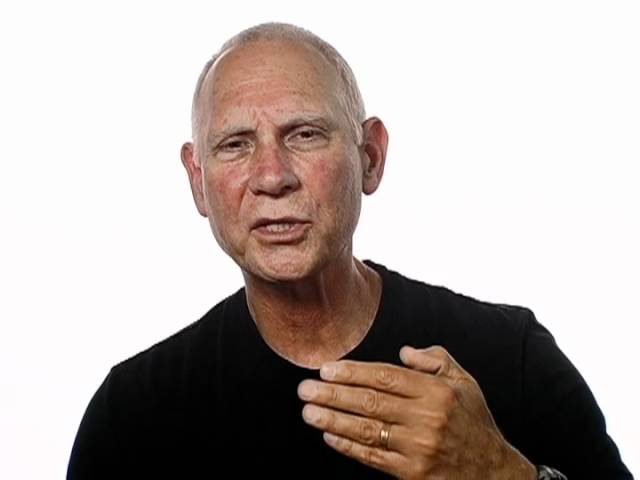
Anthony D. Romero, a former public-interest attorney, is the Executive Director of the American Civil Liberties Union. He is the ACLU's sixth executive director, and the first Latino and openly gay man to serve in that capacity. In 2007, Romero and co-author Dina Temple-Raston published In Defense of Our America: The Fight for Civil Liberties in the Age of Terror.
----------------------------------------------------------------------------------
TRANSCRIPT:
Question: How has Obama changed Guantanamo Bay policies?
Anthony Romero: Remarkably little has changed since President Obama took office when it comes to Guantanamo. We were elated when his first three executive orders in the first 24-hours of his presidency said they would shut down Guantanamo within a year, that he would ban torture unequivocally, and he would shut down the secret prisons which are being run by the CIA.
We thought we were off to a pretty good start; it seemed like civil liberties trifecta to us. But frankly, in the last six or seven months that we’ve seen since those first executive orders, there’s been very little substantive difference in the way to which the policies are executed, and even the maneuvering of the Obama administration. They have very much backtracked on those initial promises on shutting down the military commissions unequivocally.
We fear now that we’re in a very different political environment, where people want to believe and have faith in this president. He came in with enormous popularity, with an enormous mandate to get us back on track. He still commands enormous popularity in the public opinion polls, and yet when you look at the substantive policies of this president, and you compare them to those of George Bush, they’re not all that different. The rhetoric certainly much different, the values that he speaks of are newly refined, but the substantive policy outcomes are not that different, and that perhaps is what concerns us the most: that when people have finally let down their guard, and believed that we’re back on track to restore civil liberties, that in fact that we have a new administration that’s now mumbling when it comes to the initial promises they made.
Question: What is our nation’s current policy on torture?
Anthony Romero: Well the president has banned torture under his administration, and he has rejected the enhanced interrogation techniques that are now infamous in the office of legal council memos that the ACLU secured through our litigation under the Freedom of Information Act. So we’re back now to where we were pre-9/11. We don’t torture, we don’t abuse. We follow the Geneva Conventions.
The fact is that there’s still a lot of gray area in what the president has said in “We won’t use very aggressive torture techniques.” We’re not entirely sure about these enhanced interrogation techniques—where he has drawn the line? We don’t fully know. It’s clear to us in some of the discussions we’ve had with the administration that some of these rules regarding the Guantanamo military commissions, that, while they’ve banned to use of evidence gleaned from torture, it’s certainly possible—in fact we expect—they use interrogation techniques or use evidence gleaned from coerced interrogation techniques.
That could be fall a little bit below the torture line. But still would be illegal in the pre-9/11 context. We don’t fully know what’s going on at some other sites. We were saying we’re going to close Guantanamo, but we’re reading even in these recent newspapers about the wanton mess at Bagram. We read about the Chinese not having access to lawyers, awful conditions, refusing to come out of their cells as a way to protest their inhumane treatment. And whenever you have a prison or detention center that is not accessible to the members of the press, or the public advocates like us at the ACLU, that’s a recipe for abuse; what can happen behind close-doors that can’t be penetrated can in fact bleed to the type of abusive techniques that we saw under the Bush administration.
Question: Should we investigate those who may have authorized torture previously?
Anthony Romero: What I think the president fails to understand is in the fact that he always refers to himself as Commander in Chief of the nation. It is that a concern for civil liberties and human rights on the one hand won’t necessarily be at odds with the concern of making sure he enforces the nation’s security as Commander in Chief
Read the full transcript at
Sentinel Indexing in Progress
Metadata and chapters are available. Claim extraction for this episode is pending.
All video content is delivered via YouTube embedded players in accordance with the YouTube Terms of Service. Sentinel provides research tools that promote discovery and accountability across political media.