Big Think
@bigthink·8.8M subscribers·10.1K videos
Cured By Trickery | Big Think
Posted
April 24, 2012
Views
294
Likes
1
Engagement
0.34%
April 24, 2012
294
1
0.34%
Every word spoken in this episode is indexed. Type any phrase to jump straight to the moment it was said.
Type any word or phrase that may have been spoken. Click a result to seek the player to that exact moment.
Try a name, a topic, or a quoted line
Episode Timeline
Every episode in order around the one you’re watching — click any card and the page flips straight to it.
 1:58Now Playing
Cured By Trickery
New videos DAILY
Join Big Think Edge for exclusive videos
----------------------------------------------------------------------------------
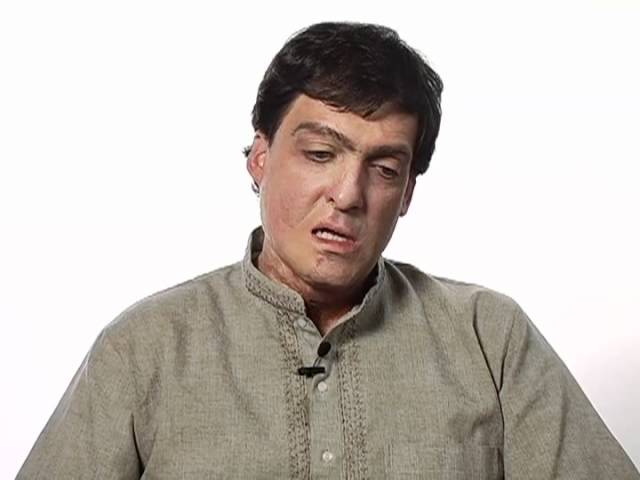
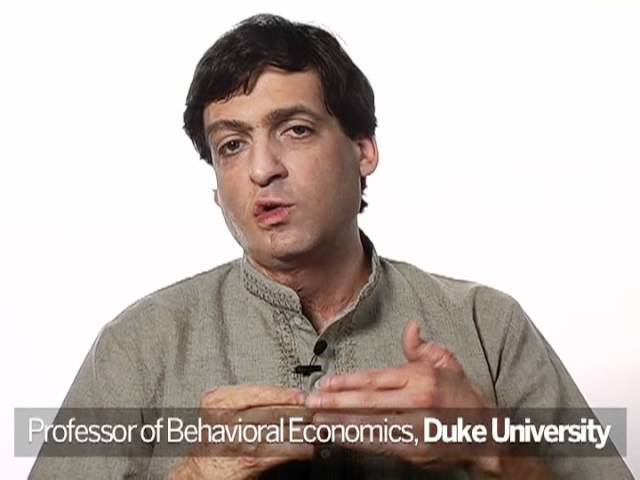
Behavioral economist Dan Ariely tackles the moral dilemma of administering placebos in medicine.
----------------------------------------------------------------------------------
Dan Ariely:
Dan Ariely is the James B Duke Professor of Psychology and Behavioral Economics at Duke University. He is the founder of The Center for Advanced Hindsight and co-founder of BEworks, which helps business leaders apply scientific thinking to their marketing and operational challenges. His books include Predictably Irrational and The Upside of Irrationality, both of which became New York Times best-sellers. as well as The Honest Truth about Dishonesty and his latest, Irrationally Yours.
Ariely publishes widely in the leading scholarly journals in economics, psychology, and business. His work has been featured in a variety of media including The New York Times, Wall Street Journal, Washington Post, Boston Globe, Business 2.0, Scientific American, Science and CNN.
----------------------------------------------------------------------------------
TRANSCRIPT:
Question: What are the benefits of placebos?
Dan Ariely: One of the ethical dilemmas that I’m very interested in is the question of placebos. We’ve done research showing that when you give people a painkiller, and you tell them it’s expensive, it works better than if you tell them it’s cheap. And it turns out that placebos are real.
So here’s what happened. You imagine that the medication is real, you get an injection from a physician and your body starts secreting Opiates. So you’re getting pain relief. You’re getting real physiological pain relief, but it’s coming from in your body rather than outside of your body. So this is a notion in which our beliefs about the world change our physiology.
And now here is the dilemma: should we start prescribing more placebos in medicine?
Should we lie to people more frequently? Because if we told people this is a placebo, it wouldn’t work. So we actually have to lie to them. But when we lie to them, it also works. So imagine that you have a virus, and you go to your physician and the physician knows it’s a virus. And he knows that antibiotics are not going to help. In fact, giving you antibiotics is going to get the mutation of the virus. It’s really bad for everybody. Should a physician start giving you sugar pill and say, “This is the best thing against this. This is a new thing. It’s from Merck. It’s the new thing coming from it and it’s the best thing against this infection you have"?
It’s a curious dilemma because doing so will actually help you. So who is really suffering here? It’s clearly not true. But it’s clearly incredibly devastating.
Sentinel Indexing in Progress
Metadata and chapters are available. Claim extraction for this episode is pending.
All video content is delivered via YouTube embedded players in accordance with the YouTube Terms of Service. Sentinel provides research tools that promote discovery and accountability across political media.