Big Think
@bigthink·8.8M subscribers·10.1K videos
The NYPD Needs to Regain Citizen Support, with Zachary Tumin | Big Think
Posted
July 3, 2014
Views
16,107
Likes
208
Comments
221
Engagement
2.66%
July 3, 2014
16,107
208
221
2.66%
Every word spoken in this episode is indexed. Type any phrase to jump straight to the moment it was said.
Type any word or phrase that may have been spoken. Click a result to seek the player to that exact moment.
Try a name, a topic, or a quoted line
 5:11Now Playing
The NYPD Needs to Regain Citizen Support, with Zachary Tumin
Watch the newest video from Big Think
Join Big Think Edge for exclusive videos
----------------------------------------------------------------------------------
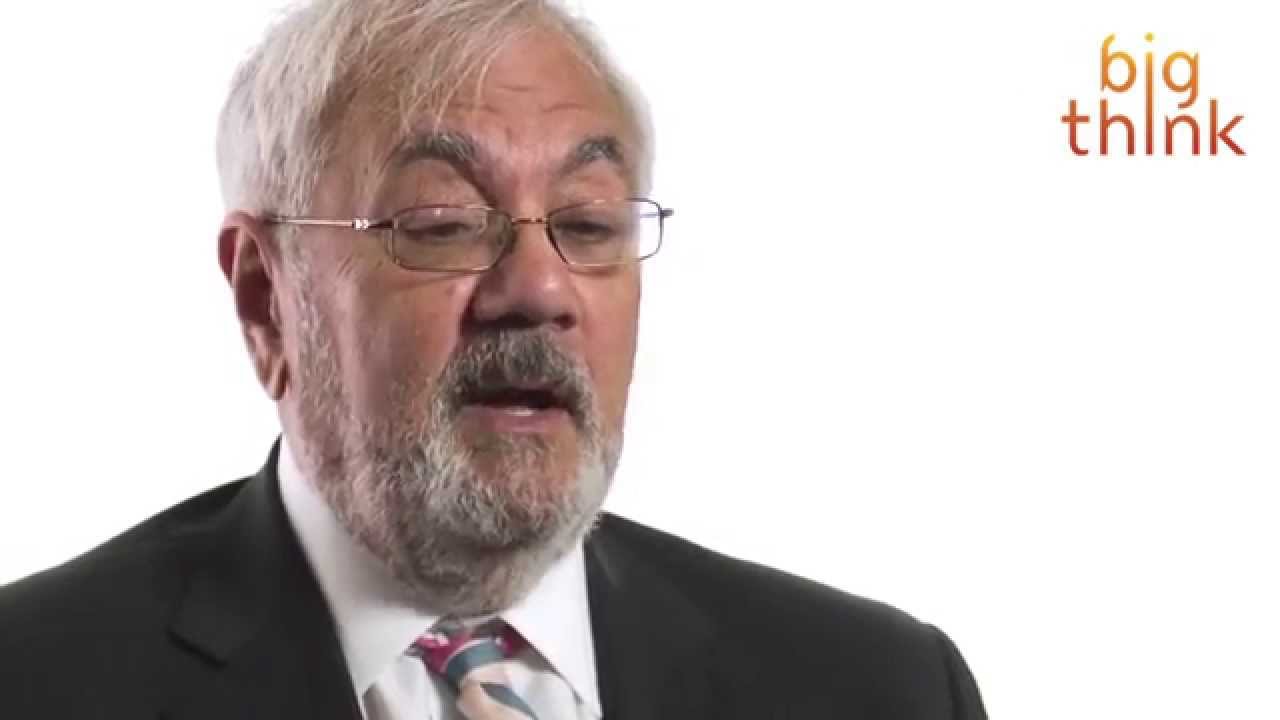
Zachary Tumin is a law enforcement strategist who runs the NYPD's social media outreach program. In this interview, he explains ways the Department has evolved in the past and lists several changes that need to be made in order to regain public support. These include a renewed focus on specialized data, a stronger system of community engagement, a more surgical approach to combating crime that doesn't tear neighborhoods apart, and a utilization of social media, which Tumin calls a "must-have tool for law enforcement."
----------------------------------------------------------------------------------
ZACHARY TUMIN:
Zachary Tumin is the Deputy Commissioner for Strategic Initiatives at the New York Police Department and former Special Project Assistant to the Director of the Science, Technology and Public Policy program at Harvard's Belfer Center for Science and International Affairs . He leads the Information and Communications Technology project and directs the Harvard component of a joint Harvard/MIT cybersecurity initiative.
Tumin has written extensively about the strategic management of collaboration. With former NYPD and LAPD Chief William Bratton, Tumin is the co-author of "Collaborate or Perish! Reaching Across Boundaries in a Networked World," published by Random House in 2012. He is the lead author on numerous articles, white papers, and reports, including Harvard Business Review’s “Viral By Design: Teams in the Networked World” and the Kennedy School’s “From Government 2.0 to Society 2.0: Pathways to Engagement, Collaboration and Transformation.”
Tumin is a sought-after adviser on collaboration strategy and has worked closely with senior executives in industry and government. He is past executive director of the Financial Services Technology Consortium. He served as staff to Boston Mayor Kevin H. White, District Attorney Elizabeth Holtzman in Brooklyn, and two New York City schools Chancellors as director of the city’s Division of School Safety, the nation’s seventh largest police force.
Tumin earned his B.A. in philosophy cum laude from the University of Pennsylvania, his Master's in Education from Harvard Graduate School of Education, and his Master's in Public Policy from Harvard Kennedy School.
----------------------------------------------------------------------------------
TRANSCRIPT:
Zachary Tumin: The New York Police Department over the last 12 years has made extraordinary progress in reducing crime in New York. It started 20, 25 years ago an idea called CompStat which was the idea that turn all the data that we have about crime transparent, let us see in infinite detail where it’s happening, who’s doing it, gives us the opportunity to then manage crime control very precisely and very effectively and move our resources where crime was and, in effect, bring it down in extraordinary ways. But what we also saw was that over these last 12 years the move to crime control cost the New York Police Department citizen support. It cost the New York Police Department the support of citizens for an incredibly important mission which was crime control. We know that it’s possible to have great crime control and strong citizen support. And we know that it’s possible as well to truly engage police officers in that work.
When you have those three things moving together and when you keep your eye not only on citizen support and workforce engagement and crime control but finally then on outcomes for neighborhoods, and we see, we measure our success by whether people are playing in parks, whether kids can walk to school safely. Then we’ll have success in a way that we’ve never had before. We’ve lost a large segment of New Yorkers. We know that we can get them back and we need to. And we need in order to do that we’ll be successful with crime control when we are able to mobilize all segments of New York in support of it. If we can’t then we’re not going to have the information that we need. We’re not going to have the support that we need. Today’s witness won’t come forward tomorrow if they don’t see the results.
So we’re in a new world today where some of the traditional tools of law enforcement have been taken away from the New York Police Department by the courts. Stop and frisk. And we see the effect on the street corners. And public housing trespass laws have been a very effective tool for law enforcement because we don’t need to ask permission. We are the agents of the public housing . We can use trespass summonses for that kind of control. Even marijuana stops have been a way of control.
Read the full transcript at
Sentinel Indexing in Progress
Metadata and chapters are available. Claim extraction for this episode is pending.
All video content is delivered via YouTube embedded players in accordance with the YouTube Terms of Service. Sentinel provides research tools that promote discovery and accountability across political media.