Big Think
@bigthink·8.8M subscribers·10.1K videos
Autonomous Cars 101, with Brad Templeton | Big Think
Posted
June 23, 2014
Views
43,420
Likes
989
Comments
123
Engagement
2.56%
June 23, 2014
43,420
989
123
2.56%
Every word spoken in this episode is indexed. Type any phrase to jump straight to the moment it was said.
Type any word or phrase that may have been spoken. Click a result to seek the player to that exact moment.
Try a name, a topic, or a quoted line
 10:40Now Playing
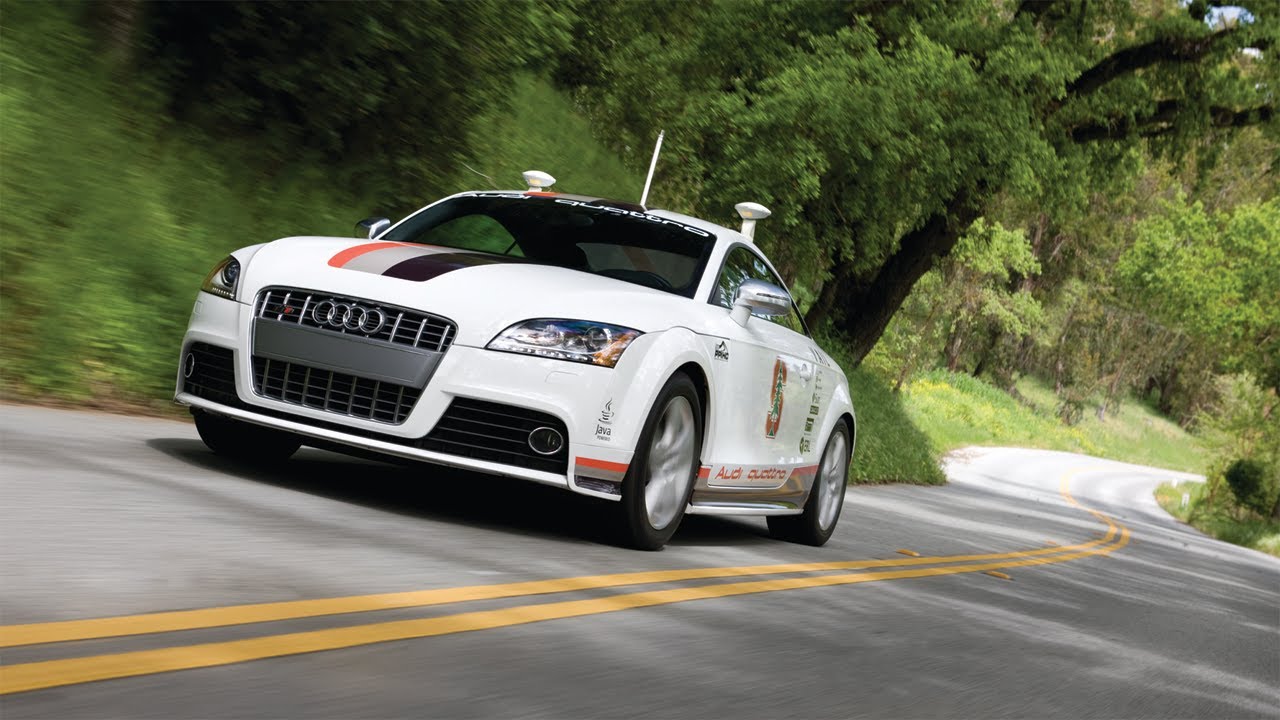
Autonomous Cars 101, with Brad Templeton
Watch the newest video from Big Think
Join Big Think Edge for exclusive videos
----------------------------------------------------------------------------------
Self-driving cars are about more than taking your hands off the wheel. Brad Templeton, who consulted Google on its autonomous cars project, says a car that drives itself is a car that can deliver itself to you. Such an on-demand service will fundamentally change how we relate to our vehicles, says Templeton. Currently, we're given to buying cars for their least practical qualities. City-dwellers buy SUVs for a couple skiing trips each year, or a weekend carpenter will buy a gas-guzzling pickup and only use the truck bed occasionally. In an on-demand world, we'll have greater fuel efficiency and, as a result, a much better world.
----------------------------------------------------------------------------------
BRAD TEMPLETON:
Brad Templeton is the Track Chair for Computing at Singularity University, developer of and commentator on self-driving cars, software architect, board member of the Electronic Frontier Foundation, internet entrepreneur, futurist lecturer, writer and observer of cyberspace issues, hobby photographer, and an artist.
Templeton has been a consultant on Google’s team designing a driverless car and lectures and blogs about the emerging technology of automated transportation. He is also noted as a speaker and writer covering copyright law and political and social issues related to computing and networks. He is a director of the futurist Foresight Nanotech Institute, a think tank and public interest organization focused on transformative future technologies.
Templeton was founder, publisher and software architect at ClariNet Communications Corp., which in the 1990s became the first internet-based business, creating an electronic newspaper. He has been active in the computer network community since 1979, participated in the building and growth of USENET from its earliest days, and in 1987 founded and edited a special USENET conference devoted to comedy.
Templeton has been involved in the development of important pieces of software including VisiCalc, the world’s first computer spreadsheet, and Stuffit for archiving and compressing computer files.
In 1996, ClariNet joined the ACLU and others in opposing the Communications Decency Act, part of the Telecom bill passed during Clinton Administration. The U.S. Supreme Court sided with the plaintiffs and ruled that the Act violated the First Amendment in seeking to impose anti-indecency standards on the internet.
---------------------------------------------------------------------------------
TRANSCRIPT:
Brad Templeton: The first thing to understand before looking at cars that drive themselves is just how much of our lives cars have become, especially in the United States but really all around the world. There are 33,000 Americans killed every year in car accidents. More killed in car accidents in the United States than in its entire history of war going back to the Revolutionary War. We have 1.2 million people killedaround the world. It's one of the world's major diseases - if it were a disease - in terms of killing people. And we also give 25 percent of all of our energy to personal transportation and 25 percent of our greenhouse gases are going to the car. Now this is not true in Manhattan, but in Los Angeles it's estimated that more then half of the land in the city belongs to the cars, its garages, its the driveways, its roads, its parking lots, all these things land that belongs to the car. We have given up so much of ourselves and we depend on the car for so much it's shaped our cities, it's shaped our lives. The fact that now cars are going to be a computer thing. That the computer is going to be the most important part of the car, the thing that drives the car will be more important than the engine. And this will be on the Moore's Law curve we've talked about getting better, not the engine getting better every year but the important part that drives it getting better every year the way computer technology and network technology do. We're going to rewrite really important elements of our society when we make transportation one of these computerized technologies.
Most people thought that cars that drive themselves were something from the science fiction. I still routinely run into people who say "This is not in my lifetime, 20 or 30 years away." But if this is clearly wrong and it is becoming more and more clearly long as time goes on. The most famous project and the most advanced project has come not from a car company but from Google. And I worked actually on Google's team for a while in building that vehicle.
Read the full transcript at
Sentinel Indexing in Progress
Metadata and chapters are available. Claim extraction for this episode is pending.
All video content is delivered via YouTube embedded players in accordance with the YouTube Terms of Service. Sentinel provides research tools that promote discovery and accountability across political media.