Big Think
@bigthink·8.8M subscribers·10.1K videos
Mostly, We Respond to Tragedies in Ways That Don’t Really Help | Big Think
Posted
November 1, 2015
Views
23,728
Likes
813
Comments
67
Engagement
3.71%
November 1, 2015
23,728
813
67
3.71%
Every word spoken in this episode is indexed. Type any phrase to jump straight to the moment it was said.
Type any word or phrase that may have been spoken. Click a result to seek the player to that exact moment.
Try a name, a topic, or a quoted line
See what was published immediately before and after this episode.
 3:28
3:28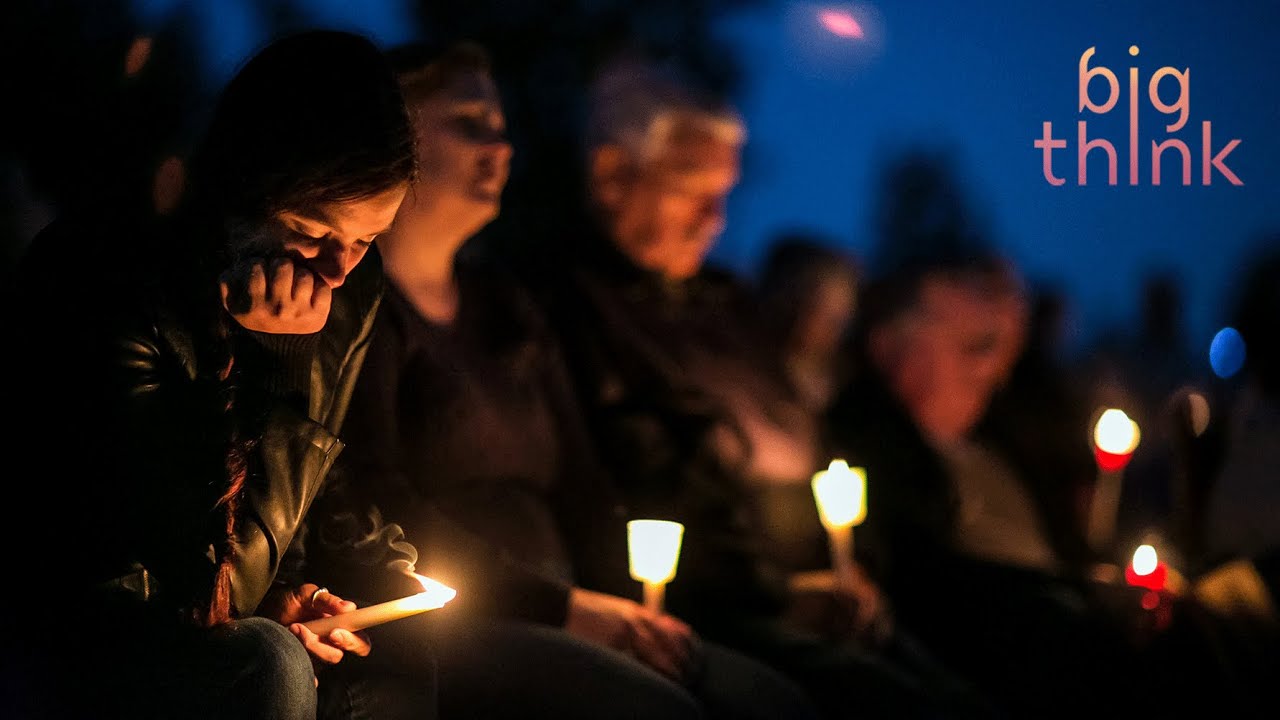 4:52Now Playing
Mostly, We Respond to Tragedies in Ways That Don’t Really Help
Watch the newest video from Big Think
Join Big Think Edge for exclusive videos
----------------------------------------------------------------------------------
What’s the best way to help after a natural disaster or school shooting? Mass tragedies can take many forms, but in all cases, extreme needs follow. Dr. Will Marling of the National Organization for Victim Assistance shares insight on how to provide support.
----------------------------------------------------------------------------------
WILL MARLING:
Will Marling was executive director of the National Organization for Victim Assistance (NOVA) from 2007 to 2015. Under his leadership of the oldest national victim assistance organization of its kind in the nation, NOVA expanded its commitment and capacity to provide training and promote victims’ rights for those harmed by crime and crisis. This includes enlarging the commitment for advocacy standards beyond the civilian National Advocate Credentialing Program to the Department of Defense Sexual Assault Advocate Certification Program. Beyond leading the organization, Marling’s skill-based expertise includes the intersection of cyber crime with physical violent crime including sexual assault and abuse.
----------------------------------------------------------------------------------
TRANSCRIPT:
Will Marling: Trauma is something that’s unexpected, out of our control, and is outside of our ability to prevent it. And so that really, by definition, is a loss. You can have the loss of life; the loss of physical control, which is an injury; the loss of emotional control, which is a mental health need; you can have a financial loss. So loss of that nature brings trauma.
A mass casualty can take the form of a violent crime or an individual's involved in harming lots of other people. It can be a natural disaster. It can be a combination of those things. Many times in the public, people don’t know how to respond, and so they kind of default to what they would perceive to be something that’s helpful. So, donating clothes, knitting things, sending food, this kind of thing. And ironically, in many situations, that’s not really that helpful. Somebody drove a truck, a tractor-trailer full of fruitcake and actually parked it in the middle of the disaster zone. You know, one [laughs] fruitcake would be plenty, actually, but, you know, in the, in the midst of this natural disaster, it’s not the right kind of resources that people typically need. They need other kinds of resources, and those needs commonly revolve around immediate safety and security issues, immediate emotional support, and then time to recover to some degree. What do you typically get when you say, “Well, is there anything I can do for you?” “Oh, there’s nothing. You know. I’m fine.” When, at that casket, when you make that comment to that widow at her, you know, her husband’s visitation, she’s not thinking, “Yeah, the grass hasn’t been mowed, and my mortgage needs to be paid, and the dog needs to be let out.” All very practical things. And many times, that’s really what we need to focus on. How do you discover those practical needs? By asking them.
In the aftermath of a situation, people are recovering emotionally, physically, financially. And many times, those needs are lifelong. If a person loses his or her job, and can’t work, that’s an issue of disability. That’s a need. Paying funeral expenses, dealing with medical expenses, medical bills; sometimes they’re still trying to make their house payment. Do they have resources to be able to manage with that? Do they have the ability to get workers comp or long-term disability? That can be questionable. A manager of a compensation program, a state compensation program, told me that they consider the average cost of a shooting victim who survived to be roughly $50,000. That’s the calculable consideration for their cost, their expenses. And so even just financially, that’s where donations can be helpful. And so it’s important for the public to be thoughtful, to make sure that whatever account that you might be contributing to is actually legitimate. Take an extra step or two to ask some questions, to do a Google search, and to make sure it’s legitimate and authentic.
When you think about how we respond to a person, we challenge people to ask the question: Am I really defining their trauma for them by the statement that I’m making? For instance, “God wanted your loved one more than you did; that’s why he took your loved one.” Well, when you kind of examine that phrase, what are we really doing? We’re defining that loss for that individual. Most people who are experiencing that kind of loss would say, “That’s not helpful.....
To read the transcript, please go to
Sentinel Indexing in Progress
Metadata and chapters are available. Claim extraction for this episode is pending.
All video content is delivered via YouTube embedded players in accordance with the YouTube Terms of Service. Sentinel provides research tools that promote discovery and accountability across political media.