Big Think
@bigthink·8.8M subscribers·10.1K videos
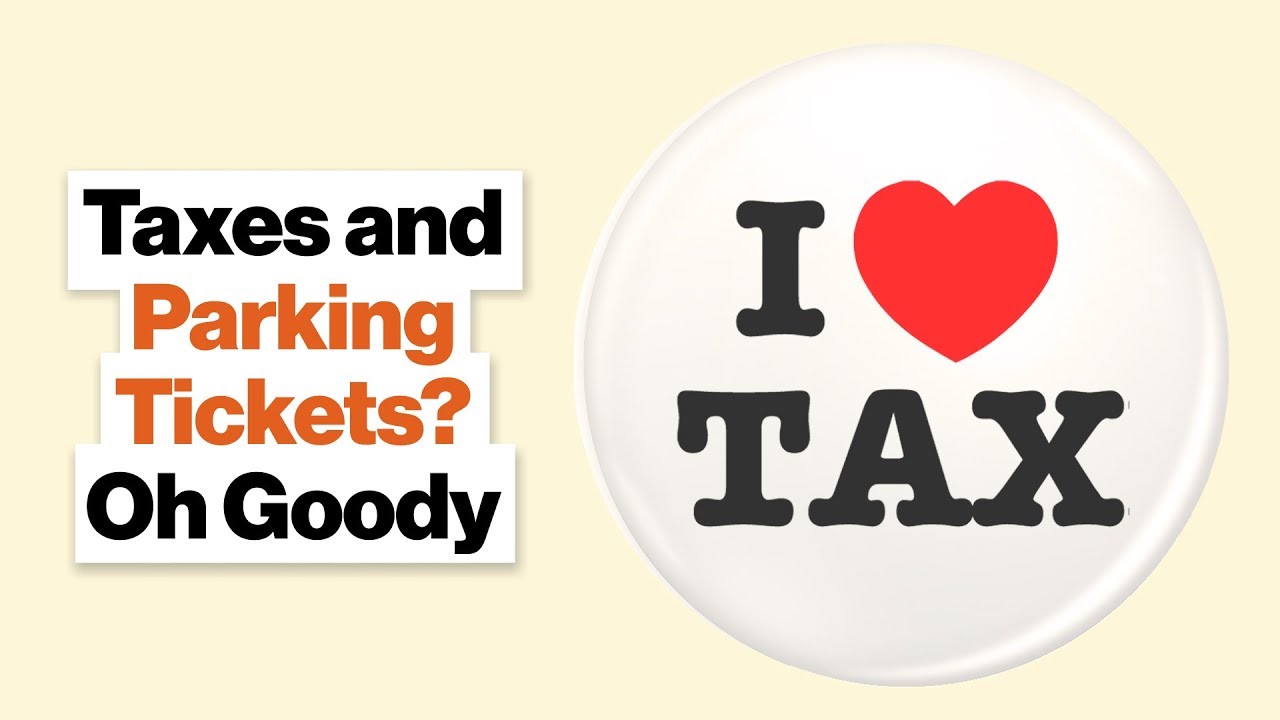
This Psychological Trick Will Make You Love Paying Your Taxes | Michael Norton | Big Think
Posted
September 30, 2017
Views
16,619
Likes
501
Comments
198
Engagement
September 30, 2017
16,619
501
198
4.21%
Every word spoken in this episode is indexed. Type any phrase to jump straight to the moment it was said.
Type any word or phrase that may have been spoken. Click a result to seek the player to that exact moment.
Try a name, a topic, or a quoted line
 4:28Now Playing
This Psychological Trick Will Make You Love Paying Your Taxes
Watch the newest video from Big Think
Join Big Think Edge for exclusive videos
----------------------------------------------------------------------------------
Tax Day is one of the most stressful days of the year for pretty much every American, and the biggest gripe about taxes is that most of us have no idea where the money goes. In an age where military spending is off the charts and government officials are taking private planes at the taxypayer expense it's no small secret that the other 99% of us would like a say in where our hard earned money goes to. But changing that system is a huge undertaking. What Michael Norton suggests is easy to start small and change just some of that pool of money to reflect what the people want. It would be easy to implement; there's even some cities in America that are already doing it. Michael's has co-written a book that covers this and other subjects called Happy Money: The Science of Happier Spending. Professor Norton’s studies are cited in The Influential Mind: What the Brain Reveals About Our Power to Change Others by Tali Sharot.
----------------------------------------------------------------------------------
MICHAEL NORTON:
Michael I. Norton is the Harold M. Brierley Professor of Business Administration at the Harvard Business School, and a member of Harvard’s Behavioral Insights Group. He holds a B.A. in Psychology and English from Williams College and a Ph.D. in Psychology from Princeton University. Prior to joining HBS, Professor Norton was a Fellow at the MIT Media Lab and MIT’s Sloan School of Management.
He is the co-author - with Elizabeth Dunn - of the book Happy Money: The Science of Smarter Spending.
----------------------------------------------------------------------------------
TRANSCRIPT:
Michael Norton: When we started studying people paying their taxes we were kind of looking for a real pain point that people have. If you think about what’s the worst day of the year for you, often the worst day of the year is when you have to write that extra check to the IRS. And of course partly we hate it just because we have to give money away that we wish we could keep, but we thought there might be some other underlying psychology going on for why we hate paying taxes so much.
And if you think about it when you send that check off you kind of have no idea what happens with it. I mean you know it’s going to your state or federal government, but you don’t really know what it’s being used for. You look outside and you see roads and there’s some link between those in some way or another but you don’t really know exactly what’s happening.
And that decoupling between what you’re sending in and what the output is is actually pretty aversive for us, we kind of like to know when we do something what’s going to happen as a result.
And so what we try to do in our research is recouple those two things closer together. So imagine, for example, when you pay your taxes you write in the amount and then you can allocate where you want things to go. You could actually say I want more of my taxes to go to schools versus roads versus the military or the reverse if you wanted to support the military more. And the idea there was sure we still wouldn’t like paying taxes that much because we wish we could spend our money on ourselves, but recoupling the cost and the benefits might actually help us hate it a little bit less.
We’ve talked to a lot of governments, local governments, state governments, federal governments in the U.S. and around the world about implementing this idea of recoupling tax payments with the benefits that citizens get. Politically it’s quite difficult, so you can imagine that if you talk about letting citizens allocate all of their money wherever they want you might not get funding for really basic things like infrastructure that aren’t really that exciting for people to think about.
So politically there’s a real risk to kind of opening up democracy where instead of taxes going into a pool where elected officials decide what needs to be done, each individual citizen has a voice. One way we’ve tried to deal with that is to think about maybe you don’t need to allocate 100 percent of your taxes wherever you want, but what if I said at the end of the year you know what, you’re going to get to allocate ten percent wherever you want. So most of your taxes are still going to be the old way where they go into a general pool and then the people we’ve elected who we in theory trust will decide where the money goes, but we still as citizens get to say a little bit more about what we want to do. And some cities in the United States have started doing this through something called participatory budgeting.
For the full transcript, check out
Sentinel Indexing in Progress
Metadata and chapters are available. Claim extraction for this episode is pending.
All video content is delivered via YouTube embedded players in accordance with the YouTube Terms of Service. Sentinel provides research tools that promote discovery and accountability across political media.