Bloomberg News
@Bloomberg-News·2.8M subscribers·40.1K videos
London's Tate Modern Shows First New Exhibit Since Covid-19 Lockdown
Posted
October 7, 2020
Views
850
Likes
14
Comments
2
Engagement
October 7, 2020
850
14
2
1.88%
Every word spoken in this episode is indexed. Type any phrase to jump straight to the moment it was said.
Type any word or phrase that may have been spoken. Click a result to seek the player to that exact moment.
Try a name, a topic, or a quoted line
See what was published immediately before and after this episode.
 1:41
1:41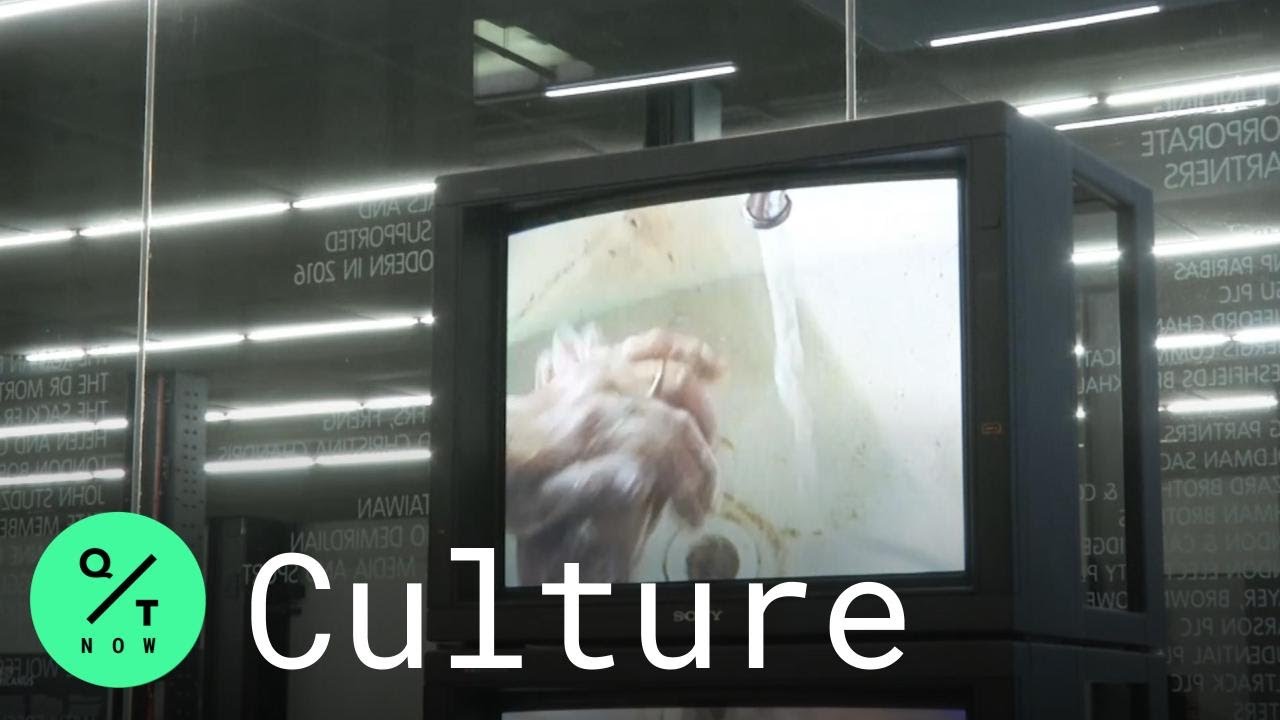 1:42Now Playing
Conceptual artist Bruce Nauman's exhibition goes on show at London's Tate Modern from Wednesday, featuring a piece on hand-washing. It's the first exhibition to open here since the coronavirus pandemic brought a lockdown to the U.K.'s public spaces, including art galleries and museums.
Getting Nauman's installations in place has taken seven weeks - an unusually long time to set up an exhibition, due to new measures to limit the number of people in the space at any one time.
But for curator and former director of Tate Nicholas Serota, the wait was worth it.
"Well, it's been a long wait, and it is really a marvellous feeling to be back in this building, opening an exhibition rather than trying to revive one that had opened before the pandemic. It's been a very slow installation process.
We've had to take every possible precaution. And, of course, the visitors, when they arrive, will be given every possible safeguard. But it's the most exciting moment to have a new show by a great artist in one of the great museums of the world."
Nauman's work spans more than 50 years and some themes reoccur over time, such as the human body, lettering and language, and physical and psychological pressure.
In a career that defies easy categorisation, he has experimented with neons, video installations, sculpture and more.
Curator Katy Wan says he has been a trailblazer for many media that are now commonplace in the art world.
"His crossover of performance, of film and video, of conceptual art as well, is something that seems to be all around us and ubiquitous and many artists are working in this way," she says.
"But it's really important to realize that in the time that he first started making these types of works, so the mid 60s and the 70s, this was a highly radical gesture that no one was really doing at the time."
And there are works that have taken on new meaning in this era of Covid-19.
"You'll see a piece which is called Hands Washing Normal. And it's two monitors showing someone washing their hands very, very vigorously with a lot of soap, and certainly for more than 20 seconds. This is a piece that was not made this year. It was made in 1996. So Nauman takes these rituals that we all perform and makes us look at them even more carefully.
And whatever resonance that piece had in 1996, it certainly has a very different resonance in 2020," says Serota.
In his 1970 work 'Going Around the Corner Piece with Live and Taped Monitors', the theme is surveillance.
Visitors wander past a CCTV camera - a rare piece of equipment when this piece was produced.
It's not until they turn the corner and catch a brief glimpse of themselves on screen that they are aware of exactly how they are being watched.
Surveillance is also at the centre of 'Mapping the Studio II', a work created decades later in 2001.
This night time monitoring of Nauman's own studio goes on for hours - and it's the lucky or patient few who will get to see any action caught on camera.
Nauman's exploration of the dull, everyday is what makes this exhibition special, according to art critic for Londonist Tabish Khan.
"So when you first go in, it's slightly strange because you think art is meant to be beautiful or is meant to be inspiring. But here we are celebrating the mundane, the inane, sometimes the slightly awkward, confusing or even disturbing. But it's when you go through it after a while and realise actually life is confusing, it's disturbing. Yes, we like to celebrate the moments that are great, but at the same time, it's also filled by moments where nothing actually happens," he says.
Nauman may not be as famous as the Andy Warhols or the Yayoi Kusamas of the world, but his impact on the art scene is undeniable.
"I believe Nauman's work shows a point in art history where we started to change from that sort of beautiful, celebrating beautiful imagery to looking at the other aspects of what it means to be a human being. And let's face it, the household names are the ones who have big, showy works. And he doesn't have necessarily big showy works, nor does he have a signature style. And that's arguably why he's not a household name. But when you see the diversity of his work in here, then you realise what he's trying to say," says Khan.
His clowns are more likely to unsettle visitors than make them laugh - but that's exactly what Nauman intended.
The exhibition runs until 21 February 2021.
Subscribe to our YouTube channel
QUICKTAKE ON SOCIAL:
Follow QuickTake on Twitter: twitter.com/quicktake
Like QuickTake on Facebook: facebook.com/quicktake
Follow QuickTake on Instagram: instagram.com/quicktake
Subscribe to our newsletter
Email us at quicktakenews@gmail.com
QuickTake by Bloomberg is a global news network delivering up-to-the-minute analysis on the biggest news, trends and ideas for a new generation of leaders.
Sentinel Indexing in Progress
Metadata and chapters are available. Claim extraction for this episode is pending.
All video content is delivered via YouTube embedded players in accordance with the YouTube Terms of Service. Sentinel provides research tools that promote discovery and accountability across political media.