Bloomberg News
@Bloomberg-News·2.8M subscribers·40.1K videos
Vaccine Safety to Remain Unclear Until Millions Get Their Shots
Posted
November 17, 2020
Views
1,360
Likes
24
Comments
21
Engagement
November 17, 2020
1,360
24
21
3.31%
Every word spoken in this episode is indexed. Type any phrase to jump straight to the moment it was said.
Type any word or phrase that may have been spoken. Click a result to seek the player to that exact moment.
Try a name, a topic, or a quoted line
Episode Timeline
Every episode in order around the one you’re watching — click any card and the page flips straight to it.
 0:38
0:38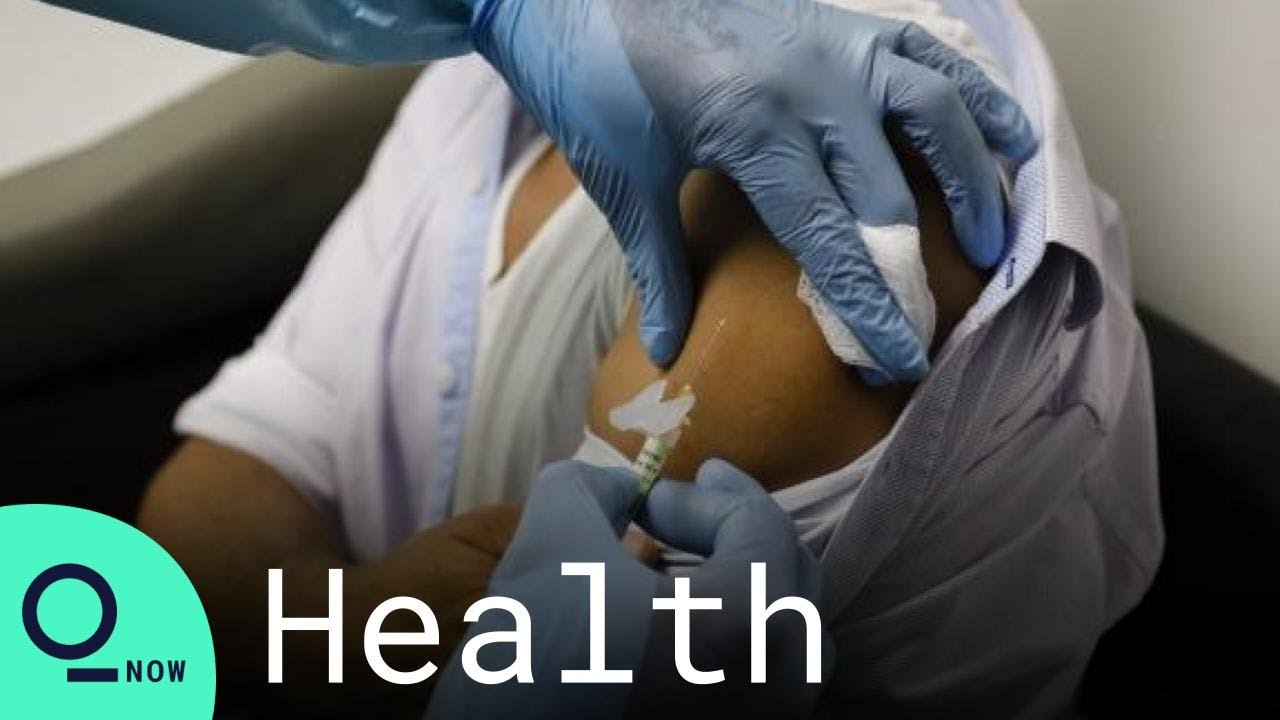 6:34Now Playing
Monitoring Covid-19 vaccines for safety issues will fall to a group of U.S. health agencies that also will have a hand in their rollout, a potential hurdle in persuading skeptics to get the shots, say former government officials who helped control an outbreak a decade ago.
The Centers for Disease Control and Prevention, the Food and Drug Administration, the Department of Veterans Affairs and other health agencies all have separate systems to track side effects and safety in people who get the first shots. But there are concerns the groups advising the agencies on all aspects of a vaccine may face public skepticism over their safety assessments at a time when vaccine hesitancy is a major concern.
“The same advisory committee that told them to get it are telling them it’s OK,” said Daniel Salmon, the director of vaccine safety for the National Vaccine Program Office during the 2009 H1N1 swine flu outbreak. “What are the optics of that?”
There’s also worry that a lack of unified oversight could make it more difficult to document and quickly act on safety issues. Meanwhile, the stalled presidential transition could complicate efforts even further, said Jesse Goodman, who led the FDA office that handled vaccines during the 2009 H1N1 outbreak.
“I am really worried that if there’s instability in leadership, or too much distraction, that in January a Biden administration could face an even more difficult situation,” said Goodman, now head of Georgetown University’s Center on Medical Product Access, Safety and Stewardship. That could affect “both the way the pandemic is accelerating and --when we do have a safe and efficacious vaccine -- getting people to use it.”
Vaccines have generally been safe, though some high-profile missteps have helped fuel skepticism. For example, in 1976, some people who received a swine flu vaccine developed Guillain-Barre Syndrome, a disease that can cause paralysis. The Covid-19 vaccines will have only two months of safety data on hand -- the FDA-mandated minimum -- when they seek emergency authorization.
That means longer-term problems with the shots may not be seen until millions of Americans have already been vaccinated. The U.S., meanwhile, will be depending on monitoring programs tied to a range of different agencies to respond quickly to reports of side effects or safety issues.
Some of the programs have been around for a few decades, others are new. It will be vital moving forward to make sense of all the data available as the vaccines are given out, said Grace Lee, who sits on the Advisory Committee on Immunization Practices for the U.S. Centers for Disease Control and Prevention, and leads the panel’s Covid-19 vaccine safety subgroup.
“The benefit of many of these systems is that they’re attached to electronic health records where we can go evaluate whether they’re real or not,” said Lee, a professor of pediatrics focusing on infectious diseases at Stanford University School of Medicine.
The subgroup includes three panel members and several consultants, including epidemiologists and immunologists from top universities. It is “laser-focused only on the safety issues,” Lee said. Her plan: the subgroup will meet weekly to assess potential signals of concerns from all the different safety monitoring programs.
Side effects can include minor annoyances, such as skin irritation where the needle went in or muscle soreness.Those are typically seen early in clinical trials, and will likely be noted in company requests for emergency approval.
Subscribe to our YouTube channel
Bloomberg Quicktake brings you live global news and original shows spanning business, technology, politics and culture. Make sense of the stories changing your business and your world.
To watch complete coverage on Bloomberg Quicktake 24/7, visit or watch on Apple TV, Roku, Samsung Smart TV, Fire TV and Android TV on the Bloomberg app.
Connect with us on…
Breaking News on YouTube
Sentinel Indexing in Progress
Metadata and chapters are available. Claim extraction for this episode is pending.
All video content is delivered via YouTube embedded players in accordance with the YouTube Terms of Service. Sentinel provides research tools that promote discovery and accountability across political media.