
Bloomberg News
@Bloomberg-News·2.8M subscribers·40.1K videos
Debris, Human Remains Recovered from Indonesia Plane Crash
Posted
January 11, 2021
Views
7,970
Likes
78
Comments
9
Engagement
1.09%
January 11, 2021
7,970
78
9
1.09%
Every word spoken in this episode is indexed. Type any phrase to jump straight to the moment it was said.
Type any word or phrase that may have been spoken. Click a result to seek the player to that exact moment.
Try a name, a topic, or a quoted line
 0:40Now Playing
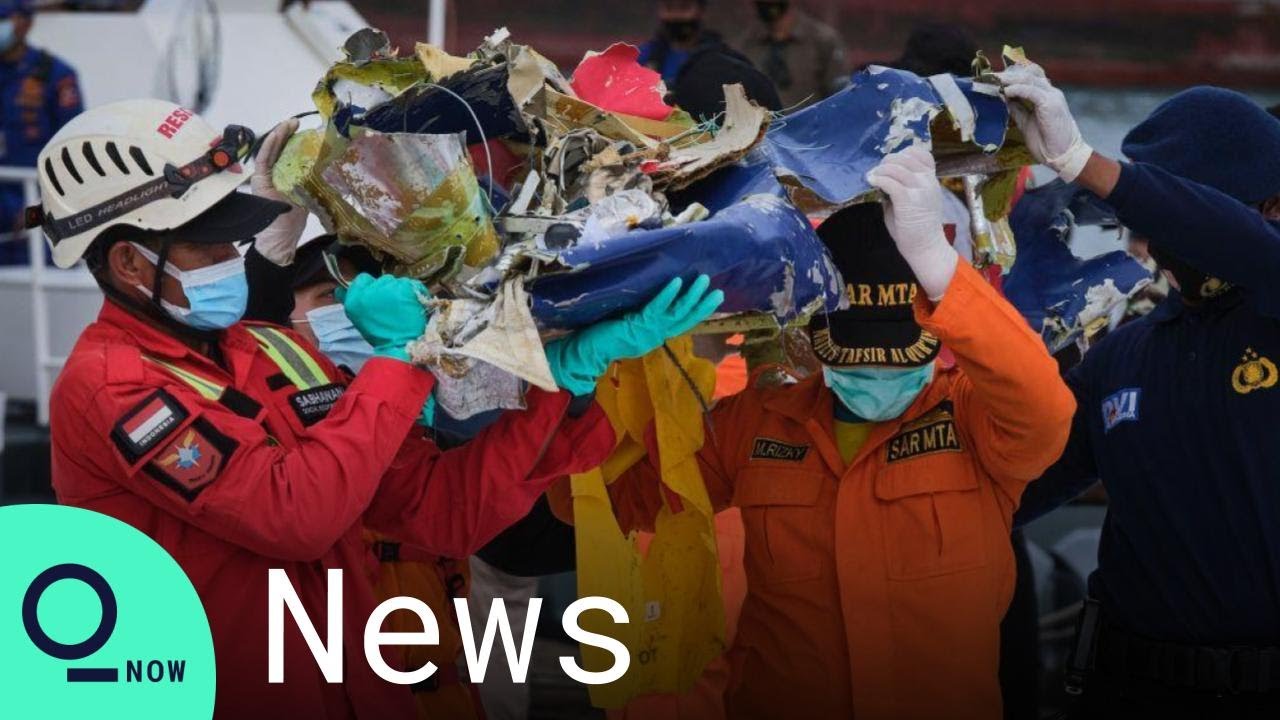
Search teams at the site of the Sriwijaya Air crash in Indonesia have sent body bags and items of clothing to police for identification as they continue to hunt for the black boxes of the aircraft, which investigators said broke apart after hitting the Java Sea.
The Boeing Co. 737-500 passenger jet carrying 62 people plunged more than 10,000 feet shortly after takeoff at 2:36 p.m. local time Saturday. Investigators are closing in on the flight recorders after detecting so-called pingers used to help locate the black boxes that capture sound in the cockpit and monitor the plane’s track and other flight data. The underwater locator beacons broadcast a unique sound when they come in contact with water to help pinpoint their location in wreckage.
At least 18 bags of human remains have been handed over, Bagus Puruhito, head of the National Search and Rescue Agency, said Monday. Several other bags containing plane parts have also been delivered to transport safety authorities, he said. Social Affairs Minister Tri Rismaharini said during an earlier televised briefing that the government is providing support including counseling to the victims’ families.
Indonesia, one of the world’s fastest-growing aviation markets prior to the coronavirus pandemic, has one of the worst safety records. The archipelago of more than 17,000 islands has suffered 104 accidents and 2,353 related fatalities, data from Aviation Safety Network show. Its planes were barred by the European Union in 2007 over safety concerns and the full ban wasn’t lifted until 2018.
Weather has been a contributing factor in several crashes in Indonesia and may have played a part in this accident. On Saturday, heavy rain in Jakarta, which is still in monsoon season, delayed the takeoff for the 90-minute SJ182 flight to Pontianak on the island of Borneo. The airport’s official weather report about 10 minutes before the crash said there was light rain with a cloud ceiling starting at 1,800 feet above the ground.
Four minutes after takeoff, controllers noticed the flight was not on its assigned track and radioed the crew. Within seconds, the aircraft disappeared from radar. Flightradar24’s tracking data showed the plane leveling off at an altitude of about 10,000 to 11,000, before a rapid descent to the water in just 14 seconds. That meant it was dropping at more than 40,000 feet per minute.
The flight track suggests the jet was intact as it dove toward the water, said John Cox, president of Safety Operating Systems and a former airline pilot who flew 737s. The plane was transmitting its position down to the water, which means its electrical system appeared to be functioning throughout, he said.
One of the most common causes for planes to fall from the sky – so-called aerodynamic stalls in which the wings lose lift – appears not to have occurred, he said. Accidents involving stalls, such as the plunge of Air France Flight 447 in the Atlantic Ocean in 2009, have gone down more slowly.
“Based on what we know so far, it is very difficult to get the airplane to come down that fast,” Cox said, referring to the Sriwijaya Air crash. “If the data is accurate, it is going to be a pretty extreme event.”
Subscribe to our YouTube channel
Bloomberg Quicktake brings you live global news and original shows spanning business, technology, politics and culture. Make sense of the stories changing your business and your world.
To watch complete coverage on Bloomberg Quicktake 24/7, visit or watch on Apple TV, Roku, Samsung Smart TV, Fire TV and Android TV on the Bloomberg app.
Have a story to tell? Fill out this survey for a chance to have it featured on Bloomberg Quicktake
Connect with us on…
Breaking News on YouTube
Sentinel Indexing in Progress
Metadata and chapters are available. Claim extraction for this episode is pending.
All video content is delivered via YouTube embedded players in accordance with the YouTube Terms of Service. Sentinel provides research tools that promote discovery and accountability across political media.