Bloomberg News
@Bloomberg-News·2.8M subscribers·40.1K videos
LIVE: Myanmar Braces for the Worst With Its Economy in Free Fall | Top News
Posted
April 13, 2021
Views
12,744
Likes
75
Comments
2
Engagement
April 13, 2021
12,744
75
2
0.60%
Every word spoken in this episode is indexed. Type any phrase to jump straight to the moment it was said.
Type any word or phrase that may have been spoken. Click a result to seek the player to that exact moment.
Try a name, a topic, or a quoted line
 11:54:56Now Playing
(Apr. 12) With a tea shop right next to key protest zones in Myanmar’s biggest city, Soe is never quite sure whether he should keep the business open.
If protesters enter to evade authorities, the 43-year-old risks getting shot, arrested or having his property destroyed as the military and police hunt them down. But if he turns away fleeing demonstrators, he may face a backlash on Facebook and a boycott of his tea shop, among hundreds in Yangon that have long served as de facto community centers.
“Now we can’t open our shop on a daily basis but we have to pay regular rental fees, municipal fees, labor wages,” said Soe, using only his first name because of concerns for his personal safety. “Many tea shop owners in Yangon are not sure how long they’ll be able to survive if this crisis continues.”
Small businesses like Soe’s are on the front lines of an economy now seemingly in free fall after a group of generals seized power on Feb. 1. The junta has killed at least 614 civilians since then, driving away foreign investors as Western nations put on new sanctions. Their opponents in the Civil Disobedience Movement, meanwhile, are pushing to tank the economy to deprive the military of financial resources.
Shipping lines have suspended operations as truck drivers strike, leaving cargo containers trapped at the ports. Restrictions on cash withdrawals have businesses struggling to pay employees. The military has restricted internet access, making it harder to reach customers. And thousands of civil servants aligned with the protesters are refusing to work, leaving areas with limited public services.
Altogether it amounts to a speedy erosion of the economic gains Myanmar reaped after investors rushed in a decade ago following a shift toward democracy. An economy that averaged growth rates of more than 6% over the past 10 years -- more than doubling gross domestic product -- is now projected by the World Bank to shrink 10% in 2021, by far the worst in Asia as countries rebound from a pandemic-induced slump.
“We are deeply concerned,” Aaditya Mattoo, the World Bank’s chief economist for Asia, said in an interview. “A 10% contraction in growth for a poor country seems to me disaster enough already. And when I add to it all the other costs, which have an impact on long term growth, I think we have a pretty dismal scenario.”
Some analysts are expecting things to get even worse: Fitch Solutions is projecting a “conservative” 20% contraction for the 2020-21 fiscal year. It said this month the rising death toll combined with increased social instability means “all areas of GDP by expenditure are set to collapse.”
“There is no worst-case scenario on the economy which we can rule out,” Fitch said.
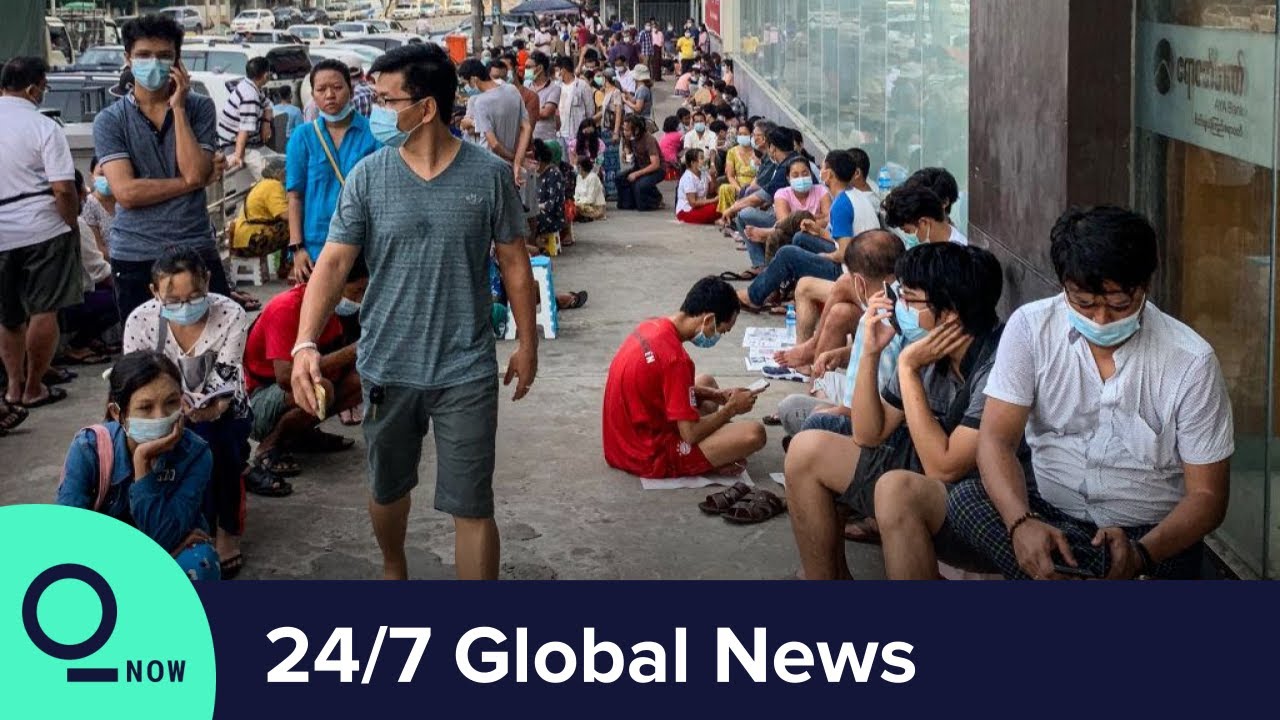
At the moment in Yangon, there’s still no sign of a humanitarian crisis. Supermarkets, convenience stories and small shops still have plenty of food, and prices of rice and other staples are relatively stable. But signs of distress are popping up, like long queues outside banks and ATMs after some banks capped daily withdrawals from ATMs at 200,000 kyat ($135). Demand for gold and U.S. dollars is rising.
“We understand that only 10% of the total number of branches in Myanmar have reopened, and we are aware of the difficulties to withdraw cash at ATMs,” junta spokesman Major General Zaw Min Tun said on Friday at a news briefing.
But even business elites in Myanmar aren’t convinced that this is merely a temporary blip.
Western investors have largely shunned Myanmar since allegations surfaced in 2017 of genocide against minority Rohingya Muslims, prompting the government to focus on attracting capital from Asian countries like Singapore and China. But even though China blocked the United Nations Security Council from imposing sanctions after the coup, it remains wary of supporting Myanmar’s generals -- particularly after several Chinese-owned factories were torched amid the protests.
---
Subscribe to our YouTube channel
Bloomberg Quicktake brings you live global news and original shows spanning business, technology, politics and culture. Make sense of the stories changing your business and your world.
To watch complete coverage on Bloomberg Quicktake 24/7, visit or watch on Apple TV, Roku, Samsung Smart TV, Fire TV and Android TV on the Bloomberg app.
Have a story to tell? Fill out this survey for a chance to have it featured on Bloomberg Quicktake
Connect with us on…
Breaking News on YouTube
Sentinel Indexing in Progress
Metadata and chapters are available. Claim extraction for this episode is pending.
All video content is delivered via YouTube embedded players in accordance with the YouTube Terms of Service. Sentinel provides research tools that promote discovery and accountability across political media.