Bloomberg Podcasts
@bloombergpodcasts·503K subscribers·32.4K videos
The Nvidia Deal is 'Inappropriate' Says Rep. Auchincloss
Posted
August 12, 2025
Views
772
Likes
11
Comments
13
Engagement
August 12, 2025
772
11
13
3.11%
Every word spoken in this episode is indexed. Type any phrase to jump straight to the moment it was said.
Type any word or phrase that may have been spoken. Click a result to seek the player to that exact moment.
Try a name, a topic, or a quoted line
See what was published immediately before and after this episode.
 8:26Now Playing
Democratic Representative Jake Auchincloss of Massachusetts joins to discuss the upcoming Putin Trump meeting in Alaska as well as the recent deal between Trump and Nvidia. Nvidia and Advanced Micro Devices Inc. both recently secured Washington’s approval to resume lower-end AI chip sales to China, on the controversial and legally questionable condition that they give the US government a 15% cut of the related revenue.
But even with Trump’s team on board, the two companies face the challenge that their Chinese customers are under Beijing’s pressure to purchase domestic chips instead. Beijing’s overall push affects AI accelerators from AMD in addition to Nvidia, one of the people said, though it’s unclear whether any letters specifically mentioned AMD’s MI308 chip.
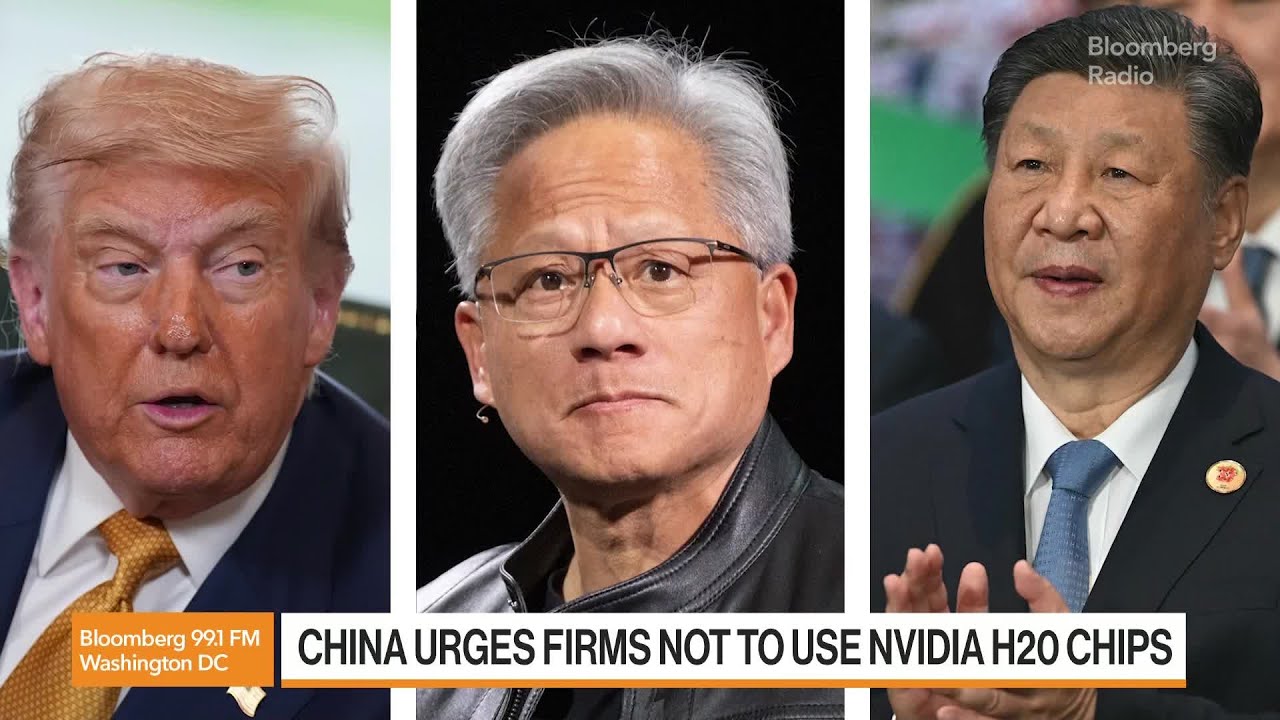
Beijing has urged local companies to avoid using Nvidia Corp.’s H20 processors, particularly for government-related purposes, complicating the chipmaker’s return to China after the Trump administration reversed an effective US ban on such sales.
Over the past few weeks, Chinese authorities have sent notices to a range of firms discouraging use of the less-advanced semiconductors, people familiar with the matter said. The guidance was particularly strong against the use of H20s for any government or national security-related work by state enterprises or private companies, said the people, who asked not to be identified because the information is sensitive.
The letters didn’t, however, constitute an outright ban on H20 use, according to the people. Industry analysts broadly agree that Chinese companies still covet those chips, which perform quite well in certain crucial AI applications. President Donald Trump said Monday that the processor “still has a market” in the Asian country despite also calling it “obsolete.”
Nvidia and Advanced Micro Devices Inc. both recently secured Washington’s approval to resume lower-end AI chip sales to China, on the controversial and legally questionable condition that they give the US government a 15% cut of the related revenue.
But even with Trump’s team on board, the two companies face the challenge that their Chinese customers are under Beijing’s pressure to purchase domestic chips instead. Beijing’s overall push affects AI accelerators from AMD in addition to Nvidia, one of the people said, though it’s unclear whether any letters specifically mentioned AMD’s MI308 chip.
Shares of Chinese AI chip designer Cambricon Technologies Corp. surged to their daily limit of 20% on the news of China’s guidance, leading a rally in peers such as Semiconductor Manufacturing International Corp.
Beijing’s stance could limit Trump’s ability to turn his export control about-face into a windfall for government coffers, a deal that highlighted his administration’s transactional approach to national security policies long treated as nonnegotiable.
Still, Chinese companies may not be ready to jump ship to local semiconductors. “Chips from domestic manufacturers are improving dramatically in quality, but they might not be as versatile for specific workloads that China’s domestic AI industry hopes to focus on,” said Homin Lee, a senior macro strategist at Lombard Odier in Singapore. Lee added that he anticipates “strong” demand for the chips the Trump administration is allowing Nvidia and AMD to sell.
Rosenblatt Securities analyst Kevin Cassidy said he doesn’t anticipate that Nvidia’s processor sales to China will be affected because “Chinese companies are going to want to use the best chips available.” Nvidia and AMD’s chips are superior to local alternatives, he said.
Beijing asked companies about that issue in some of its letters, according to one of the people, posing questions such as why they buy Nvidia H20 chips over local versions, whether that’s a necessary choice given domestic options, and whether they’ve found any security concerns in the Nvidia hardware. The notices coincide with state media reports that cast doubt on the security and reliability of H20 processors.
--------
Watch Bloomberg Radio LIVE on YouTube
Weekdays 7am-6pm ET
Follow us on X
Subscribe to our Podcasts:
Bloomberg Daybreak
Bloomberg Surveillance
Bloomberg Intelligence
Balance of Power
Bloomberg Businessweek
Listen on Apple CarPlay and Android Auto with the Bloomberg Business app:
Apple CarPlay
Android Auto
Visit our YouTube channels:
Bloomberg Podcasts
Bloomberg Television
Bloomberg Originals
Sentinel Indexing in Progress
Metadata and chapters are available. Claim extraction for this episode is pending.
All video content is delivered via YouTube embedded players in accordance with the YouTube Terms of Service. Sentinel provides research tools that promote discovery and accountability across political media.