Bloomberg Podcasts
@bloombergpodcasts·503K subscribers·32.4K videos
Israeli's Divided Over Netanyahu Leadership
Posted
September 25, 2025
Views
635
Likes
8
Comments
6
Engagement
2.20%
September 25, 2025
635
8
6
2.20%
Every word spoken in this episode is indexed. Type any phrase to jump straight to the moment it was said.
Type any word or phrase that may have been spoken. Click a result to seek the player to that exact moment.
Try a name, a topic, or a quoted line
 7:30Now Playing
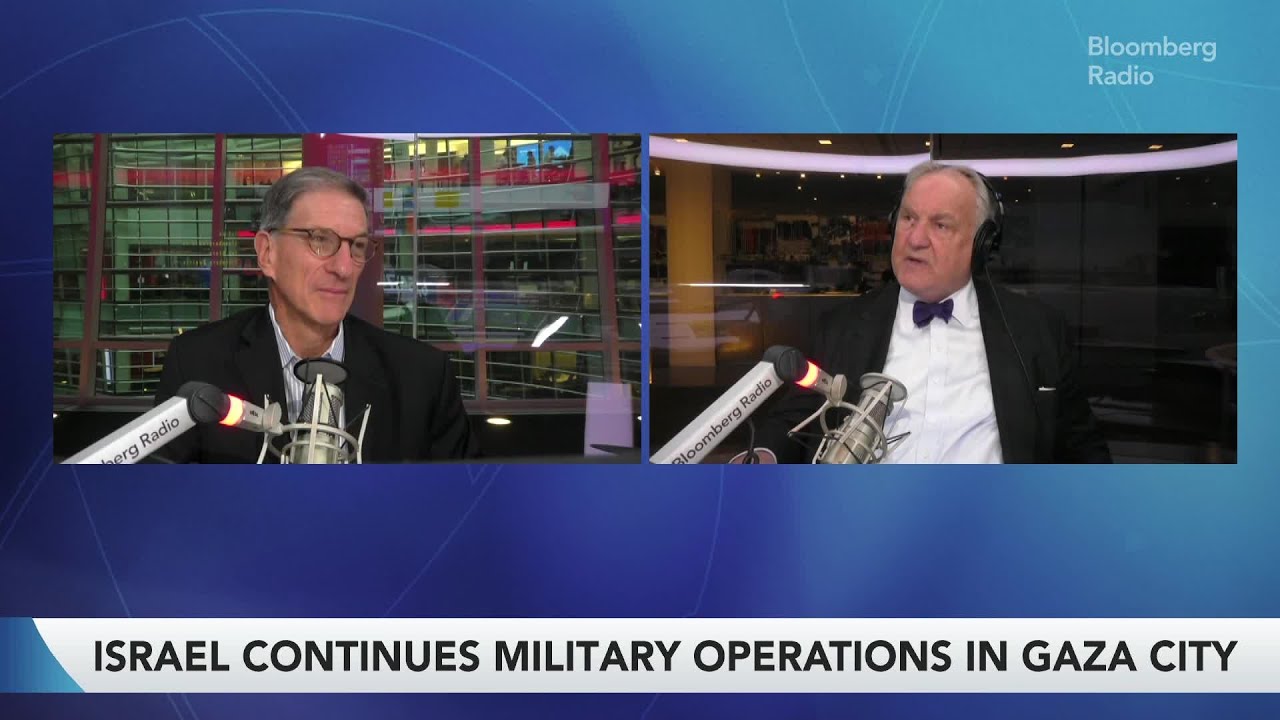
Ethan Bronner, Israel Bureau Chief with Bloomberg News, discusses the war in Gaza, how the world is reacting, and where the United States stands in ceasefire efforts.
US President Donald Trump met with leaders of Arab states and member states of the Organization of Islamic Cooperation at the UN headquarters in New York, and discussed the conflict in Gaza and the West Bank, Saudi state-run SPA reports.
Co-hosted by Trump and Qatar Emir Sheikh Tamim bin Hamad Al Thani, meeting attended by Jordan’s King Abdullah II, Turkey President Recep Tayyip Erdogan, President of Indonesia Prabowo Subianto, Prime Minister of Pakistan Shehbaz Sharif, Prime Minister Egypt Mostafa Madbouly, Deputy Prime Minister and Minister for Foreign Affairs of the United Arab Emirates Sheikh Abdullah bin Zayed Al Nahyan, and Saudi Arabia’s Minister of Foreign Affairs Prince Faisal bin Farhan
Leaders emphasize need for immediate ceasefire in Gaza, ensuring stability in West Bank, supporting Palestinian Authority’s reform efforts, according to a joint statement
Given the fury in Israel over the growing call at the United Nations this week for recognition of a Palestinian state next to the Jewish one, it’s worth recalling that a two-state solution was a Jewish nationalist dream—and an Arab nightmare—for generations. Starting in the late 19th century, the movement that became known as Zionism lobbied for a homeland within Palestine. Antisemitism was rampant in Europe and the Muslim world, and the answer was to grant Jews a state in the territory where their history began.
That’s not, of course, how the Muslim and Christian Arabs then dominating the area saw things. For them, a Jewish homeland in their midst, in any boundaries, was anathema.
So when a UK royal commission recommended in 1937 that Palestine, under British mandate, be divided into a Jewish state and an Arab one, Arab leaders spurned the plan. When the UN voted for the same thing a decade later, leading the Jews in Palestine to dance in the streets, the Arab answer was again no. After British troops pulled out six months later and Israel declared independence in the UN-designated borders, Arab states invaded. Israel emerged victorious and larger, and did so again in the 1967 Six-Day War. The Arab League responded: no peace, no recognition, no negotiation.
As the UN filled with new nations that sympathized with the Palestinians displaced by Israel’s conquests, votes by the international forum repeatedly censured Israel and supported Palestinian sovereignty. By the 1990s, after Egypt and Jordan signed peace treaties with Israel and the Palestinians recognized it, Israel said it was open to Palestinian statehood. But the barriers to agreement—Jerusalem, refugees, borders, security—were too high and no offer was mutually acceptable. In addition, both Israeli and Palestinian societies grew more religious and nationalistic. Hamas, which seeks Israel’s destruction, took over in Gaza. For the past decade, as Israel also became richer and more powerful, the Palestinian issue seemed almost to disappear for many. Palestinians were divided and despondent, and Arab powers increased their links to Israeli defense and high-tech industries, paying lip service to Palestinian sovereignty.
Then came Oct. 7, 2023, when thousands of Hamas operatives swarmed into Israel killing and abducting people in an attack that altered Middle Eastern politics for the foreseeable future. For many around the world, it was proof that the Palestinian issue won’t be buried, that the oppressed will eventually burst with rage. They expected Israel to retaliate but then for it to negotiate a joint future.
--------
Watch Bloomberg Radio LIVE on YouTube
Weekdays 7am-6pm ET
Follow us on X
Subscribe to our Podcasts:
Bloomberg Daybreak
Bloomberg Surveillance
Bloomberg Intelligence
Balance of Power
Bloomberg Businessweek
Listen on Apple CarPlay and Android Auto with the Bloomberg Business app:
Apple CarPlay
Android Auto
Visit our YouTube channels:
Bloomberg Podcasts
Bloomberg Television
Bloomberg Originals
Sentinel Indexing in Progress
Metadata and chapters are available. Claim extraction for this episode is pending.
All video content is delivered via YouTube embedded players in accordance with the YouTube Terms of Service. Sentinel provides research tools that promote discovery and accountability across political media.