Daniel Davis Deep Dive
@danieldavisdeepdive·442K subscribers·4.9K videos
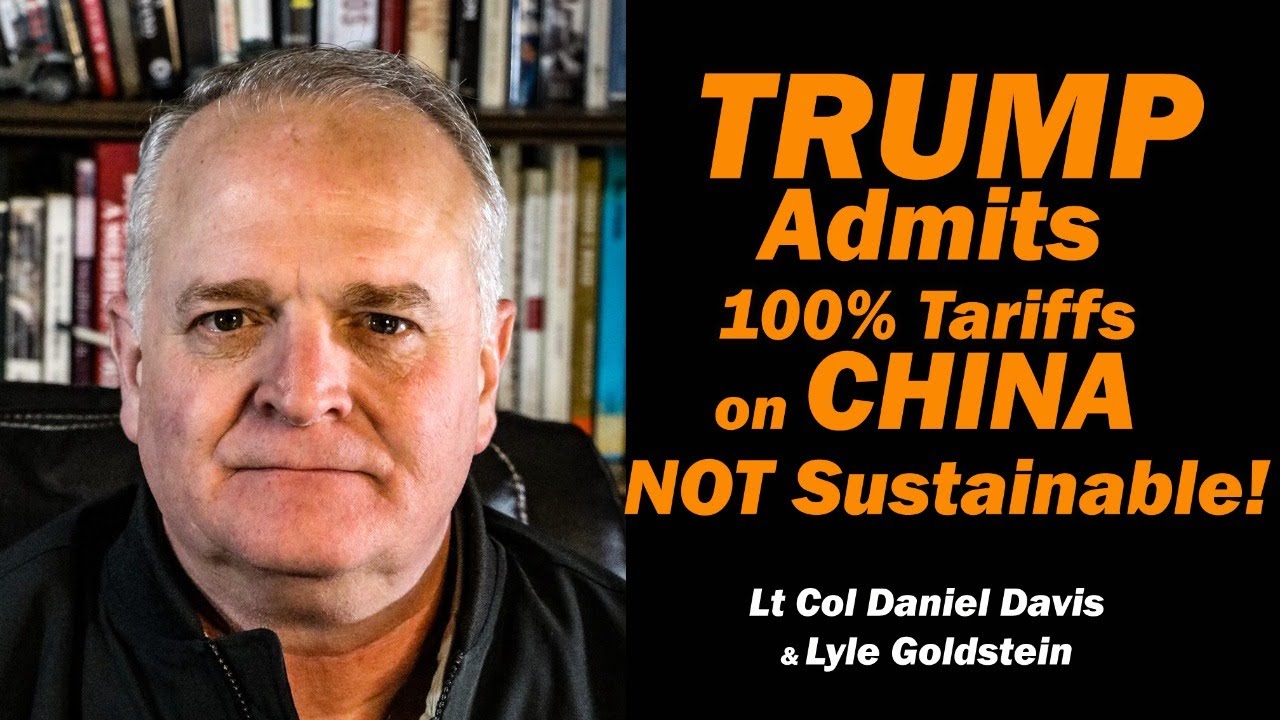
TRUMP ADMITS 100% Tariffs on China NOT SUSTAINABLE /Lt Col Daniel Davis & Lyle Goldstein
Posted
October 17, 2025
Views
41,658
Likes
1,861
Comments
335
October 17, 2025
41,658
1,861
335
5.27%
Every word spoken in this episode is indexed. Type any phrase to jump straight to the moment it was said.
Type any word or phrase that may have been spoken. Click a result to seek the player to that exact moment.
Try a name, a topic, or a quoted line
 1:03:31Now Playing
Daniel Davis Deep Dive Merch: Etsy store
Target Taiwan - Lyle Goldstein
Special series to assess the military and political dynamics of an all-out Chinese invasion of Taiwan
The conversation discusses the state of U.S.–China relations amid renewed tariff tensions and upcoming talks. The speaker notes low expectations for the meeting, hoping simply for a cordial handshake without market disruption.
They trace the current standoff back to Trump’s first term, citing the 2020 crackdown on Huawei as the real start of the trade war. The recent escalation — major tariffs imposed by Trump on China and China’s retaliatory tariffs — eventually led to a short-lived truce in May. Both sides recognized that their economies are deeply interdependent, making prolonged conflict unsustainable.
The speaker criticizes Peter Navarro’s hardline influence while noting that other China hawks like Pompeo are gone. They argue that although U.S. complaints about unfair trade and China’s undervalued currency are legitimate, Americans have also benefited from cheap Chinese goods and agricultural exports to China. The relationship, they say, is mutually dependent and needs a “win-win” approach.
The discussion then turns to China’s October export restrictions on rare earth minerals, which are vital for semiconductors, AI systems, electric motors, and U.S. defense manufacturing (including submarines). The move is seen as highly significant and deliberately aimed at America’s defense sector.
Analysts debate the motive: it may be retaliation for new U.S. export restrictions in September, but the scale suggests long-term planning. The New York Times framed it as China “beating the U.S. at its own game” — using strategic resource control as leverage, just as the U.S. has done with technology exports.
Sentinel Indexing in Progress
Metadata and chapters are available. Claim extraction for this episode is pending.
All video content is delivered via YouTube embedded players in accordance with the YouTube Terms of Service. Sentinel provides research tools that promote discovery and accountability across political media.