Daniel Davis Deep Dive
@danieldavisdeepdive·442K subscribers·4.9K videos
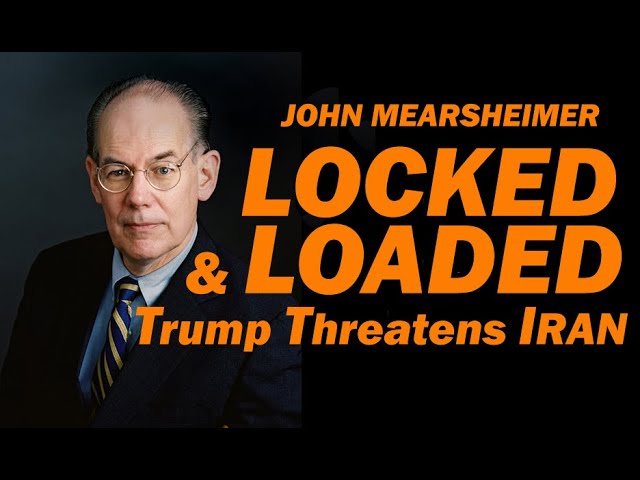
John Mearsheimer: Ukraine's Greatest Danger /There'll Be NO U.S. Security Guarantees
Posted
January 2, 2026
Views
106,765
Likes
3,373
Comments
522
Engagement
January 2, 2026
106,765
3,373
522
3.65%
Every word spoken in this episode is indexed. Type any phrase to jump straight to the moment it was said.
Type any word or phrase that may have been spoken. Click a result to seek the player to that exact moment.
Try a name, a topic, or a quoted line
 14:48Now Playing
Professor John Mearsheimer argues that Russia’s demands—Ukraine withdrawing from heavily fortified cities in Donetsk—are militarily and politically decisive. Russia’s position is that if Ukraine will not concede these areas through negotiation, Russia will eventually take all of Donetsk and likely additional territory by force. Ukraine, meanwhile, is steadily losing territory and suffering worse casualties in a war of attrition, making a negotiated settlement now strategically preferable from a purely military standpoint.
However, the speakers argue that Kyiv is unwilling to voluntarily give up territory. A plausible explanation offered is domestic politics: President Zelensky cannot survive politically if he concedes land, so it is “easier” for Ukraine to lose territory militarily and later justify a deal as unavoidable. As a result, negotiations are described as “Kabuki theater”—public relations exercises rather than serious diplomacy.
Both Ukrainian and U.S. peace proposals (the 20-point Ukrainian plan and the 28-point U.S. plan) are portrayed as irrelevant because they ignore Russia’s core demands: Ukrainian neutrality, no NATO membership or security guarantees, demilitarization, political changes in Kyiv, protections for Russian-speaking populations, and recognition of Russia’s claimed territories. Russia, according to the discussion, has not shifted from these positions since mid-2024.
The speakers emphasize that the war will be settled on the battlefield, not at the negotiating table. Russia does not trust U.S. assurances—particularly under Trump—and sees negotiations mainly as a public relations tool to avoid blame and manage relations with Washington, not as a path to compromise.
Attention then shifts to Europe. The U.S. has increasingly pushed responsibility for supporting Ukraine onto European states, but Europe lacks the financial capacity to sustain Ukraine long-term. Plans to seize Russian frozen assets failed, leaving Europe to fund Ukraine through borrowing. This comes on top of severe economic strain, especially in Germany, whose economy has been hit hard by the loss of cheap Russian energy, de-nuclearization, competition from China, and aging infrastructure.
The conclusion is bleak: Europe faces worsening economic and political stress, internal divisions over Ukraine policy, and growing financial burdens, while the war continues to move westward and is likely to end in a Russian military victory rather than a negotiated settlement.
Sentinel Indexing in Progress
Metadata and chapters are available. Claim extraction for this episode is pending.
All video content is delivered via YouTube embedded players in accordance with the YouTube Terms of Service. Sentinel provides research tools that promote discovery and accountability across political media.