Daniel Davis Deep Dive
@danieldavisdeepdive·442K subscribers·4.9K videos
Patrick Henningsen & Lt Col Daniel Davis: We Can't Calculate the Fallout from Davos
Posted
January 21, 2026
Views
50,128
Likes
2,770
Comments
454
Engagement
January 21, 2026
50,128
2,770
454
6.43%
Every word spoken in this episode is indexed. Type any phrase to jump straight to the moment it was said.
Type any word or phrase that may have been spoken. Click a result to seek the player to that exact moment.
Try a name, a topic, or a quoted line
 22:16Now Playing
** NEW MERCH ** Jackets & Sweatshirts, Thermo Mugs!!
Daniel Davis Deep Dive Merch: Etsy store
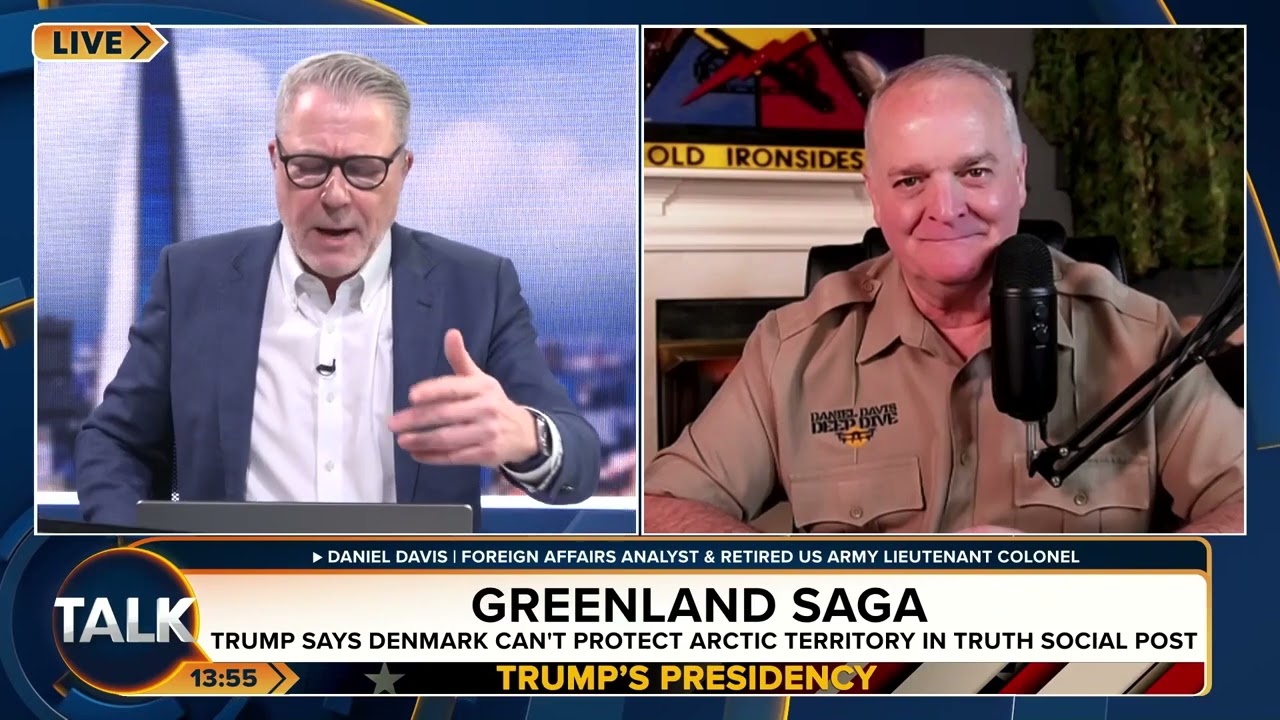
The discussion centers on President Trump’s remarks about Greenland, NATO, and U.S. power, highlighting contradictions and broader geopolitical consequences.
Trump claimed respect for Greenland and Denmark but argued that no country or alliance other than the U.S. can defend Greenland—while simultaneously insisting NATO members must defend themselves. Commentators note this contradicts NATO’s core principle of collective security and exposes deeper questions about NATO’s real purpose. The conversation frames NATO less as a defensive alliance and more as an instrument of U.S. (and allied) power projection, market access, and energy control, citing Libya and Syria as examples.
Trump’s aggressive, coercive rhetoric about acquiring Greenland later softened when he said he would not use force. This retreat is seen as a bluff being called, likely leaving him empty-handed and damaging U.S. credibility in Europe. Analysts argue Trump is using Greenland as leverage within a broader “chessboard” strategy tied to Ukraine, Gaza, Iran, trade, and arms sales—but that this approach risks failure if European allies resist.
The conversation suggests growing European unease, including talk in France about distancing itself from NATO command, which—combined with Trump’s behavior—could seriously weaken the alliance. Russia, meanwhile, is portrayed as strategically benefiting from U.S. actions that fracture Europe, quietly encouraging moves that deepen transatlantic divisions.
More broadly, the speakers argue the U.S. is attacking international law and institutions—through actions involving Venezuela, defunding UN bodies, backing Israel against UN agencies, and potentially striking Iran. This is framed as a direct assault on the post-WWII international order and even U.S. constitutional norms.
On Iran, the discussion warns a U.S. attack could trigger major escalation. Iran is described as capable of inflicting severe damage on Israel through conventional missile power, potentially destabilizing Israeli society and government. Any U.S. strike on Iran would likely prompt Iranian retaliation against Israel, making the situation “existential” for Israel and highly dangerous regionally.
Overall, the segment portrays U.S. policy under Trump as increasingly transactional and coercive, accelerating NATO’s decline, weakening alliances, empowering rivals like Russia, and pushing the global system toward fragmentation and instability.
Sentinel Indexing in Progress
Metadata and chapters are available. Claim extraction for this episode is pending.
All video content is delivered via YouTube embedded players in accordance with the YouTube Terms of Service. Sentinel provides research tools that promote discovery and accountability across political media.