Daniel Davis Deep Dive
@danieldavisdeepdive·442K subscribers·4.9K videos
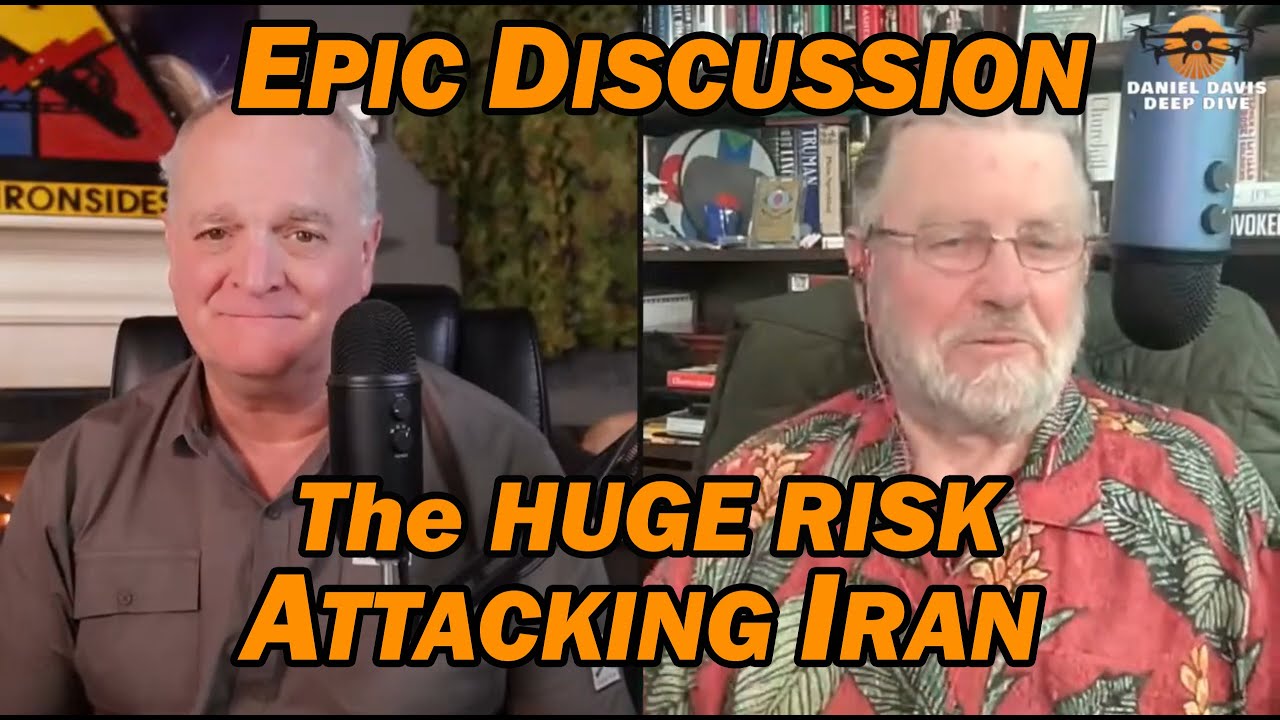
EPIC DISCUSSION: The Huge Risk Attacking Iran /Larry Johnson & Lt Col Daniel Davis
Posted
February 4, 2026
Views
103,140
Likes
5,097
Comments
905
Engagement
February 4, 2026
103,140
5,097
905
5.82%
Every word spoken in this episode is indexed. Type any phrase to jump straight to the moment it was said.
Type any word or phrase that may have been spoken. Click a result to seek the player to that exact moment.
Try a name, a topic, or a quoted line
 50:54Now Playing
** NEW MERCH ** Jackets & Sweatshirts, Thermo Mugs!!
Daniel Davis Deep Dive Merch: Etsy store
Larry and Danny argue that U.S. naval power would be short-lived in a conflict with Iran due to limited resupply capabilities, flawed ship design that requires port visits to reload missiles, and poor strategic planning. Past operations—especially against the Houthis in Yemen—failed to achieve stated objectives like securing freedom of navigation or degrading enemy missile capacity, despite Yemen being far smaller than Iran. This raises serious doubts about the U.S. ability to succeed against a much larger, more capable adversary.
Iran, meanwhile, has gained significant real-world combat experience and has carefully studied U.S. and Israeli tactics, including failed decapitation strikes and covert destabilization efforts. These attempts backfired, strengthening Iran internally and pushing it closer to Russia and China, who are now providing advanced support such as systems that can disrupt GPS and Starlink—potentially neutralizing U.S. precision weapons like Tomahawks.
The discussion warns that any war would likely reinforce hardliners in Iran who argue for developing nuclear weapons as the ultimate deterrent, noting that nuclear-armed states like North Korea are not attacked. Iran is also described as having a “dead hand” system, meaning missiles could still launch even if leadership were decapitated, dramatically increasing escalation risks.
Finally, the speakers criticize U.S. policymakers for having no clear plan for regime change or post-conflict governance—an admission made publicly by senior officials. With sanctions eroding, Iran integrated into BRICS, and Russian and Chinese backing growing, the overall conclusion is that U.S. strategy is dangerously under-thought, escalation would likely fail, and the consequences could be catastrophic.
Sentinel Indexing in Progress
Metadata and chapters are available. Claim extraction for this episode is pending.
All video content is delivered via YouTube embedded players in accordance with the YouTube Terms of Service. Sentinel provides research tools that promote discovery and accountability across political media.